Mumbai: Unsecured loans from banks to customers purchasing consumer durables like washing machines, televisions and air conditioners continue to fall. Latest central bank data showed such loans fell 5% in FY26, when banking sector advances expanded 16%.
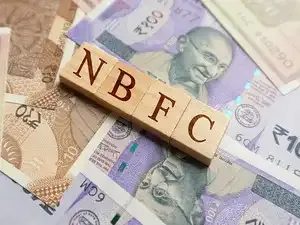
Analysts and bankers said banks have ceded this segment to non-banking finance companies (NBFCs) because of the small ticket size. Also, banks are mostly lending to this segment of small-ticket loans through credit cards as it is easier for lenders to offer zero EMI loans via credit cards rather than make an agreement with vendors for exclusive loan deals on these products.
Also Read: Bank Lending to NBFCs Rises 26%, Fastest in FY26
"It is too low a ticket size for banks to invest in the network and people on ground and NBFCs have taken the market. Most of these loans happen through credit card swipes. This is reflected in the fall in consumer durable loans, which will continue to be weak," said Sumit Phakka, deputy managing director, IDBI Bank.
Sectoral data published by the Reserve Bank of India (RBI) showed loans by banks to buy consumer durables fell 5% year on year in FY26, compared with a 1% fall recorded a year earlier.
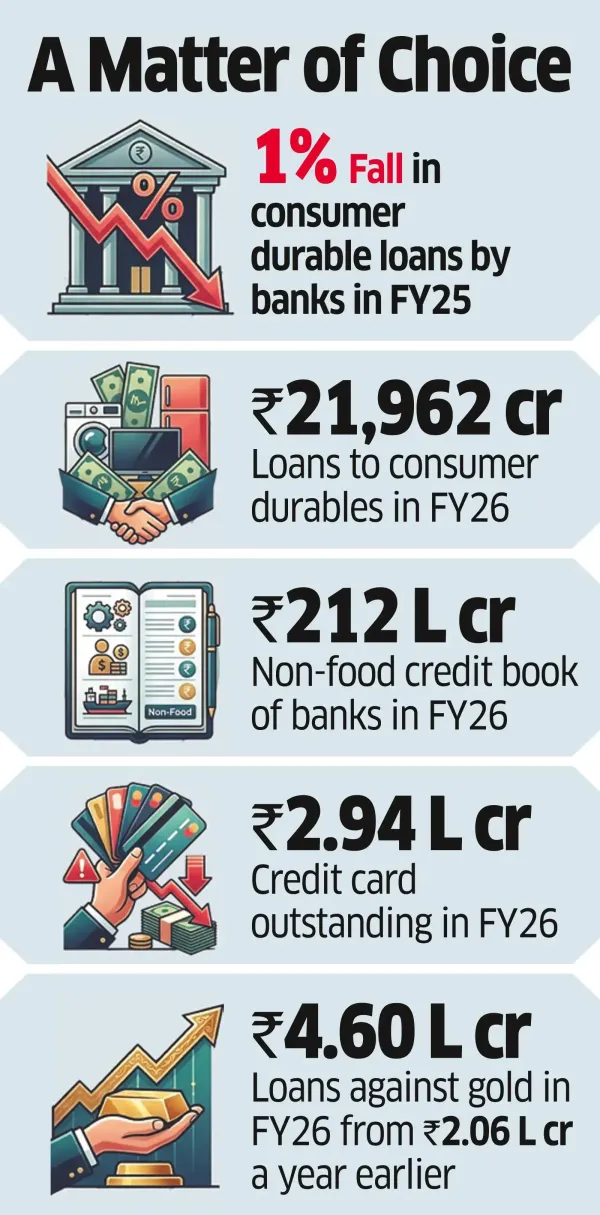
To be sure, loans to consumer durables at ₹21,962 crore are just a miniscule 0.10% of the ₹212 lakh crore non-food credit book of banks.
Anil Gupta, co-head, financial sector ratings, ICRA said consumer durable loans for the banks have shrunk because of zero-cost EMIs that many credit cards offer on such purchases.
Also Read: India must map, monitor economic vulnerabilities in energy, food, other areas: EAC-PM chairman
"It is only a few NBFCs that still do that business because they cater to a section of people who may not have credit cards. For banks it is better that this business shifts to cards because it does not require physical presence at dealers and a fresh credit assessment of customers as such loans are part of approved credit card limit for the customer," Gupta said.
Credit card outstanding at ₹2.94 lakh crore is still much greater than consumer durable loans. Phakka from IDBI Bank said banks prefer auto and personal loans because of their ticket size and yields, respectively. "Gold loans have picked up because they are linked to agriculture and have a priority sector tag," Phakka said.
Assembly Elections 2026
Election Results 2026 Live Updates: Who's ahead in which state
West Bengal Election Results 2026 Live Updates
TN Election Result 2026 Live Updates
Also Read: Bank Lending to NBFCs Rises 26%, Fastest in FY26
"It is too low a ticket size for banks to invest in the network and people on ground and NBFCs have taken the market. Most of these loans happen through credit card swipes. This is reflected in the fall in consumer durable loans, which will continue to be weak," said Sumit Phakka, deputy managing director, IDBI Bank.
Sectoral data published by the Reserve Bank of India (RBI) showed loans by banks to buy consumer durables fell 5% year on year in FY26, compared with a 1% fall recorded a year earlier.
Such unsecured loans fall 5% in FY26; banks see their low-ticket sizes as weighing on investments
To be sure, loans to consumer durables at ₹21,962 crore are just a miniscule 0.10% of the ₹212 lakh crore non-food credit book of banks.
Anil Gupta, co-head, financial sector ratings, ICRA said consumer durable loans for the banks have shrunk because of zero-cost EMIs that many credit cards offer on such purchases.
Also Read: India must map, monitor economic vulnerabilities in energy, food, other areas: EAC-PM chairman
"It is only a few NBFCs that still do that business because they cater to a section of people who may not have credit cards. For banks it is better that this business shifts to cards because it does not require physical presence at dealers and a fresh credit assessment of customers as such loans are part of approved credit card limit for the customer," Gupta said.
Credit card outstanding at ₹2.94 lakh crore is still much greater than consumer durable loans. Phakka from IDBI Bank said banks prefer auto and personal loans because of their ticket size and yields, respectively. "Gold loans have picked up because they are linked to agriculture and have a priority sector tag," Phakka said.