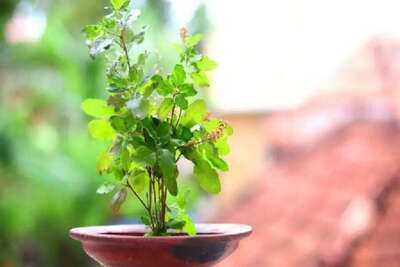
The Tulsi plant not only beautifies homes but also holds significant religious and Ayurvedic value. It is commonly found in Indian households, often placed at prayer altars and cared for daily. However, there are times when the Tulsi plant struggles to thrive, producing small leaves or appearing wilted. If you are facing similar issues, consider these simple solutions.
What to Do When Tulsi Leaves Are Small?
If your Tulsi plant previously produced large leaves but now only yields small, weak ones, it may indicate an internal deficiency. According to Shambhu, a gardener running a nursery in Noida, using camphor water can be very effective in such cases. Camphor, a small white tablet commonly used in rituals, can be purchased for just 1 rupee.
How to Prepare Camphor Fertilizer?
1. Take 200 to 300 ml of water in a container.
2. Add one camphor tablet to it.
3. Heat the water on low flame until the camphor dissolves completely.
4. Allow it to cool down.
5. Once cooled, mix in a little plain water.
6. Pour this mixture directly into the soil of the Tulsi plant.
Camphor as a Pest Deterrent
During the rainy season, it is common for pests to attack Tulsi plants, leading to black or white spots on the leaves or causing the plant to gradually wilt. In such cases, camphor-infused water acts as a natural spray. Fill a spray bottle with this solution and apply it to the leaves, repeating this process every 15 to 20 days.
Important Care Tips
- Avoid adding onion, garlic peels, or tea leaves used as fertilizer to the Tulsi plant.
- Water the plant only as needed, without overdoing it.
- Place the pot in a location where it receives gentle morning sunlight.
- Once a week, gently aerate the soil to allow air circulation.
-
GWSSB: Opportunity for Engineering Graduates — Recruitment for Assistant Engineers at the Gujarat Water Board..

-
Indian Navy: Notification Issued for SSC Executive Recruitment; Selection for IT Posts to be Conducted Without a Written Examination..

-
BPSC 72nd Exam: BPSC 72nd Recruitment—365 Posts for Revenue Officers; How Many Vacancies Have Been Announced for DSP and SDO Positions?

-
UPSSSC JE Answer Key: UPSSSC JE Answer Key Released—Here's How to Download; Objections Can Be Submitted Until May 10..

-
UPPSC Lecturer Exam: GIC Lecturer Recruitment Exam will not be held on June 7, the commission has fixed a new date..