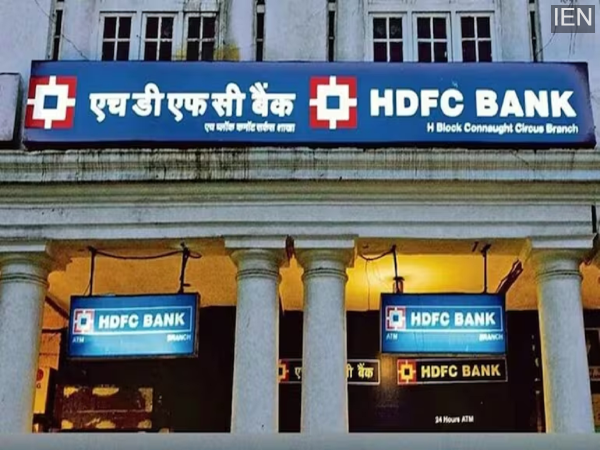
India’s largest private-sector lender, HDFC Bank, has revised its Marginal Cost of Funds-Based Lending Rates (MCLR), bringing mixed news for borrowers. While some short-term loan rates have been reduced, the bank has increased the three-year MCLR, a move that could impact home loan customers and potentially increase EMIs for certain borrowers.
The revised rates came into effect on May 7, 2026.
The latest changes have created confusion among customers because the bank has both reduced and increased lending rates across different loan tenures.
What Has HDFC Bank Changed?
HDFC Bank has revised its MCLR rates by up to 5 basis points (0.05%) across various tenures.
After the latest revision, the bank’s MCLR rates now range between 8.05% and 8.60%, compared to the earlier range of 8.10% to 8.55%.
The most important change is the increase in the three-year MCLR from 8.55% to 8.60%.
Since many home loans are linked to longer-tenure benchmark rates, this increase could affect borrowers whose loans are tied to the three-year MCLR benchmark.
At the same time, the bank has reduced several short-term MCLR rates, which could provide relief to customers with certain business and short-duration loans.
Latest HDFC Bank MCLR Rates
Here is the revised MCLR structure effective from May 7, 2026:
| Tenure | New MCLR (May 2026) | Previous MCLR (April 2026) | Change |
|---|---|---|---|
| Overnight | 8.05% | 8.10% | Reduced by 0.05% |
| One Month | 8.05% | 8.10% | Reduced by 0.05% |
| Three Months | 8.15% | 8.20% | Reduced by 0.05% |
| Six Months | 8.30% | 8.35% | Reduced by 0.05% |
| One Year | 8.35% | 8.35% | No Change |
| Two Years | 8.45% | 8.45% | No Change |
| Three Years | 8.60% | 8.55% | Increased by 0.05% |
Who Will Benefit From the Rate Cuts?
The reduction in short-term MCLR rates is expected to benefit borrowers whose loans are linked to shorter-duration benchmarks.
This could include:
- Business loan customers
- Working capital borrowers
- Companies using short-term credit facilities
- Customers with short-duration floating-rate loans
For such borrowers, the reduction in lending rates may slightly lower borrowing costs and reduce interest burdens over time.
Financial experts say short-term corporate and commercial borrowers are likely to benefit the most from the revised structure.
Why Home Loan Borrowers Could Face Higher EMIs
The increase in the three-year MCLR is the key concern for home loan customers.
Many floating-rate home loans are linked to longer-duration benchmark rates. If a customer’s loan reset cycle is connected to the revised three-year MCLR, monthly EMIs may increase slightly during the next reset period.
Although the increase is relatively small at 0.05%, even a minor rise in interest rates can impact total repayment amounts over long loan tenures.
For borrowers with large outstanding balances or long remaining repayment periods, the increase could result in higher monthly installments or extended loan tenure.
What Is MCLR and Why Does It Matter?
MCLR, or Marginal Cost of Funds-Based Lending Rate, is the minimum lending rate below which banks generally cannot offer loans.
The system was introduced by the Reserve Bank of India (RBI) in 2016 to improve transparency in loan pricing and ensure faster transmission of policy rate changes to borrowers.
Banks calculate MCLR based on several factors, including:
- Cost of raising funds
- Operating expenses
- Cash reserve requirements
- Repo-linked borrowing costs
- Tenure-related risks
Different MCLR rates are applicable for different loan durations, which is why banks maintain separate benchmark rates for overnight, monthly, yearly, and long-term loans.
Why Banks Change MCLR Rates
Banks regularly revise MCLR depending on liquidity conditions, RBI policy decisions, deposit costs, and overall market conditions.
If a bank’s cost of funds rises, lending rates may also increase. Conversely, improved liquidity or lower borrowing costs can lead to rate cuts.
Experts believe HDFC Bank’s latest decision reflects a balancing strategy where the bank is trying to support short-term borrowing while protecting margins in longer-duration lending products like home loans.
What Existing Borrowers Should Do
Financial advisors say borrowers should first check whether their loans are linked to:
- MCLR-based rates
- Repo-linked lending rates (RLLR)
- Fixed-rate structures
This is important because not all home loans are directly affected by MCLR revisions.
Borrowers with floating-rate MCLR-linked loans should monitor their reset dates carefully to understand when revised rates may impact their EMIs.
Customers may also consider:
- Partial prepayments to reduce interest burden
- Loan balance transfer options if better rates are available elsewhere
- Reviewing fixed vs floating interest structures
Loan Market Remains Dynamic
The latest move by HDFC Bank highlights how dynamic India’s lending market has become amid changing interest rate cycles and banking conditions.
While some borrowers may benefit from cheaper short-term credit, home loan customers could face a slightly higher repayment burden depending on their loan structure.
For now, financial experts recommend that borrowers review loan agreements carefully before making assumptions about EMI changes, as the actual impact depends on benchmark linkage, reset periods, and remaining loan tenure.
-
'Matured a great deal' - Lamine Yamal did a 'wonderful job' for Spain at 2026 World Cup, insists Luis de la Fuente

-
Amanath Yatra Resumes After Six-Day Delay Due to Weather Conditions

-
Petrol-Diesel Prices Today: Check the latest rates in your city for July 25, 2026.

-
Devotee dies due to suffocation while pulling chariot, Puri Rath Yatra toll mounts to 3

-
Amarnath Yatra Resumes After Six-Day Weather Suspension; Over 6,200 Pilgrims Depart Jammu For Baltal Under Tight Security | Video