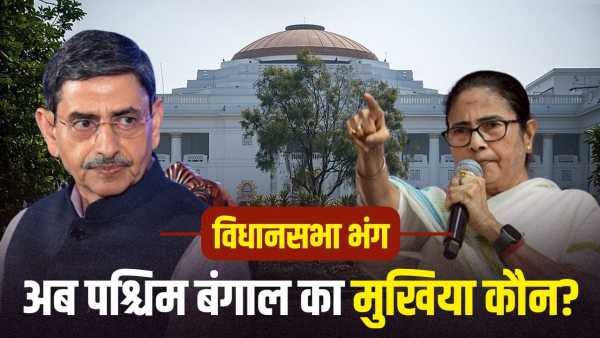
The Chief Minister not resigning may be a political message, but it cannot become a constitutional shield.
A big constitutional question has arisen in the politics of West Bengal at this time. CM Mamata Banerjee has not resigned. The Governor has dissolved the Assembly. This means that even though Mamata has not resigned, she is no longer the CM constitutionally. The swearing in of the new BJP government is proposed on May 9.
In such a situation there is a direct question. After all, who is in command of the state now? Who will see the government files? Who will take big decisions? What does the Indian Constitution say in this situation? Let us understand this issue in detail by quoting legal experts.
What is the direct meaning of dissolution of assembly?
First of all, it is important to understand that the tenure of the Assembly is not forever. Supreme Court advocate Ashwani Kumar Dubey says that the normal tenure of a state assembly is five years from the date of its first meeting. The tenure of the Assembly ends after completion of five years.
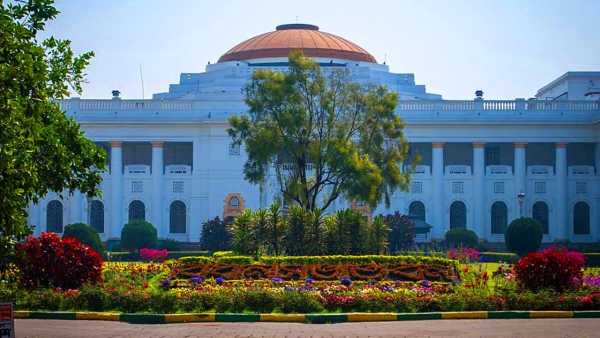
In West Bengal, Governor R.N. Ravi has dissolved the assembly.
This is clearly recorded in Article 172 of the Indian Constitution. In many cases it is considered to end on its own. At some places formal notifications are also issued. When the Assembly ceases to exist, the status of the Council of Ministers accountable to it also changes. Because the basis of a democratic government is the confidence of the House. If the tenure of the House ends, or a new political situation is created, the legal basis of the old government may also end.
Can the Chief Minister remain on the post merely by not resigning?
no way. The post of Chief Minister does not depend on political will alone. That is a constitutional post. Its legitimacy comes from the Constitution and majority. Article 164 says that the Chief Minister and ministers can hold office at the pleasure of the Governor. In practice, this means that the Chief Minister is the person who has the support of the majority in the Assembly. If his term ends, the House is dissolved, or the majority clearly passes to someone else, the Governor takes action according to the new situation.
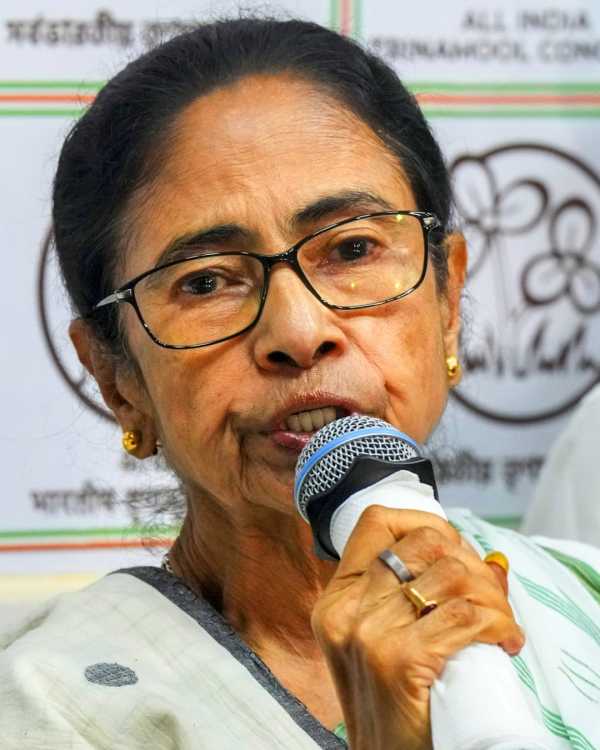
Even after the dissolution of the Assembly, Mamata Banerjee has not resigned.
Therefore, not resigning may be a political message, but it does not become a constitutional shield. Many times, if the CM resigns after the elections, the Governor appoints the same CM as caretaker till the next arrangement.
Then who remains in charge of the state in the meantime?
This is the most important question. When the old government has gone and the new government has not yet taken oath, then a short interim period is formed in the state. Advocate Dubey says that during this period the normal administration does not stop completely. Government offices continue to function. Officers keep working. Law and order is also maintained. But during this period political and policy decisions become limited. In such a situation the role of the Governor increases. The Governor ensures that there is no vacuum in governance. They complete the process of formation of the new government.
The leader of the majority party or coalition is called to form the government. Maintain administrative continuity till swearing in. This does not mean that the Governor starts running day-to-day politics like an elected government. Rather, it means that they play the role of constitutional guardian. The administrative machinery, i.e. the Chief Secretary, Home Secretary, police and other officials, continues to work within a limited scope.
Is this President's rule?
Absolutely not. This is a very important distinction. Not every constitutional interval is President's rule. President's rule is imposed under Article 356. There is a separate process for that. On the basis of the Governor's report or other material, the President has to be satisfied that the constitutional machinery in the state has failed. The situation is different in West Bengal. The issue here is of a very short period between changes of government. If the new government is going to be sworn in the next day or soon, it is considered a normal constitutional transition, but will not be called President's rule.
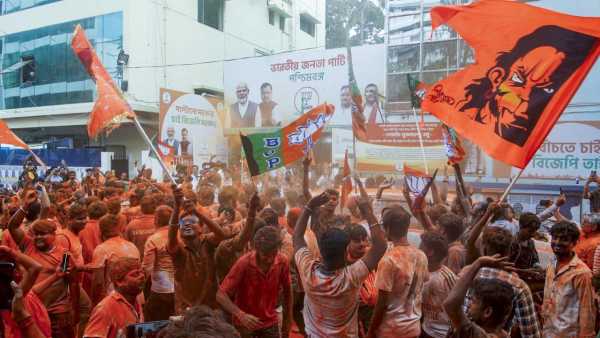
Celebration of BJP's victory in West Bengal.
Could the old government continue as a caretaker?
Yes, this happens in some circumstances. The term caretaker government is not written in much detail in the Indian Constitution. But in parliamentary tradition it is believed that until the new government takes office, the old government can work to a limited extent. This is called caretaker arrangement. But this happens only if the Governor allows this to happen and asks the old government to continue in the interim. If the Governor has issued a notification and the tenure of the old government is considered to be over, then the situation is different. In such a situation, the Chief Minister and the Council of Ministers are effectively considered out of office.
Which decisions should not be taken in the meantime?
Constitutional decorum says that major decisions should not be taken during the transition period. Announcement of new big policy, large scale appointments, huge financial sanctions, sensitive administrative orders, long term political decisions. During this period, only necessary, regular and immediate work should be done. Law and order, hospital, services like electricity, water, emergency files, salary, pension, regular administration, security and public order etc. That means the state continues to function, but the government does not run a new agenda.
What is the constitutional role of the Governor?
The Governor is the constitutional head of the state. Under normal circumstances they work on the advice of the Council of Ministers. This arrangement is understood within the broad framework of Articles 163 and 166, but when the Council of Ministers ceases to effectively exist, or a new government has to be formed, then the Governor has to take charge. They see which party or alliance has got the majority, who is the leader of the legislative party, who should be called to form the government, when the oath will be taken, how the administration will run till then. In this era, the objective of the Governor is not to rule but to maintain constitutional continuity.
Can Mamata Banerjee take any big decision at this time?
If the Assembly has been dissolved and the Governor's notification is effective, then no. In such a situation, Mamata Banerjee's continuation on the post of Chief Minister will not be considered legally sustainable. She can make political statements. You can file a protest, but taking legal action on behalf of the state is a different thing. If the Governor does not ask her to continue as acting Chief Minister, she will not be in a position to take administrative decisions.
Officers will perform routine tasks under the supervision of the Governor
Talking in simple words, the picture is clear. After the tenure of the Assembly ends and its dissolution, the constitutional basis of the old government ends. The Chief Minister cannot remain in office on the strength of his statements alone. Only the majority, the House and the constitutional process decide the validity of the post. In such an interim situation, the day-to-day administrative system of the state is run through the supervision and bureaucracy of the Raj Bhavan. As soon as the new government takes oath, the real political and executive power goes to the new Chief Minister and his Council of Ministers. Therefore, in the present case of West Bengal, if the Assembly has been dissolved and the swearing-in of the new government is to take place tomorrow, then as of today, the command of the state will be considered to be under the constitutional supervision of the Governor in the interim. Administration will run within limited scope. Big decisions will be postponed. As soon as the new government takes oath, the newly elected government will get the right to take decisions.


-
Small pimples appearing after waxing? Adopt these easy home remedies, you will get relief

-
Viral: Diet Coke Returns To Indian Market, This Time In Glass Bottles, Worth The Cost Of 3 Cans

-
Jio’s new blast: Android Auto and Apple CarPlay will work without wires, price only ₹ 2399

-
Happy Mother’s Day 2026: From PPF to FD, give these financial gifts to your mother on Mother’s Day, there will be no money problems.

-
IPL 2026: Lucknow breaks the losing streak, beats RCB by 9 runs –