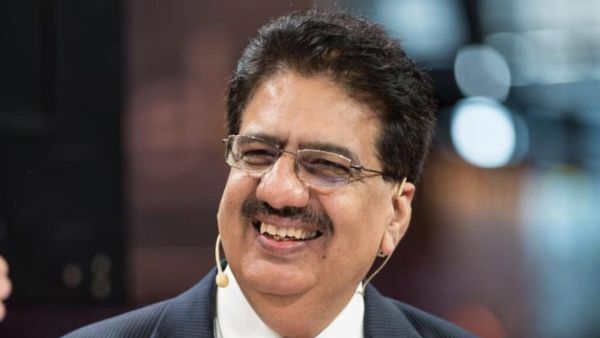
Vineet Nayar is the Founder-Chairman of Sampark Foundation and the former CEO of HCL Technologies.
During his tenure, Vineet led the transformation of HCL Technologies into one of India’s fastest-growing global information technology service companies. His management practices at HCL Technologies became case studies at bothHarvard Business School and London Business School.
In 2013, Vineet stepped down from HCL Technologies to focus on Sampark Foundation, which he co-founded with his wife Anupama Nayar. The foundation works to drive ‘large-scale transformation in primary education through frugal innovation’.
Vineet holds a degree in mechanical engineering from GB Pant University of Agriculture and Technology and a management degree from XLRI Jamshedpur. He is also the author of the management bestseller, Employees First, Customer Second: Turning Conventional Management Upside Down (Harvard Business Press).
Vineet spoke to indianexpress.com on the work of the Sampark Foundation, the challenges of transforming education in India through technology, and how AI could transform the education sector in rural India. Edited excerpts:
Venkatesh Kannaiah: Tell us about your journey from HCL Technologies to the Sampark Foundation.
Vineet Nayar: My journey from HCL to Sampark Foundation was not about moving from business to philanthropy. It was about moving from one large transformation challenge to another.
Sampark Foundation today reaches 20 million children across two lakh government schools through eight state government partnerships.
It is not as if we picked up education as a possible intervention in the first instance. We identified five areas, including health, rural development, agriculture, water management, and education, and we launched projects in each one of them. We discovered that the education sector offered the possibility of impact at scale.
My wife is a special education teacher from the Spastic Society, and my mother was a government school teacher for 30 years. That was of great help. We experimented, learned, and eventually honed in on education.
It was an interaction with my mother which made me realise the need to find one’s true meaning in life. And true meaning, she said, comes only when you help others achieve their goals.
That was the moment of change around 2011-2012, when I was 50 years old, that I realised the need to change my path so that I would still have the energy to execute another transformation.
Venkatesh Kannaiah: What were the initial challenges?
Vineet Nayar: When I entered the education sector, I saw that millions of children were in school, but learning was not happening. The system had become dependent on compliance instead of inspiration. Teachers were overloaded. Classrooms were overcrowded. Solutions were designed in boardrooms, not for the realities of rural India.
I realised that if we wanted transformation at scale, we had to combine three things: technology, simplicity, and the power of human connection. That became the foundation of Sampark.
What excites me most is that Sampark is not a charity, distributing products. We are building scalable learning systems for Bharat.
Venkatesh Kannaiah: Tell us about your learnings from HCL that you have brought forward to the Sampark Foundation. And what is it that you had to unlearn?
Vineet Nayar: The world often behaves as if machines are replacing humans. My experience has been the opposite. Machines amplify humans. Weak systems become weaker with technology. Strong human systems become transformational.
At HCL, I also learned that large systems change only when frontline people are empowered. In education, the frontline is the teacher. Yet most education reform treats teachers as the problem instead of the solution.
So we asked ourselves a different question: how do we make teachers successful? How do we reduce complexity inside classrooms?
The second lesson was about scale. India needs solutions that can work across millions of children. Every Sampark innovation is designed with scale, affordability, and simplicity at its core.
The third lesson was around feedback loops. Technology becomes powerful when it creates visibility and accountability. Without data, systems drift. With data, systems improve.
On what I needed to unlearn, the amount of resources I had at HCL Technologies was almost unlimited, and I could pick up the phone and speak to anyone in the world. All of that collapsed overnight.
So I had to build the organisation all over again, this time with people who were interested in villages and rural education, which is a much smaller pool. People no longer picked up your calls just because you held a particular chair or title. And yes, we had resources, but not billions of dollars to take unlimited bets. So that was one major level of change.
The second level of change was emotional and cultural. At HCL, it was a for-profit initiative. The enthusiasm and motivation were certainly there, but here the morale of the employees is at a level I had never experienced before. As a result, my own motivation, morale, and sense of satisfaction became far higher.
Venkatesh Kannaiah: Where does tech fit in the Sampark Foundation’s vision?
Vineet Nayar: Technology sits at the centre of Sampark’s work, but not in the way Silicon Valley imagines it. We are not obsessed with shiny technology. We are for solving real problems at scale.
Most educational technology fails in rural India because it assumes infrastructure, internet, training, and ideal classroom conditions. Rural India has none of these consistently.
Venkatesh Kannaiah: Tell us more about one of your innovations, Sampark TV, and how it works on the ground?
Vineet Nayar: When you enter a classroom, you will see all the content aligned with the state textbooks, almost in a Netflix-style interface. The entire system is driven by an Android device connected to a smart board. It does not require internet connectivity.
Now, pedagogy is based on the idea that there is a structured way of teaching every microconcept correctly. You will see lesson plans, animated videos, and there will be gamified assessments that teachers conduct in the classroom.
There is also an AI engine inside Sampark TV that captures and sends classroom data back to us. We process it through the AI engine and share daily insights with government agencies.
Normally, we do not know what is happening inside classrooms. What Sampark TV has done is make teaching easier and learning more engaging, while also allowing us to understand what is actually happening in the classroom.
At the same time, we are able to extract classroom-level data and provide it to state administrators. They can see which teachers are teaching according to plan and which are not.
The teacher does not have to independently explain every microconcept. She becomes an enabler of learning rather than the sole source of instruction. The multimedia content helps deliver the concept.
I am completely against devices in the hands of children, and I can cite research to support that view. I believe the device should remain in the hands of the teacher. So what you will see is one large Android screen in the classroom, fully controlled by the teacher. No personal devices in the hands of students. It is currently active in 86,000 classrooms.
Venkatesh Kannaiah: Tell us about Sampark AI and how it works.
Vineet Nayar: Sampark AI helps us design the optimal learning path for every microconcept. The Sampark AI engine inside the Android device captures data on what the teacher is teaching and how the children are responding. That data flows into our AI engine, which then feeds insights to government administrators through dashboards. They can see which teachers are progressing according to plan and which are not. Sampark AI helps us assess children periodically to understand whether learning is actually happening.
Venkatesh Kannaiah: How does the system track individual student-level performance?
Vineet Nayar: So the first level of tracking happens at the classroom and community level. We visually identify the responses and understand what percentage of children selected the correct answer. That completes the classroom-level assessment.
When a Sampark staff member visits the classroom, they take photographs of the children’s workbook pages. Then AI converts those photographs into correct and incorrect responses, and that gives us assessment data for each child individually.
Venkatesh Kannaiah: Tell us about the Harvard Business case studies on Sampark Foundation.
Vineet Nayar: The Harvard case study on Sampark explores a fascinating challenge: can large-scale social transformation happen with the same rigour, innovation, and accountability expected in the corporate world?
The cases examine how Sampark built scalable education systems by combining technology, behavioural insights, operational discipline, and government partnerships.
Sampark Foundation also features among the 10 cases in the book Genius at Scale by Harvard professor Linda Hill.
Venkatesh Kannaiah: Education in rural India. How much of it is a tech problem?
Vineet Nayar: Rural education is not fundamentally a technology problem. It is a systems and human capability problem. Technology cannot replace motivation, teacher ownership, leadership, or community participation. But technology can dramatically amplify outcomes when used correctly.
The mistake many people make is believing that distributing devices equals educational reform. It does not. A tablet without pedagogy is just hardware.
India must be careful not to copy Western models blindly. Our solutions must be built for multilingual classrooms, low infrastructure environments, and first-generation learners.
Venkatesh Kannaiah: Tell us about three tech solutions that have not worked in an Indian educational context.
Vineet Nayar: The first failure has been hardware-led thinking. India spent years believing that tablets and computers alone would improve learning. They did not.
The second failure has been internet-dependent models. Rural India cannot rely on uninterrupted connectivity for learning.
The third failure has been importing urban edtech models into rural government schools. Most of these products were designed for affluent, English-speaking environments and collapsed when exposed to the realities of Bharat.
Venkatesh Kannaiah: Tell us about the challenges the education ecosystem would face from new tech interventions?
Vineet Nayar: Let’s talk about AI companies first. AI companies want subscribers. Initially, they offer free services, but eventually they begin charging for them.
Now, despite knowing that AI can fudge facts and hallucinate, we are still putting these tools into the hands of children through subscription-based models. We do not know what kind of history, geography, or understanding a child may absorb over the next two or three years.
Companies push AI into the hands of children primarily to drive subscriber growth, because their valuations increase when they can claim a billion or two billion users. And because these products are initially free, many state governments in India are adopting them.
Now they are training their AI engines using our data. Once people become dependent on these systems, there may no longer be viable alternatives.
I often give this example: when I first entered the technology industry, there were operating systems from companies like Wipro, Infosys, and HCL Technologies. Then Microsoft entered the market, and its operating system spread rapidly because pirated copies were freely available. Over time, Indian operating systems disappeared. I believe something similar could happen here. These companies will learn from our data, build dependence, and later move to subscription models.
The edtech companies, in my view, are among the biggest contributors to this problem. They built subscription-driven models for urban children and are now pushing the same approach into rural education.
In our villages and towns, we have multi-grade classrooms. Classes 1, 2, and 3 often sit together. We have multiple languages. Attendance may only be 120-130 days a year. And teachers spend only around 19% of their time teaching, while 81% goes into administrative work.
In this context, the tool should be in the hands of the teacher, not the child. That is why I am strongly against putting iPads or similar devices directly into the hands of children. I am strongly against edtech models that isolate the child with a screen.
It reminds me of the “Free Basics” debate, when Facebook proposed free internet access. Thankfully, the Indian government did not approve of the same. In my opinion, policymakers should apply the same level of scrutiny to these education models as well.
Venkatesh Kannaiah: Do you work with startups? Tell us about some opportunities that you see for social impact startups in the edtech sector.
Vineet Nayar: I mentor 19 startups, many of them using AI and advanced technology to solve relevant business and social problems.
Some are solving for teacher productivity and learning personalisation. Others are improving employee assessments, operational efficiency, healthcare delivery, financial models, drug discovery, or enhancing human capability.
In education, the biggest opportunities are in foundational learning, multilingual AI systems, adaptive learning, teacher enablement, and low-cost, scalable infrastructure.
I personally commit a certain number of hours every month to mentoring these 19 startups. I do not invest in them, nor do I charge a fee.
The first question when startups approach me is: What is the use case you are trying to solve? Secondly, is the benefit actually reaching the end beneficiary? And thirdly, is there a meaningful technology embedded in the solution? If a startup can answer those three questions convincingly, I am willing to mentor them. It does not matter whether they are for-profit or not-for-profit.
Venkatesh Kannaiah: How will AI impact the work of the Sampark Foundation?
Vineet Nayar: AI can be a powerful tool in helping us understand how microcompetency should be taught. It can help define the right sequence and the right method of teaching a microconcept.
Secondly, it can help nudge the teacher. Suppose I am teaching a concept, and the children are not responding well. In many classrooms, especially multi-grade classrooms, you may technically be teaching Grade 3 while several children are still functioning at a Grade 2 level. AI can help identify where learning is breaking down and suggest the next pathway for the teacher.
Third, AI can help analyse classroom data and feed insights to administrators and bureaucrats. It can help identify which schools are teaching according to plan and which are not.
Where AI should not be used is by placing it directly into the hands of children. AI systems are still not sufficiently human-tested or context-sensitive for unrestricted child use.
-
'The fundamental encounter between one soul and a new place hasn't changed at all': Writer Pico Iyer

-
Hantavirus outbreak: India faces no immediate public health threat, says virology institute chief

-
Prince Harry caught in 'huge royal battle' as he braces for major UK return

-
Little-known luggage tip that gets your suitcase off the plane first
-
Lieutenant General NS Raja Subramani appointed next chief of defence staff