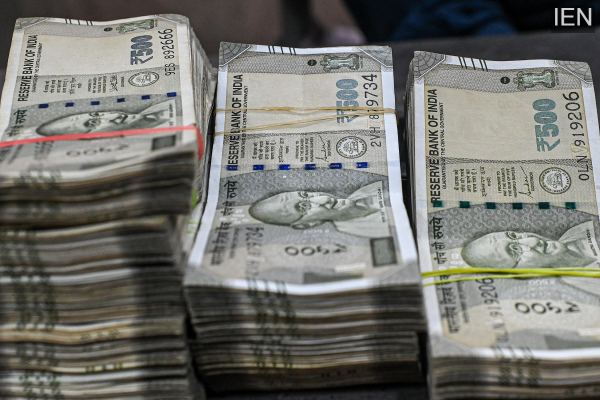
8th Pay Commission Updates: The existing formula is based on only 3 units (the employee, their spouse, and 2 children). Employee unions are demanding that this be expanded to 5 units. Consequently, salaries would also increase based on this revised standard.
8th Pay Commission: Employee unions have put forward several demands regarding the 8th Pay Commission. One of these is to increase the "Family Unit" size from 3 to 5. The objective behind this is to broaden the base upon which salary calculations are performed. This would result in an increase in both the minimum basic salary and various allowances.
In reality, for millions of Central Government employees, salary calculation remains based on a formula originally designed with a significantly smaller Indian family structure in mind. Now, employee associations are demanding that the 8th Pay Commission rewrite this formula. They argue that modern-day families can no longer sustain themselves based on assumptions made decades ago.
The Need for a Change in the Formula
Since the time of India's independence, a specific formula has been utilized to determine the minimum wage in the country. This formula assumes that an employee's family consists of three units: the employee themselves, their spouse, and two children. The government historically fixed the minimum wage based on the subsistence requirements (food and shelter) of these three individuals. However, employees now contend that in the present era, they also bear the responsibility of caring for their elderly parents; therefore, the formula must be amended to accommodate 5 units—Employee + Spouse = 1 Unit.
Parents = 2 Units (1 + 1)
Total = 5
Their argument is that if they are required to bear the expenses of five people, then salary calculations should logically be based on the requirements of five individuals.
What Will Be the Impact on Your Pocket?
If the government accepts the formula based on 5 units instead of the current 3, it could lead to a substantial surge in salaries. Minimum Salary—This could rise from the current ₹18,000 to a range of approximately ₹50,000 to ₹70,000.
Pension and Allowances—Naturally, if the basic salary increases, there will be a proportionate increase in DA, HRA, and pension as well.
Simply put, an increase in 'units' implies that the government will now acknowledge that an employee is responsible for supporting the expenses of five people—rather than the previous three—and, consequently, should receive higher remuneration.
-
Work From Home: If you are working from home, then setup your workstation in these ways, productivity will double.

-
Opposition raised questions on Prime Minister Modi’s appeal, Sharad Pawar demanded to call an all-party meeting, said – discussion on future policies is necessary
-
Ayurvedic Upay for Stress: This ancient knowledge of Patanjali can provide relief in corporate stress and hectic life.

-
Does your child also remain engrossed in his mobile for hours? Be careful! This small habit is making him mentally ill

-
Golden Child Syndrome: Parents’ mistakes can cost the child dearly! You are not making this mistake?