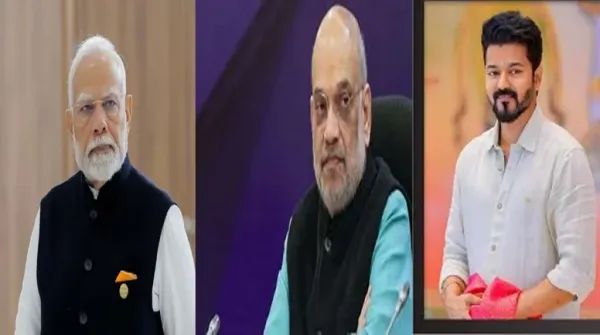
The high-voltage drama that has been going on in Tamil Nadu politics for the last few days has finally ended. All attempts to trample democracy failed and on May 10, the TVK government led by cine star Vijay was formed in Chennai. After Governor Rajendra Arlekar administered the oath to Vijay, many people who believe in the dignity of democracy have heaved a sigh of relief.
Public decision and majority mathematics
The election results on May 4 had made it clear that the people of Tamil Nadu now want change. Thalapathy Vijay’s party TVK, which contested for the first time in the 234-member assembly, got 108 seats. Although it was 10 seats short of the majority mark of 118, the mandate was clearly in Vijay’s favor. On the other hand, DMK, which has been in power for 10 years, was reduced to just 59 seats, while AIADMK got only 47 seats. The thing to note is that the total seats of these two big parties, which have been ruling alternately for the last 59 years, were not equal to that of TVK alone.
Raj Bhavan’s ‘condition’ and constitutional complications
Soon after the results came, 5 Congress MLAs supported Vijay, taking his tally to 113. Vijay met the Governor and staked claim to form the government, but Governor Rajendra Arlekar, trained in BJP politics, returned him empty handed. The Governor’s argument was that unless Vijay presented a letter with the signatures of 118 MLAs, he would not get a call from ‘Lok Bhavan’ (the new name of Raj Bhavan). This was when no other party had even claimed to form the government.
This condition of the Governor surprised legal experts. Even senior lawyer Mukul Rohatgi, considered close to the Modi government, termed it an ‘unauthorized attempt’. Experts believed that the Governor was deliberately creating an ‘artificial crisis’.
Parliamentary history and opinions of commissions
Formation of minority governments is not a new thing in the parliamentary history of India. Narasimha Rao government in 1991 and Atal Bihari Vajpayee’s 13-day government in 1996 are big examples of this. If Governor Arlekar’s condition had been applicable then, these governments would never have been formed.
The Sarkaria Commission (1988), Venkatachaliah Commission (2002) and Panchi Commission (2010) on Centre-State relations have given clear guidelines. According to them, if no one gets absolute majority, then the Governor should first give a chance to the pre-poll alliance and then to the largest party. The commissions have also made it clear that the majority should be tested on the floor of the House (Legislative Assembly) and not on the basis of personal satisfaction of the Governor in Raj Bhavan. Ultimately, the Raj Bhavan had to bow before constitutional pressure and a clear mandate and a new era of Thalapathy Vijay began in Tamil Nadu.
-
Concerns Rise Over NEET UG 2026 Paper Leak Amidst China's GaoKao Exam Security

-
UPSSSC Recruitment for Cane Supervisor: Over 1,100 Vacancies Announced

-
Amul Milk Prices Hiked from Today; Check New Rates

-
Latest Odisha Breaking News Updates | Thursday, 14 May 2026

-
UPSC CSE 2025 Answer Key Released: Key Details and Future Exam Dates