When videos showing Pakistani classical dancer Sheema Kermani being escorted away by policewomen in Karachi began circulating online this week, social media users across India and Pakistan quickly recognised a familiar face. For many, she was the graceful Bharatanatyam performer seen in the globally popular song Pasoori. For others, she has long been known as one of Pakistan’s most outspoken women’s rights activists.
According to Pakistani newspaper Dawn, Sheema Kermani was among seven Aurat March activists briefly detained by Sindh Police near the Karachi Press Club on Tuesday. The group had reportedly gathered for a scheduled press conference seeking a no-objection certificate (NOC) for an upcoming Aurat March event in Karachi. Sindh Home Minister Ziaul Hasan Lanjar later ordered their release.
The incident has once again pushed Kermani into public discussion, with many people searching online to know more about the veteran dancer and activist whose presence in Pasoori introduced her to a younger global audience.
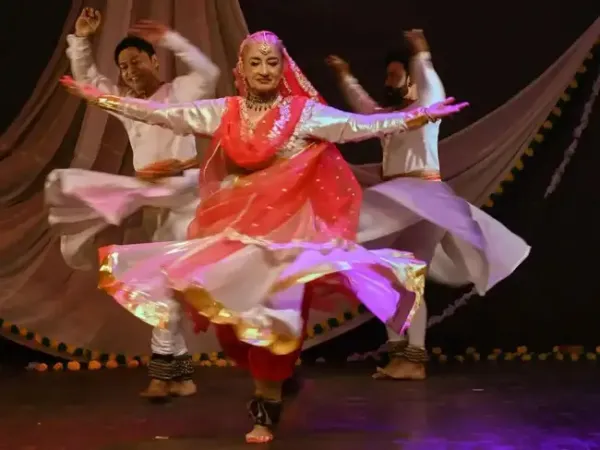
That performer was Sheema Kermani, a Pakistani classical dancer known for promoting Bharatanatyam in Pakistan despite conservative opposition to classical dance forms.
The song gained enormous popularity in India as well, especially because of its Punjabi lyrics and South Asian cultural elements. Kermani’s brief appearance in the video earned her renewed international attention and introduced her work to a younger audience unfamiliar with her decades-long career.
Her father served in the Pakistan Army and later became chairman of the Karachi Electric Supply Corporation. Reports about her background also mention that her paternal roots trace back to Lucknow in India and Kerman in Iran, while her maternal family belongs to Hyderabad Deccan.
Kermani reportedly developed an interest in Indian classical dance during school visits to India. She later pursued Bharatanatyam seriously and continued performing it throughout her career. She has been married to Pakistani theatre actor and writer Khalid Ahmed.
Over the decades, she became a prominent cultural figure in Karachi and beyond through stage performances, theatre work and activism linked to women’s rights and social awareness.
She also founded Tehrik-e-Niswan, known as the Women’s Movement Cultural Action Group. Since the late 1970s, the organisation has worked on theatre, educational awareness and women-centric cultural programmes in Pakistan.
Kermani openly identifies as a feminist and Marxist, and much of her public work has centred around women’s voices and representation in Pakistani society.
Even during that time, she continued teaching dance and organising performances despite resistance to classical art forms. Her supporters often describe her as someone who used art and theatre as tools of expression in a society where women frequently faced restrictions.
Now, years after becoming a recognisable face through Pasoori, Kermani is once again at the centre of public attention — this time because of the viral protest videos from Karachi that have triggered debate around women’s rights and freedom of expression in Pakistan.
According to Pakistani newspaper Dawn, Sheema Kermani was among seven Aurat March activists briefly detained by Sindh Police near the Karachi Press Club on Tuesday. The group had reportedly gathered for a scheduled press conference seeking a no-objection certificate (NOC) for an upcoming Aurat March event in Karachi. Sindh Home Minister Ziaul Hasan Lanjar later ordered their release.
The incident has once again pushed Kermani into public discussion, with many people searching online to know more about the veteran dancer and activist whose presence in Pasoori introduced her to a younger global audience.
Sheema Kermani: The face many recognised from ‘Pasoori’
When Pakistani singer Ali Sethi released Pasoori with Coke Studio Pakistan, the song became a massive hit across borders. Its music, lyrics and visual presentation drew attention worldwide. Along with the melody, viewers also noticed the traditional dance performance featured in the opening visuals.That performer was Sheema Kermani, a Pakistani classical dancer known for promoting Bharatanatyam in Pakistan despite conservative opposition to classical dance forms.
The song gained enormous popularity in India as well, especially because of its Punjabi lyrics and South Asian cultural elements. Kermani’s brief appearance in the video earned her renewed international attention and introduced her work to a younger audience unfamiliar with her decades-long career.
Who is Sheema Kermani?
Sheema Kermani was born on January 16, 1951, in Rawalpindi, Punjab, in Pakistan. Over the years, she built a reputation as a classical dancer, theatre artist and women’s rights campaigner.Her father served in the Pakistan Army and later became chairman of the Karachi Electric Supply Corporation. Reports about her background also mention that her paternal roots trace back to Lucknow in India and Kerman in Iran, while her maternal family belongs to Hyderabad Deccan.
Kermani reportedly developed an interest in Indian classical dance during school visits to India. She later pursued Bharatanatyam seriously and continued performing it throughout her career. She has been married to Pakistani theatre actor and writer Khalid Ahmed.
Sheema Kermani kept classical dance alive in Pakistan
Kermani is often credited with keeping Bharatanatyam visible in Pakistan at a time when classical dance forms faced criticism from conservative groups.Over the decades, she became a prominent cultural figure in Karachi and beyond through stage performances, theatre work and activism linked to women’s rights and social awareness.
She also founded Tehrik-e-Niswan, known as the Women’s Movement Cultural Action Group. Since the late 1970s, the organisation has worked on theatre, educational awareness and women-centric cultural programmes in Pakistan.
Kermani openly identifies as a feminist and Marxist, and much of her public work has centred around women’s voices and representation in Pakistani society.
Sheema Kermani's activism during military rule
Kermani’s work became especially significant during the rule of General Zia-ul-Haq, a period marked by strict religious and cultural restrictions in Pakistan.Even during that time, she continued teaching dance and organising performances despite resistance to classical art forms. Her supporters often describe her as someone who used art and theatre as tools of expression in a society where women frequently faced restrictions.
Now, years after becoming a recognisable face through Pasoori, Kermani is once again at the centre of public attention — this time because of the viral protest videos from Karachi that have triggered debate around women’s rights and freedom of expression in Pakistan.