
Dhan’s Latest Acquisition
Raise Financial Services, the parent entity of investment tech platform Dhan, is widening its fintech playbook again. The fintech unicorn has now moved into the insurtech space with the acquisition of insurance broker Greenlife Insurance for an undisclosed amount.
Insurance In The Mix: The cash and stock deal will pave the way for the unicorn to enter the insurance distribution segment. It will also invest $15 Mn in GIBL to build a direct consumer insurance business, scale hybrid distribution and roll out advisory-driven support to target metros and other smaller markets. As part of the deal, GIBL’s 25-member team will join Raise and relocate their operations to Mumbai.
Why Insurance? This is the next logical bridge for Raise Financial to become a full-stack fintech player because it sits at the intersection of financial planning and recurring user trust. GIBL brings offline reach spanning 50 cities and towns in East and Northeast India, and a long list of B2B clientele. By combining its product engineering and digital scale in the mix, Raise is looking to move beyond active traders into everyday financial decision-making.
A Move Beyond Brokerage: GIBL is not a one-off expansion for Raise. The unicorn has spent the last few years building layers around its stock broking platform Dhan, from APIs and algorithmic tools to content and AI-led research. With acquisitions like Upsurge, Filter Coffee, FuzzAI, Artham, Stratzy and now GIBL, Raise is trying to own the entire investor lifecycle — discovery, analysis, execution and automation.
The Complexity Risk: This aggressive expansion, however, raises the risk of overbuilding. Each layer in Raise’s stack serves a different user need that may eat into its budgets and resources. Each acquisition also brings its own legacy infrastructure, distinct development cycles and unique regulatory burdens, which may create a cluttered bundle of features that could be harder to scale. So, can Raise Financial crack the insurtech code with the GIBL acquisition? Let’s find out…
From The Editor’s Desk
![🛍]() India’s Biggest D2C Hub
India’s Biggest D2C Hub
- Delhi NCR has emerged as India’s leading D2C startup hub, bagging over $3.5 Bn in funding across 434 deals between 2015 and Q1 2026. Bengaluru grabbed the second spot on the funding ladder with $3.4 Bn, followed by Mumbai with $2 Bn.
- As per Inc42 Datalabs’ D2C 3.0 Report 2026, the broader Indian ecommerce market is projected to add $285 Bn in GMV between 2026 and 2031, with D2C brands expected to capture nearly 86% of this value, or $245 Bn.
- Going forward, the spotlight will be on India’s 377 Mn Gen Z consumers, which are expected to influence nearly $2 Tn Bn in consumption by 2035. This is expected to drive demand for convenience, premiumisation, and digital-first brands.
Zaggle’s Profitable Q4 Show
- The fintech SaaS company reported a 30.4% YoY increase in its consolidated net profit to ₹40.6 Cr in Q4 FY26, while revenue from operations rose 49.9% YoY to ₹617.9 Cr.
- Meanwhile, total expenses rose 49.6% YoY to ₹573.7 Cr in Q4 FY26. At the operating level, adjusted EBITDA rose 62.4% YoY to ₹60.5 Cr, while EBITDA margin improved to 9.8% in the quarter under review.
- For FY27, Zaggle projected a standalone revenue growth of 25-30% and consolidated revenue growth of about 40%, driven by AI, international expansion, and deeper monetisation across its ecosystem.
Uber India’s Data Centre Play
- The ride-hailing giant is setting up its first data centre in the country in partnership with Adani Group. The facility, which will be utilised to test and deploy Uber’s tech, is expected to be operational later this year.
- This follows Uber CEO Dara Khosrowshahi meeting FM Nirmala Sitharaman to discuss the ride-hailing platform’s long-term roadmap in the country. Post the meeting, he claimed that the number of earners on Uber India have quadrupled since 2022.
- This comes as a slew of global and local titans are ramping up investments in India’s AI and data centre ecosystem. OpenAI plans to set up a 1 GW data centre with TCS, while Reliance is building data centres in Jamnagar and Visakhapatnam.
Zoho Pumps ₹70 Cr In ONDC
- The SaaS major has invested about $7.3 Mn in the Open Network for Digital Commerce (ONDC). With the latest infusion, the state-backed network plans to scale digital commerce adoption among MSMEs.
- Launched in 2021, ONDC operates an open decentralised network that allows buyers to connect with any seller, regardless of the app they use. It counts Kotak Mahindra Bank, Axis Bank, SIDBI, ICICI Bank and Quality Council of India as backers.
- Currently operational in 616 cities, ONDC claims to have facilitated 21.8 Cr transactions in FY26. It also claims to have so far onboarded more than 7.64 Lakh sellers and service providers.
![🧾]() Flipkart’s GST Woes
Flipkart’s GST Woes
- The Walmart-owned ecommerce major suffered a major setback after the West Bengal Appellate Authority for Advance Ruling struck down the company’s proposed structure that sought GST exemption on delivery charges collected from customers.
- The ecommerce major argued that no GST is applicable as GTA services provided to unregistered individuals are exempt from GST under existing rules.However, WBAAAR termed the arrangement a “mere legal fiction”.
- The ruling is expected to have wider implications for ecommerce and quick commerce platforms that have been exploring similar tax exemption arrangements. If not overruled, players in the sector could face 18% GST on delivery charges.
Inc42 Markets
Inc42 Startup Spotlight
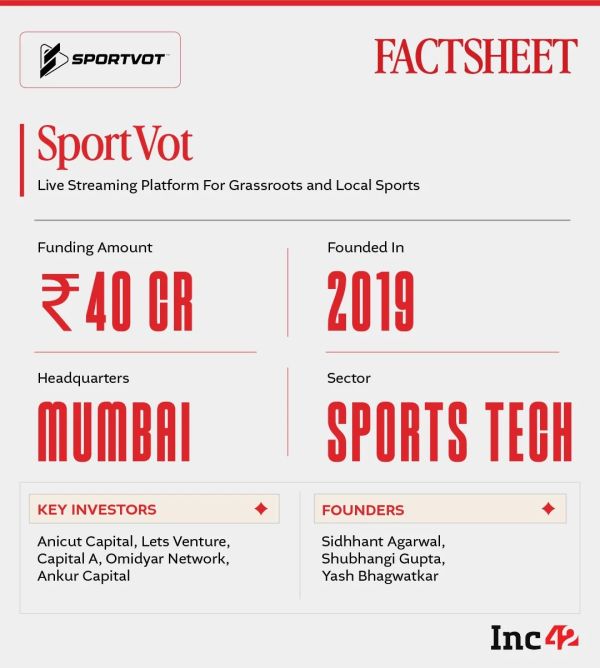
Can SportVot Streamline Amateur Sports Streaming?
India’s sports boom masks a painful gap. While elite tournaments command huge sums, local fixtures lack affordable, pro-grade broadcasting. This limits talent discovery and monetisation. SportVot is trying to solve this with its OTT stack.
Democratising Hyper-Local Coverage: Founded in 2019, SportVot has developed a white-label OTT solution to enable professional-grade broadcasting for grassroots sports events in India and overseas. It provides end-to-end video capture solutions, and automated production and streaming tools to ensure streaming of small events looks and feels professional.
Modular Production Stack: Customers can either choose to stream the tournament on their own smartphones, or rent automated cameras that automatically track the on-field action. It also sells packages that can help organisers layer graphics, scoreboards, remote commentary and sponsor integration during the stream.
A Monetisation Avenue: The platform enables organisers to monetise via sponsorships, ads, pay-per-view or platform distribution. SportVot’s major customers include Reliance Foundation Youth Sports, South Africa-based SuperSport Schools and other sports tournament organisers. It also caters to customers in Portugal, Israel and the US.
A Steady Revenue Track: SportVot claims to have streamed 1 Lakh matches across 35 sports in FY26. On the back of this, the startup clocked ₹19 Cr in revenue last fiscal and is looking to at least double its top line in FY27. Going forward, it also plans to further grow its scale and improve automation. So, can SportVot elevate grassroots sports into profitable shows?
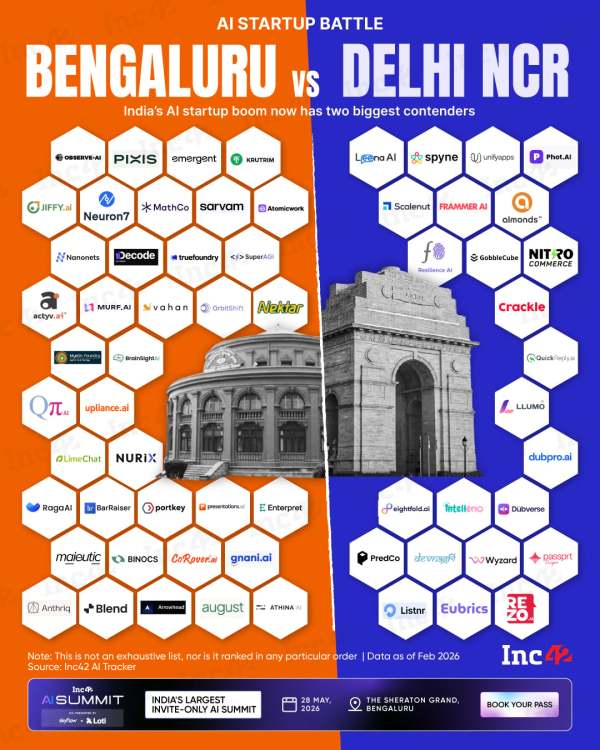
Infographic Of The Day
India’s AI race now has two power centres. While Bengaluru is building the infrastructure, Delhi NCR is scaling the distribution. So, which ecosystem will win India’s AI decade?
-
WATCH: Child Allegedly Forced To Face Senior Bowlers Amid Vaibhav Sooryavanshi Hype

-
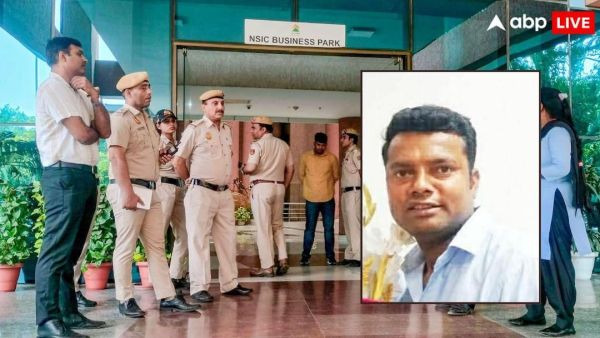
NEET Paper Leak Row: Dinesh Bival Never Held Any Official Party Post, BJP Clarifies Stand
-
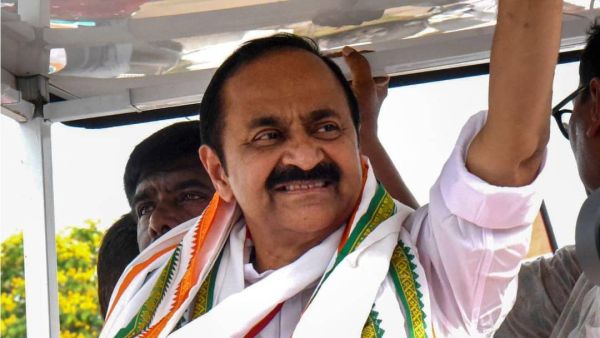
Who Is VD Satheesan? Grassroots Congress Leader Set To Become Kerala’s Next Chief Minister
-
Mother Dairy, Amul hike milk prices: How much will buffalo milk, cow milk, toned and other variants cost you now

-
Why are gold and silver prices down today, and will precious metals decline or rise again in near future? Full market explainer on precious metals outlook