India’s beauty industry is quietly scripting what could become the next major global skincare movement. After K-beauty reshaped routines with sheet masks and glass skin, and J-beauty won fans with minimalist rituals, a new contender is gathering pace - I-beauty.
According to Fitch unit BMI, Indian beauty is moving from niche appeal to broader global relevance, helped by rising exports, growing international exposure and a wave of acquisitions by some of the world’s biggest consumer companies. The research firm says the trend is likely to become an important personal care offering across global markets between 2026 and 2030.
Also Read | GRWM: Kids’ cosmetics brands vie to ‘catch them young’
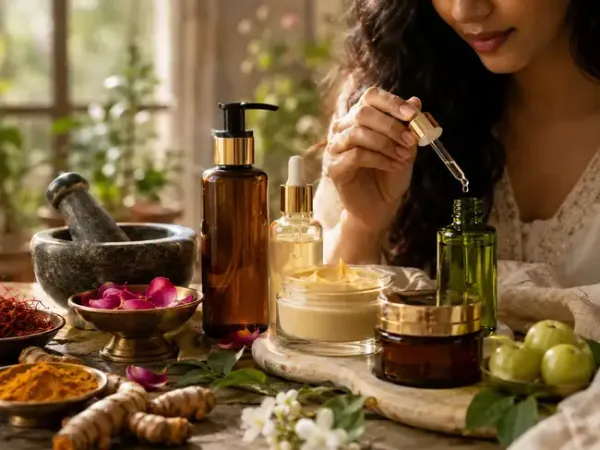
What makes I-beauty different is the combination of Ayurvedic heritage and modern science. Indian brands are increasingly blending ingredients such as turmeric, saffron and neem with active skincare ingredients like vitamin C and hyaluronic acid, while also tapping into fast-growing demand for clean beauty, wellness-led products and dermocosmetics.
Yet BMI says the path will not be easy. Global beauty shelves are already crowded, K-beauty remains deeply entrenched, and consumers are overwhelmed by choice.
The strongest sign of momentum may be coming from dealmaking activity.
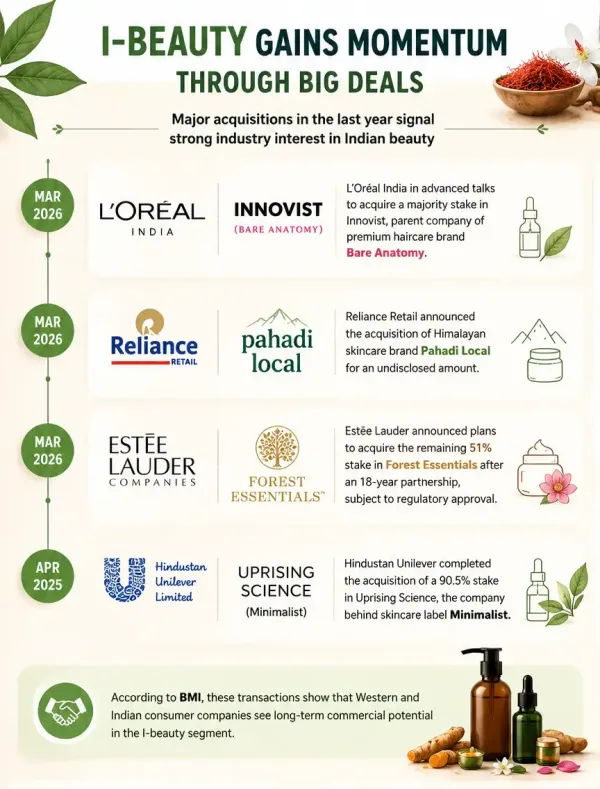
In March 2026, L’Oréal India was reportedly in advanced talks to acquire a majority stake in Innovist, the parent company of premium haircare brand Bare Anatomy, according to BMI. The same month, Reliance Retail announced the acquisition of Himalayan skincare brand Pahadi Local for an undisclosed amount.
Estée Lauder also announced plans to acquire the remaining 51% stake in Forest Essentials after an 18-year partnership, subject to regulatory approval. Earlier, in April 2025, Hindustan Unilever completed the acquisition of a 90.5% stake in Uprising Science, the company behind skincare label Minimalist.
BMI says these transactions show that Western and Indian consumer companies see long-term commercial potential in the segment.
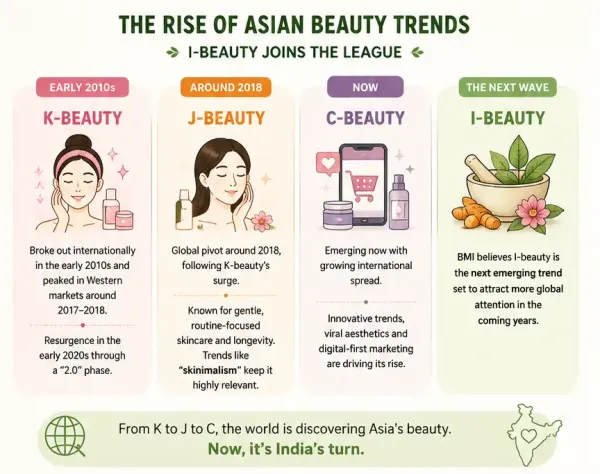
The research firm traces a broader pattern across Asian beauty trends. K-beauty first broke out internationally in the early 2010s and peaked in Western markets around 2017 and 2018 before entering a renewed “2.0” phase in the early 2020s. J-beauty followed around 2018, gaining recognition for gentle skincare routines and longevity-focused products. C-beauty is now expanding internationally through digital-first marketing and viral aesthetics.
BMI believes I-beauty is now joining that list.
“Along with C-beauty, which is already expanding beyond Asia and into towards Western markets, we identify I-beauty as a niche, but emerging trend set that is also on route to attracting more global attention over the coming years,” the report said.
Also Read | Chanel for Chandigarh, Mango for Mangaluru: India’s luxury map shifts beyond metros
The appeal of Indian beauty products lies partly in how they align with current consumer preferences.
Clean ingredient lists, natural formulations and transparency have become increasingly important for skincare buyers globally. Indian brands have leaned into this shift by combining traditional Ayurvedic formulations with scientific validation.
BMI says many Indian personal care brands position themselves around eco-friendly, sustainable and cruelty-free production practices, helping them stand out among consumers focused on ethical consumption.
But Indian beauty is also moving beyond purely natural positioning.
The report says brands are increasingly entering the “dermocosmetics” category, where products are marketed with scientifically backed formulations and efficacy claims. That places them in more direct competition with Western names such as Rhode and L’Oréal, which are also investing heavily in science-led skincare.
An interactive element of this trend can already be seen in product innovation. Many Indian brands are creating climate-responsive products designed to help consumers deal with humidity, pollution, heat and sun exposure, issues especially relevant in tropical markets.
Another fast-growing category is skincare-led makeup, where cosmetics double up as treatment products.
Forest Essentials offers skin tints, highlighters, concealers and blushes infused with Ayurvedic ingredients including saffron and cow’s ghee. Kay Beauty sells liquid foundations and concealers containing chamomile and marula oil. Just Herbs has become known for skincare-makeup hybrids such as Ayurvedic lipsticks and foundations, while Fae Beauty incorporates active skincare ingredients into products such as its Peptide Glaws gloss and Lush blush.
BMI says such innovation is helping Indian brands differentiate themselves from mainstream Western beauty labels, which often rely on more conventional ingredient profiles.
Pricing is another advantage.
BMI says most Indian beauty brands sit in the affordable luxury segment, offering premium-feeling products at accessible prices. That positioning may prove particularly effective at a time when consumers remain cautious with spending after the pandemic years.
The report links this to the so-called “lipstick effect”, where consumers cut back on larger discretionary purchases but continue spending on smaller indulgences such as beauty products.
This creates an opening for Indian brands offering science-backed skincare and cosmetics at relatively affordable price points.
At the same time, brands are using digitally enabled tools, personalised skincare approaches and transparency-led marketing to strengthen engagement with younger consumers.
Social media could become another powerful driver. BMI says platforms are likely to play an important role in helping younger Western consumers discover India-linked beauty products, much like they did with K-beauty and C-beauty.
Trade data also points to growing international interest.
According to BMI, India’s personal care exports reached USD1.2 billion in 2025, doubling from USD600 million in 2015.
Cosmetics and skincare have emerged as the country’s largest personal care export category. Exports in this segment climbed to USD768 million in 2025 from USD149 million in 2015.
The US remains the biggest Western market for Indian personal care products. India exported USD183.5 million worth of such products to the US in 2025, compared with USD75.6 million a decade earlier, BMI noted. Exports to the European Union also rose sharply, reaching USD118.7 million in 2025 from USD41.8 million in 2015.
BMI says the recently announced free trade agreement between India and the EU could strengthen that trajectory further over time.
Still, the research firm cautions that the export data does not entirely reflect Indian-owned brands alone. Some shipments include products manufactured in India for multinational companies, private-label brands or contract manufacturing arrangements.
Even so, BMI says stronger exports into Western markets show India’s growing relevance in global beauty supply chains. Over time, wider use of Indian-origin ingredients and formulations by international brands could further familiarise consumers with I-beauty concepts.
Despite the optimism, BMI says the beauty industry’s saturation remains a major obstacle.
K-beauty brands already have widespread international distribution and strong consumer recognition, making it difficult for newer trends to break through quickly.
Competition is also intensifying from fast-growing newer labels such as Byoma, Nakery Beauty and Rhode, alongside legacy players including L’Oréal, Lancôme and Estée Lauder.
The sheer number of brands is also leading to decision fatigue among consumers. BMI says many shoppers now stick to familiar skincare and makeup products instead of experimenting with new labels because the market has become too crowded.
That could slow the international expansion of Indian beauty brands in the near term.
According to Fitch unit BMI, Indian beauty is moving from niche appeal to broader global relevance, helped by rising exports, growing international exposure and a wave of acquisitions by some of the world’s biggest consumer companies. The research firm says the trend is likely to become an important personal care offering across global markets between 2026 and 2030.
Also Read | GRWM: Kids’ cosmetics brands vie to ‘catch them young’
What makes I-beauty different is the combination of Ayurvedic heritage and modern science. Indian brands are increasingly blending ingredients such as turmeric, saffron and neem with active skincare ingredients like vitamin C and hyaluronic acid, while also tapping into fast-growing demand for clean beauty, wellness-led products and dermocosmetics.
Yet BMI says the path will not be easy. Global beauty shelves are already crowded, K-beauty remains deeply entrenched, and consumers are overwhelmed by choice.
Global beauty giants are circling Indian brands
The strongest sign of momentum may be coming from dealmaking activity.
In March 2026, L’Oréal India was reportedly in advanced talks to acquire a majority stake in Innovist, the parent company of premium haircare brand Bare Anatomy, according to BMI. The same month, Reliance Retail announced the acquisition of Himalayan skincare brand Pahadi Local for an undisclosed amount.
Estée Lauder also announced plans to acquire the remaining 51% stake in Forest Essentials after an 18-year partnership, subject to regulatory approval. Earlier, in April 2025, Hindustan Unilever completed the acquisition of a 90.5% stake in Uprising Science, the company behind skincare label Minimalist.
BMI says these transactions show that Western and Indian consumer companies see long-term commercial potential in the segment.
The research firm traces a broader pattern across Asian beauty trends. K-beauty first broke out internationally in the early 2010s and peaked in Western markets around 2017 and 2018 before entering a renewed “2.0” phase in the early 2020s. J-beauty followed around 2018, gaining recognition for gentle skincare routines and longevity-focused products. C-beauty is now expanding internationally through digital-first marketing and viral aesthetics.
BMI believes I-beauty is now joining that list.
“Along with C-beauty, which is already expanding beyond Asia and into towards Western markets, we identify I-beauty as a niche, but emerging trend set that is also on route to attracting more global attention over the coming years,” the report said.
Also Read | Chanel for Chandigarh, Mango for Mangaluru: India’s luxury map shifts beyond metros
Ayurveda meets dermocosmetics
The appeal of Indian beauty products lies partly in how they align with current consumer preferences.
Clean ingredient lists, natural formulations and transparency have become increasingly important for skincare buyers globally. Indian brands have leaned into this shift by combining traditional Ayurvedic formulations with scientific validation.
BMI says many Indian personal care brands position themselves around eco-friendly, sustainable and cruelty-free production practices, helping them stand out among consumers focused on ethical consumption.
But Indian beauty is also moving beyond purely natural positioning.
The report says brands are increasingly entering the “dermocosmetics” category, where products are marketed with scientifically backed formulations and efficacy claims. That places them in more direct competition with Western names such as Rhode and L’Oréal, which are also investing heavily in science-led skincare.
An interactive element of this trend can already be seen in product innovation. Many Indian brands are creating climate-responsive products designed to help consumers deal with humidity, pollution, heat and sun exposure, issues especially relevant in tropical markets.
Another fast-growing category is skincare-led makeup, where cosmetics double up as treatment products.
Forest Essentials offers skin tints, highlighters, concealers and blushes infused with Ayurvedic ingredients including saffron and cow’s ghee. Kay Beauty sells liquid foundations and concealers containing chamomile and marula oil. Just Herbs has become known for skincare-makeup hybrids such as Ayurvedic lipsticks and foundations, while Fae Beauty incorporates active skincare ingredients into products such as its Peptide Glaws gloss and Lush blush.
BMI says such innovation is helping Indian brands differentiate themselves from mainstream Western beauty labels, which often rely on more conventional ingredient profiles.
Affordable luxury is becoming a sweet spot
Pricing is another advantage.
BMI says most Indian beauty brands sit in the affordable luxury segment, offering premium-feeling products at accessible prices. That positioning may prove particularly effective at a time when consumers remain cautious with spending after the pandemic years.
The report links this to the so-called “lipstick effect”, where consumers cut back on larger discretionary purchases but continue spending on smaller indulgences such as beauty products.
This creates an opening for Indian brands offering science-backed skincare and cosmetics at relatively affordable price points.
At the same time, brands are using digitally enabled tools, personalised skincare approaches and transparency-led marketing to strengthen engagement with younger consumers.
Social media could become another powerful driver. BMI says platforms are likely to play an important role in helping younger Western consumers discover India-linked beauty products, much like they did with K-beauty and C-beauty.
Exports are rising sharply
Trade data also points to growing international interest.
According to BMI, India’s personal care exports reached USD1.2 billion in 2025, doubling from USD600 million in 2015.
Cosmetics and skincare have emerged as the country’s largest personal care export category. Exports in this segment climbed to USD768 million in 2025 from USD149 million in 2015.
The US remains the biggest Western market for Indian personal care products. India exported USD183.5 million worth of such products to the US in 2025, compared with USD75.6 million a decade earlier, BMI noted. Exports to the European Union also rose sharply, reaching USD118.7 million in 2025 from USD41.8 million in 2015.
BMI says the recently announced free trade agreement between India and the EU could strengthen that trajectory further over time.
Still, the research firm cautions that the export data does not entirely reflect Indian-owned brands alone. Some shipments include products manufactured in India for multinational companies, private-label brands or contract manufacturing arrangements.
Even so, BMI says stronger exports into Western markets show India’s growing relevance in global beauty supply chains. Over time, wider use of Indian-origin ingredients and formulations by international brands could further familiarise consumers with I-beauty concepts.
Crowded shelves may slow the rise
Despite the optimism, BMI says the beauty industry’s saturation remains a major obstacle.
K-beauty brands already have widespread international distribution and strong consumer recognition, making it difficult for newer trends to break through quickly.
Competition is also intensifying from fast-growing newer labels such as Byoma, Nakery Beauty and Rhode, alongside legacy players including L’Oréal, Lancôme and Estée Lauder.
The sheer number of brands is also leading to decision fatigue among consumers. BMI says many shoppers now stick to familiar skincare and makeup products instead of experimenting with new labels because the market has become too crowded.
That could slow the international expansion of Indian beauty brands in the near term.