
Listen to this article in summarized format
Loading...
××
Subscribe to

Unlock AI Briefing and Premium Content
New Year Offer 24 Hours Left
Subscribe NowAlready a member? Sign In
What's Included
- Exclusive Stories
- Daily ePaper Access
- Smart Market Tools
- Curated Investment Ideas
- Ad-lite Experience
Subscription

Gin as a drink is not so popular in India as beer and whiskey. However, home-grown distillery Nao Spirits & Beverages is among the few attempting to bring about a craft gin revolution in India. The task is anything but easy, given the wide variation in guidelines across states.
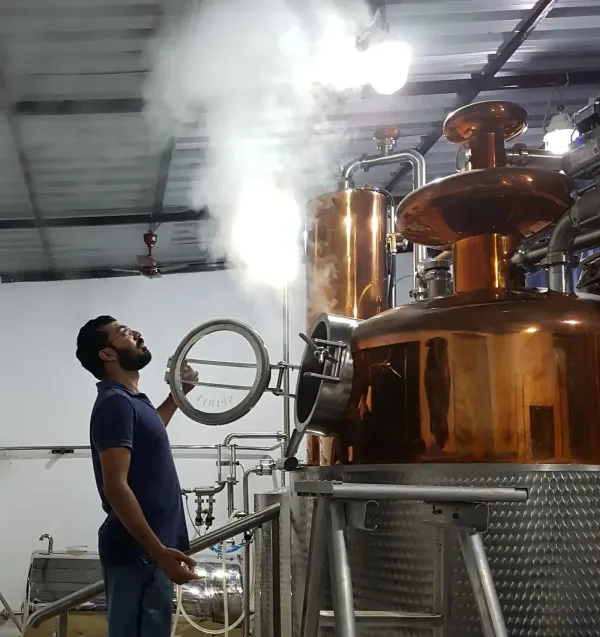
Anand Virmani, Co-Founder & Master Distiller, Nao Spirits & Beverages, says that a bottle of Greater Than (one of their top gin brands) destined for Karnataka must often be produced and labelled differently from one sold in Maharashtra. As each state operates as a separate market with different excise rules, label requirements, and SKUs, domestic distribution becomes highly complicated.
“That creates a very specific operational challenge: we don’t produce without a confirmed order. If Karnataka is going to pick up 100 cases, we will make 100 cases. We can’t afford to produce a thousand and hope they move, because the volatility of state-level demand doesn't allow for that kind of speculation. Globally, it’s actually much simpler because one label travels everywhere,” Virmani contends. “International distribution is actually more straightforward compared to India; one label travels everywhere.”
Gin holds a small yet defined and growing niche within India’s spirits market, which is primarily dominated by whisky, rum, and brandy. Both local and international brands are competing for consumers. According to experts, rising “Indian-ness” sentiment among consumers is benefiting premium domestic spirits, particularly higher-end white spirits. The shift in consumer preference toward premium, locally inspired spirits created an ideal environment for Indian craft gin brands to emerge and thrive.
Made in India
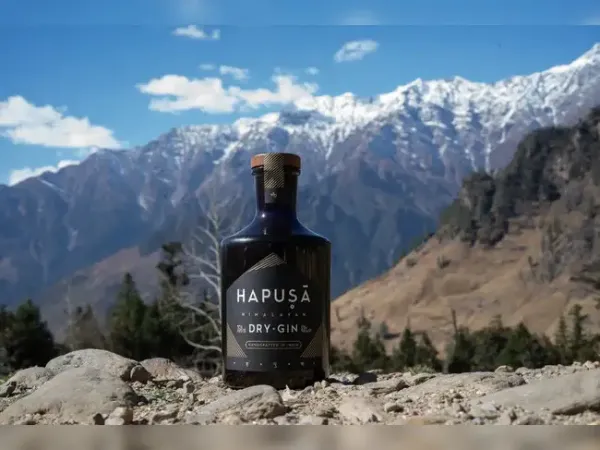
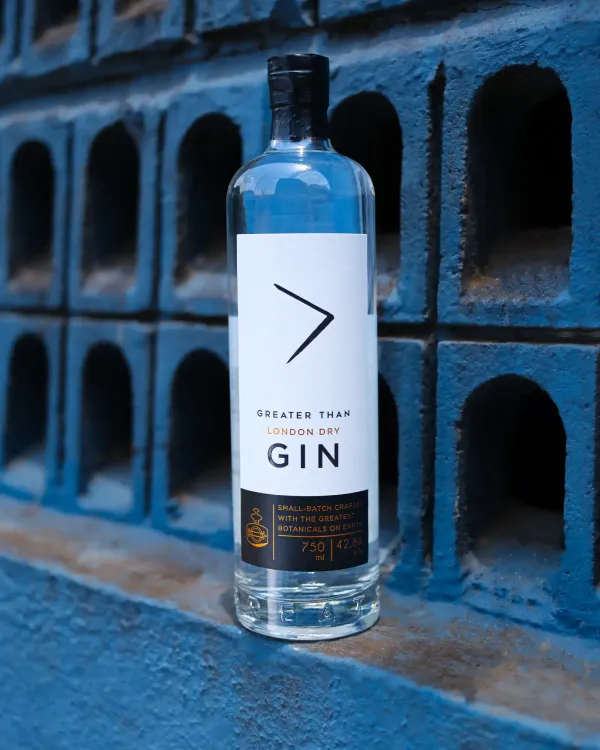
India got its first craft gin Greater Than in 2017, launched by Anand Virmani, Aparajita Ninan and Vaibhav Singh of Nao Spirits & Beverages. It is a classic London Dry made with unique botanicals like lemongrass, coriander seed, ginger, and orange peel. Over time, it became Nao Spirits best-selling gin. Apart from Greater Than, the founder also launched another flagship gin Hapusa to make Indian gin a spirit of choice across domestic and foreign shores.
Virmani recalls they sold only 653 cases in the first year of launch, amounting to around 8,000 bottles. “At the time, there was no Indian craft gin to speak of, so every sale was essentially building the category from scratch. Since then, we have sold approximately 359,700 cases in total, which is around 4.3 million bottles,” he says.
Indian craft gin was made specifically for bartenders so that it was versatile enough to work in anything—from a Gin & Tonic to a Negroni, points out Virmani. Today the brand is in markets all over India as well as internationally, and it boasts 85 international accolades to its credit. Hapusa, which made its foray in 2018, was positioned as the world’s first Himalayan Dry Gin, bottling the spirit of the mountains with a premium, sipping gin.
 According to Virmani, gin is far from being a niche spirit category, and the numbers tell the real story. At around 2.2 million cases, he says, it is a solid second behind vodka, which sits at roughly 14 million cases. “Tequila gets a lot of the glamour right now, but it’s actually at about 160,000 cases, which is tiny in comparison. So, gin is far from niche.”
“What makes it interesting isn’t just the volume; it’s who is buying it and how,” he says. “Premium gin has been growing in double digits, which tells you consumers aren't just picking it up because it's cheap or available. They are seeking it out. That is a different kind of momentum,” he emphasises.
Today, some of the Indian craft gins available in the market include Stranger & Sons from Third Eye Distillery, Jaisalmer from Radico Khaitan, Samsara produced by Spaceman Spirits, and Cherrapunji Eastern Craft Gin produced by Raincheck Earth Co.
Bar takeover
In June 2025, Diageo India (United Spirits Ltd) acquired a majority stake in Nao Spirits & Beverages for Rs 130 crore. “This isn’t the end of a journey, but the beginning of a new chapter, powered by the same people, the same purpose, and the same belief—that modern Indian spirits deserve their place on the world stage,” Virmani had said in a statement.
 Currently the key markets for Nao Spirits include the UK, Italy, Singapore, Thailand, and Nepal, amongst a total list of 15 countries. Their export revenue contribution is 8-12% while overall market share in India is 20-22%.
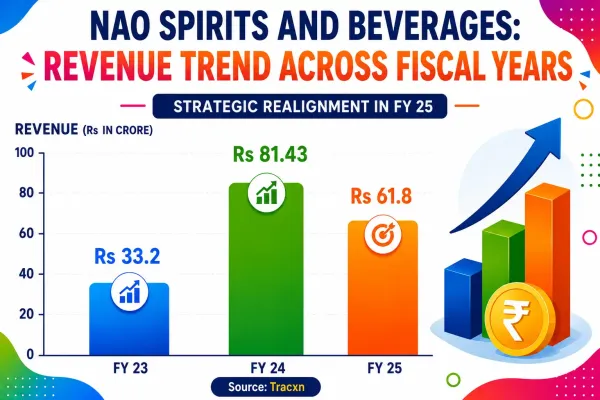
In FY24, the company’s revenue grew to Rs 81.43 crore from Rs 33.2 crore in FY23, as per data from Tracxn. However, its revenue dropped to Rs 61.8 crore in FY 25. Virmani attributes the decline to a deliberate reset for the company.
“Nao Spirits has grown at an average of 30% year-on-year since inception. FY25-26 was an exception; the Diageo acquisition and integration meant we didn’t have a full business year to deliver, and that reflects in the numbers. Scaling meaningfully takes groundwork: ensuring every single custodian understands the ethos of the brand and, equally, that the brand understands and appreciates what real scale and efficiency look like. That mutual understanding takes time to build, and we are lucky to be doing it on solid footing with the Diageo leadership,” he says.
The focus currently, he says, is to keep steering in the same direction of building Indian craft brands that stand for something specific. “We are not interested in chasing volume for its own sake. The Diageo partnership has given us the infrastructure to grow faster and reach further than we could on our own, and we are using that thoughtfully,” he adds.
The botanical story
Industry experts say gin will continue to grow as a category since many investments are being made in new brands out of India. As per the International Wine and Spirit Record (IWSR), premium-and-above gin volume in India, which grew more than 8% in 2023, is projected to expand at a CAGR of over 5% during 2023-28.
While the long-term outlook for gin remains positive, shifting trends in consumer experimentation are reshaping the competitive landscape. “The flip side of experimentation is that people move to other categories quickly enough. If you see gin now, for example, there is a tequila wave currently. So, when another category grows, people move out of an earlier category; that is what gin is going through at present. Gin is more like a category which will scale over a period of time irrespective of the tactical challenges at play. It has some inherent advantages when it comes to Gen Z consumption; it lends itself to cocktail mixing and is a lot less massified in a sense,” explains Anand Ramanathan, Partner, Consumer Industry Leader, Deloitte South Asia.
In fact, if one talks of ingredients, gin is one of the few global spirits where botanicals, especially spices, play a central role. Even though such aspects make India an ideal origin for gin-making, this potential was untapped until recently.
Virmani claims India has an extraordinary range of botanicals that have no equivalent anywhere else, such as Himalayan juniper, Gondhoraj lime, and spices that have been used in Indian kitchens and medicine for centuries. “Once bartenders and consumers signalled they were open to something beyond the familiar, distillers ran with it. Internationally, this provenance has become the whole point. Global consumers have grown tired of gins that taste like slight variations of each other. A gin built around a foraged Himalayan botanical or a Bengali lime can’t be replicated. You can’t make it somewhere else and call it the same thing. That is a much stronger position than just being another well-made gin,” he says.
But there is a catch. Classic botanicals like juniper berry and orange peel are more reliably sourced outside India than within it. Virmani gives the example of Nagpur Orange to illustrate his point. “It’s a spectacular ingredient, and one we have wanted to use for a long time. But the drying process for the peel isn’t consistent enough in India yet, and the supply isn’t reliable at the scale we would need. So, we are still using Spanish orange peel instead. That is not a compromise we love, but it’s an honest one,” he says, candid in his admission.
Hard to replicate
The entrepreneur adds that the infrastructure for processing and consistently supplying dried botanicals in India simply hasn’t caught up with the ambition of the craft spirits movement yet. “Until it does, distillers will continue to navigate this case by case—using what’s available and consistent and waiting on the rest,” he says.
Virmani believes that the botanical story still has much to offer. As per IWSR, gin volumes hit approximately 107 million cases in 2024, up 2% year on year, with value rising 3% to around $14 billion, which is 29% above 2019 levels. “I think the next chapter is specificity, not just “Indian botanicals” as a broad claim, but very particular ingredients from very particular places, with the geography and the story to back it up. That is where Indian gin gets genuinely hard to replicate. Emerging markets like India are being identified as the key engines of future growth. The craft movement here has earned genuine credibility,” he rationalises.
What such credibility is also doing is changing assumptions about Indian gin being an ‘underdog’ to imported labels. “The craft & premium end segment is where the real comparison with imports sits, and at that level, Indian gin is holding its own completely. The gap in perception is much wider than the gap in reality. Indian gin doesn’t need to prove itself anymore; that conversation has largely been settled,” Virmani adds.
Deloitte’s Ramanathan says brands can now invest more in brand building to convert more people to consume gin. “Some or the other trend will keep coming, but if they are large enough as brands, all such changes can be absorbed. Companies have spent so much effort in widening the category. So, the real aspect now is to further invest in branding and availability to grow gin into a different league,” he says.
Enter Gen Z
Incidentally, a lot of interesting consumption trends are happening on the domestic front. The rise of gin-centric bars and at-home mixology is contributing to gin being seen as a preferred spirit category for different age groups. While Gin & Tonic and Negroni have been firmly established as popular cocktails, Virmani states that a move away from sweetness is now being seen. “The dirty martini is having a moment; it’s one of the most ordered gin cocktails right now. Not sweet, more umami, salty, and briny. On the same note, the martini highball is gaining ground: a lighter, more refreshing take on the martini. And the gin sonic—gin with both soda and tonic—is growing as people look to cut sugar,” he reveals.
Virmani states that India is the only market where consumer sentiment, recalled volume and recalled spend are all in positive territory, with urban Gen Z closely following affluent Millennials in both consumption and experimentation. “The thread running through all of this is that consumers are getting more precise about what they want – they are ordering a specific gin, a specific way. That is a good problem to have,” he sums up.
Anand Virmani, Co-Founder & Master Distiller, Nao Spirits & Beverages, says that a bottle of Greater Than (one of their top gin brands) destined for Karnataka must often be produced and labelled differently from one sold in Maharashtra. As each state operates as a separate market with different excise rules, label requirements, and SKUs, domestic distribution becomes highly complicated.
“That creates a very specific operational challenge: we don’t produce without a confirmed order. If Karnataka is going to pick up 100 cases, we will make 100 cases. We can’t afford to produce a thousand and hope they move, because the volatility of state-level demand doesn't allow for that kind of speculation. Globally, it’s actually much simpler because one label travels everywhere,” Virmani contends. “International distribution is actually more straightforward compared to India; one label travels everywhere.”
Anand Virmani, Co-Founder & Master Distiller, Nao Spirits & Beverages, says that a bottle of Greater Than destined for Karnataka must often be produced and labelled differently from the one sold in Maharashtra.
Gin holds a small yet defined and growing niche within India’s spirits market, which is primarily dominated by whisky, rum, and brandy. Both local and international brands are competing for consumers. According to experts, rising “Indian-ness” sentiment among consumers is benefiting premium domestic spirits, particularly higher-end white spirits. The shift in consumer preference toward premium, locally inspired spirits created an ideal environment for Indian craft gin brands to emerge and thrive.
Made in India
India got its first craft gin Greater Than in 2017, launched by Anand Virmani, Aparajita Ninan and Vaibhav Singh of Nao Spirits & Beverages. It is a classic London Dry made with unique botanicals like lemongrass, coriander seed, ginger, and orange peel. Over time, it became Nao Spirits best-selling gin. Apart from Greater Than, the founder also launched another flagship gin Hapusa to make Indian gin a spirit of choice across domestic and foreign shores.
Virmani recalls they sold only 653 cases in the first year of launch, amounting to around 8,000 bottles. “At the time, there was no Indian craft gin to speak of, so every sale was essentially building the category from scratch. Since then, we have sold approximately 359,700 cases in total, which is around 4.3 million bottles,” he says.
Indian craft gin was made specifically for bartenders so that it was versatile enough to work in anything—from a Gin & Tonic to a Negroni, points out Virmani. Today the brand is in markets all over India as well as internationally, and it boasts 85 international accolades to its credit. Hapusa, which made its foray in 2018, was positioned as the world’s first Himalayan Dry Gin, bottling the spirit of the mountains with a premium, sipping gin.
Greater Than is a classic London Dry made with unique botanicals like lemongrass, coriander seed, ginger, and orange peel.
“What makes it interesting isn’t just the volume; it’s who is buying it and how,” he says. “Premium gin has been growing in double digits, which tells you consumers aren't just picking it up because it's cheap or available. They are seeking it out. That is a different kind of momentum,” he emphasises.
Today, some of the Indian craft gins available in the market include Stranger & Sons from Third Eye Distillery, Jaisalmer from Radico Khaitan, Samsara produced by Spaceman Spirits, and Cherrapunji Eastern Craft Gin produced by Raincheck Earth Co.
Bar takeover
In June 2025, Diageo India (United Spirits Ltd) acquired a majority stake in Nao Spirits & Beverages for Rs 130 crore. “This isn’t the end of a journey, but the beginning of a new chapter, powered by the same people, the same purpose, and the same belief—that modern Indian spirits deserve their place on the world stage,” Virmani had said in a statement.
In FY24, the company’s revenue grew to Rs 81.43 crore from Rs 33.2 crore in FY23, as per data from Tracxn. However, its revenue dropped to Rs 61.8 crore in FY 25. Virmani attributes the decline to a deliberate reset for the company.
“Nao Spirits has grown at an average of 30% year-on-year since inception. FY25-26 was an exception; the Diageo acquisition and integration meant we didn’t have a full business year to deliver, and that reflects in the numbers. Scaling meaningfully takes groundwork: ensuring every single custodian understands the ethos of the brand and, equally, that the brand understands and appreciates what real scale and efficiency look like. That mutual understanding takes time to build, and we are lucky to be doing it on solid footing with the Diageo leadership,” he says.
The focus currently, he says, is to keep steering in the same direction of building Indian craft brands that stand for something specific. “We are not interested in chasing volume for its own sake. The Diageo partnership has given us the infrastructure to grow faster and reach further than we could on our own, and we are using that thoughtfully,” he adds.
The botanical story
Industry experts say gin will continue to grow as a category since many investments are being made in new brands out of India. As per the International Wine and Spirit Record (IWSR), premium-and-above gin volume in India, which grew more than 8% in 2023, is projected to expand at a CAGR of over 5% during 2023-28.
While the long-term outlook for gin remains positive, shifting trends in consumer experimentation are reshaping the competitive landscape. “The flip side of experimentation is that people move to other categories quickly enough. If you see gin now, for example, there is a tequila wave currently. So, when another category grows, people move out of an earlier category; that is what gin is going through at present. Gin is more like a category which will scale over a period of time irrespective of the tactical challenges at play. It has some inherent advantages when it comes to Gen Z consumption; it lends itself to cocktail mixing and is a lot less massified in a sense,” explains Anand Ramanathan, Partner, Consumer Industry Leader, Deloitte South Asia.
In fact, if one talks of ingredients, gin is one of the few global spirits where botanicals, especially spices, play a central role. Even though such aspects make India an ideal origin for gin-making, this potential was untapped until recently.
Virmani claims India has an extraordinary range of botanicals that have no equivalent anywhere else, such as Himalayan juniper, Gondhoraj lime, and spices that have been used in Indian kitchens and medicine for centuries. “Once bartenders and consumers signalled they were open to something beyond the familiar, distillers ran with it. Internationally, this provenance has become the whole point. Global consumers have grown tired of gins that taste like slight variations of each other. A gin built around a foraged Himalayan botanical or a Bengali lime can’t be replicated. You can’t make it somewhere else and call it the same thing. That is a much stronger position than just being another well-made gin,” he says.
But there is a catch. Classic botanicals like juniper berry and orange peel are more reliably sourced outside India than within it. Virmani gives the example of Nagpur Orange to illustrate his point. “It’s a spectacular ingredient, and one we have wanted to use for a long time. But the drying process for the peel isn’t consistent enough in India yet, and the supply isn’t reliable at the scale we would need. So, we are still using Spanish orange peel instead. That is not a compromise we love, but it’s an honest one,” he says, candid in his admission.
Hard to replicate
The entrepreneur adds that the infrastructure for processing and consistently supplying dried botanicals in India simply hasn’t caught up with the ambition of the craft spirits movement yet. “Until it does, distillers will continue to navigate this case by case—using what’s available and consistent and waiting on the rest,” he says.
Virmani believes that the botanical story still has much to offer. As per IWSR, gin volumes hit approximately 107 million cases in 2024, up 2% year on year, with value rising 3% to around $14 billion, which is 29% above 2019 levels. “I think the next chapter is specificity, not just “Indian botanicals” as a broad claim, but very particular ingredients from very particular places, with the geography and the story to back it up. That is where Indian gin gets genuinely hard to replicate. Emerging markets like India are being identified as the key engines of future growth. The craft movement here has earned genuine credibility,” he rationalises.
What such credibility is also doing is changing assumptions about Indian gin being an ‘underdog’ to imported labels. “The craft & premium end segment is where the real comparison with imports sits, and at that level, Indian gin is holding its own completely. The gap in perception is much wider than the gap in reality. Indian gin doesn’t need to prove itself anymore; that conversation has largely been settled,” Virmani adds.
Deloitte’s Ramanathan says brands can now invest more in brand building to convert more people to consume gin. “Some or the other trend will keep coming, but if they are large enough as brands, all such changes can be absorbed. Companies have spent so much effort in widening the category. So, the real aspect now is to further invest in branding and availability to grow gin into a different league,” he says.
Enter Gen Z
Incidentally, a lot of interesting consumption trends are happening on the domestic front. The rise of gin-centric bars and at-home mixology is contributing to gin being seen as a preferred spirit category for different age groups. While Gin & Tonic and Negroni have been firmly established as popular cocktails, Virmani states that a move away from sweetness is now being seen. “The dirty martini is having a moment; it’s one of the most ordered gin cocktails right now. Not sweet, more umami, salty, and briny. On the same note, the martini highball is gaining ground: a lighter, more refreshing take on the martini. And the gin sonic—gin with both soda and tonic—is growing as people look to cut sugar,” he reveals.
Virmani states that India is the only market where consumer sentiment, recalled volume and recalled spend are all in positive territory, with urban Gen Z closely following affluent Millennials in both consumption and experimentation. “The thread running through all of this is that consumers are getting more precise about what they want – they are ordering a specific gin, a specific way. That is a good problem to have,” he sums up.