In February this year, 45 people headed towards jewellery shops in Rohru, a town in Himachal Pradesh. But shopping was not their agenda. The group was a squad of forest rangers, guards and van mitras, on a mission, Operation Clawing Back, to raid shops to seize jewellery allegedly made from claws and teeth of leopards and feathers of protected birds. This raid illustrates a wider phenomenon in the Himalayas.
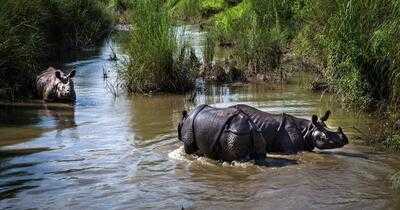
Illegal wildlife trade is happening across eight countries in the Hindu Kush Himalaya region and has doubled from 2019 onwards compared to 2018 and previous years, found a study published in January 2026. The research was conducted by Babar Khan and Kesang Wangchuk at the International Center for Integrated Mountain Development in Kathmandu, Nepal.
India and China recorded thousands of seizure incidents, with carnivores, elephants, pangolins, and various endangered animals trafficked for live trade, body parts, and traditional medicine, according to the research. Illegal wildlife trade is the fourth largest illicit transnational activity in the world. It remains an attractive business for poachers and smugglers, with Southeast Asia at the epicentre of much of this crime. Over 12,000 species of animals and plants have been traded internationally in recent years.
A threat to biodiversity and the mountain ecosystemThe Hindu Kush Himalaya stretches...
Read more
-
Cornflour: an essential ingredient in the kitchen

-
‘Uniboob’ is a real medical condition — who’s likely to get it

-
NALCO has recruited for 268 posts, application starts from May 21, know the selection process and fees here.

-
Is Vodafone Idea share going to become a rocket now? The company, which was on the verge of bankruptcy, made huge profits for the first time in 6 years.

-
Bushra Ansari celebrates milestone birthday with close friends