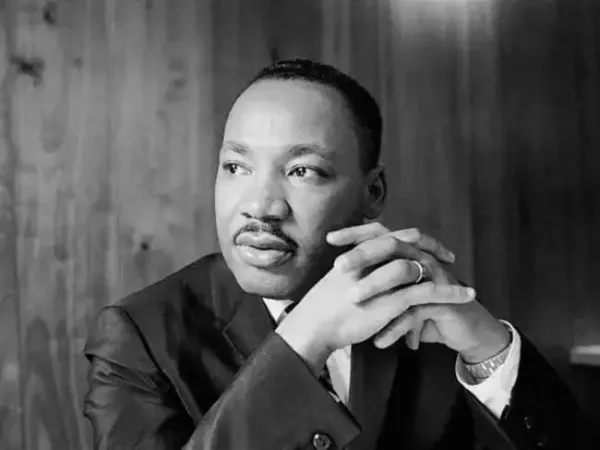
Few quotes about humanity and compassion have stood the test of time quite like this one from Martin Luther King Jr.: “Love is the only force capable of transforming an enemy into a friend.” Simple, direct and powerful, the line continues to resonate decades after it was first written. At a time when public discourse often feels increasingly divided, the quote remains one of the clearest reflections of King’s lifelong belief in nonviolence, empathy and reconciliation.
The statement wasn’t just philosophical idealism. For King, it was a practical strategy for social change, one that shaped the American civil rights movement and inspired generations around the world.
Where Did Martin Luther King Jr. Say This Quote?
The quote comes from King’s 1963 book Strength to Love, specifically from a chapter titled Loving Your Enemies.
In the essay, King argued that hatred only deepens conflict, while love has the ability to break cycles of violence and hostility. Importantly, he was not speaking about passive acceptance of injustice. Instead, he believed people could firmly resist oppression without losing their humanity in the process.
That idea became one of the defining principles of the civil rights movement in the United States during the 1950s and 1960s.
For King, love was not weakness. It was discipline, courage and moral strength.
Who Was Martin Luther King Jr.?
Martin Luther King Jr. was one of the most influential civil rights leaders in modern history.
Born on January 15, 1929, in Atlanta, King became a Baptist minister before emerging as the face of the American civil rights movement, which fought against racial segregation and discrimination faced by Black Americans.
He rose to national prominence during the 1955 Montgomery Bus Boycott, sparked after Rosa Parks refused to give up her seat to a white passenger on a segregated bus in Alabama.
King’s leadership style was heavily inspired by nonviolent resistance, drawing influence from Mahatma Gandhi and Christian teachings.
Throughout his life, King organised peaceful protests, marches and speeches demanding equal rights, voting access and an end to racial segregation in America.
His most famous speech, the iconic “I Have a Dream” address, was delivered during the 1963 March on Washington in front of the Lincoln Memorial.
In 1964, King became the youngest recipient of the Nobel Peace Prize at the time, recognised for his nonviolent struggle against racial inequality.
He was assassinated on April 4, 1968, in Memphis at the age of just 39.
Despite his short life, his ideas continue to influence movements for equality, justice and human rights across the globe.
Why This Quote Still Feels Relevant Today
Part of the reason this quote continues to circulate widely online is because it speaks to something universal.
Modern public life, whether in politics, workplaces or social media, often rewards outrage, division and hostility. In that environment, King’s words feel unusually calm yet deeply challenging.
The quote suggests that genuine change rarely comes from humiliation or revenge. Instead, it comes from understanding, dialogue and the willingness to see humanity even in people we disagree with.
That doesn’t mean accepting injustice or remaining silent in the face of wrongdoing. King himself was a fierce critic of racism, inequality and systemic discrimination. But he believed hatred ultimately destroys both the oppressed and the oppressor.
His philosophy of nonviolence was built on the idea that people can oppose harmful systems without dehumanising one another.
Martin Luther King Jr.’s Philosophy Of Nonviolence
King’s approach was heavily influenced by Mahatma Gandhi’s nonviolent resistance movement in India.
After studying Gandhi’s methods, King became convinced that peaceful resistance was not only morally right but strategically effective.
He often argued that violence creates temporary victories at best, while love and nonviolence have the power to create lasting social transformation.
In Strength to Love, King wrote extensively about the importance of refusing to mirror hatred.
For him, loving your enemy did not mean liking them or approving of their actions. It meant refusing to let bitterness define your own character.
That distinction became central to his activism.
Whether facing arrests, threats or violent attacks, King repeatedly insisted that responding with hatred would only continue the cycle of conflict.
How The Quote Became So Widely Shared
Over the years, the quote has appeared in books, speeches, classrooms, social justice campaigns and countless social media posts.
It is frequently used during discussions about political polarisation, reconciliation and peacebuilding because it captures King’s broader worldview in a single sentence.
Unlike many viral internet quotes that are misattributed or poorly sourced, this one is well documented through Strength to Love and remains one of King’s most authentic reflections on human relationships and social change.
It also stands out because it feels surprisingly practical rather than overly poetic.
The quote doesn’t claim love instantly solves conflict. Instead, it argues that love is the only force capable of truly transforming hostility into understanding.
That’s a much harder idea, and perhaps why it still resonates.
More Than Just A Motivational Quote
Today, Martin Luther King Jr.’s words are often reduced to inspirational graphics and short captions online. But behind this quote sits an entire philosophy built through years of activism, struggle and personal sacrifice.
For King, love was never passive sentimentality. It was an active force capable of reshaping societies.
More than sixty years after he wrote those words, the quote still serves as a reminder that empathy, dignity and compassion are not soft ideals. In King’s view, they were among the strongest tools humanity possesses.
The statement wasn’t just philosophical idealism. For King, it was a practical strategy for social change, one that shaped the American civil rights movement and inspired generations around the world.
Where Did Martin Luther King Jr. Say This Quote?
The quote comes from King’s 1963 book Strength to Love, specifically from a chapter titled Loving Your Enemies.In the essay, King argued that hatred only deepens conflict, while love has the ability to break cycles of violence and hostility. Importantly, he was not speaking about passive acceptance of injustice. Instead, he believed people could firmly resist oppression without losing their humanity in the process.
That idea became one of the defining principles of the civil rights movement in the United States during the 1950s and 1960s.
For King, love was not weakness. It was discipline, courage and moral strength.
Who Was Martin Luther King Jr.?
Martin Luther King Jr. was one of the most influential civil rights leaders in modern history.Born on January 15, 1929, in Atlanta, King became a Baptist minister before emerging as the face of the American civil rights movement, which fought against racial segregation and discrimination faced by Black Americans.
He rose to national prominence during the 1955 Montgomery Bus Boycott, sparked after Rosa Parks refused to give up her seat to a white passenger on a segregated bus in Alabama.
King’s leadership style was heavily inspired by nonviolent resistance, drawing influence from Mahatma Gandhi and Christian teachings.
Throughout his life, King organised peaceful protests, marches and speeches demanding equal rights, voting access and an end to racial segregation in America.
His most famous speech, the iconic “I Have a Dream” address, was delivered during the 1963 March on Washington in front of the Lincoln Memorial.
In 1964, King became the youngest recipient of the Nobel Peace Prize at the time, recognised for his nonviolent struggle against racial inequality.
He was assassinated on April 4, 1968, in Memphis at the age of just 39.
Despite his short life, his ideas continue to influence movements for equality, justice and human rights across the globe.
Why This Quote Still Feels Relevant Today
Part of the reason this quote continues to circulate widely online is because it speaks to something universal.Modern public life, whether in politics, workplaces or social media, often rewards outrage, division and hostility. In that environment, King’s words feel unusually calm yet deeply challenging.
The quote suggests that genuine change rarely comes from humiliation or revenge. Instead, it comes from understanding, dialogue and the willingness to see humanity even in people we disagree with.
That doesn’t mean accepting injustice or remaining silent in the face of wrongdoing. King himself was a fierce critic of racism, inequality and systemic discrimination. But he believed hatred ultimately destroys both the oppressed and the oppressor.
His philosophy of nonviolence was built on the idea that people can oppose harmful systems without dehumanising one another.
Martin Luther King Jr.’s Philosophy Of Nonviolence
King’s approach was heavily influenced by Mahatma Gandhi’s nonviolent resistance movement in India.After studying Gandhi’s methods, King became convinced that peaceful resistance was not only morally right but strategically effective.
He often argued that violence creates temporary victories at best, while love and nonviolence have the power to create lasting social transformation.
In Strength to Love, King wrote extensively about the importance of refusing to mirror hatred.
For him, loving your enemy did not mean liking them or approving of their actions. It meant refusing to let bitterness define your own character.
That distinction became central to his activism.
Whether facing arrests, threats or violent attacks, King repeatedly insisted that responding with hatred would only continue the cycle of conflict.
How The Quote Became So Widely Shared
Over the years, the quote has appeared in books, speeches, classrooms, social justice campaigns and countless social media posts.It is frequently used during discussions about political polarisation, reconciliation and peacebuilding because it captures King’s broader worldview in a single sentence.
Unlike many viral internet quotes that are misattributed or poorly sourced, this one is well documented through Strength to Love and remains one of King’s most authentic reflections on human relationships and social change.
It also stands out because it feels surprisingly practical rather than overly poetic.
The quote doesn’t claim love instantly solves conflict. Instead, it argues that love is the only force capable of truly transforming hostility into understanding.
That’s a much harder idea, and perhaps why it still resonates.
More Than Just A Motivational Quote
Today, Martin Luther King Jr.’s words are often reduced to inspirational graphics and short captions online. But behind this quote sits an entire philosophy built through years of activism, struggle and personal sacrifice.For King, love was never passive sentimentality. It was an active force capable of reshaping societies.
More than sixty years after he wrote those words, the quote still serves as a reminder that empathy, dignity and compassion are not soft ideals. In King’s view, they were among the strongest tools humanity possesses.