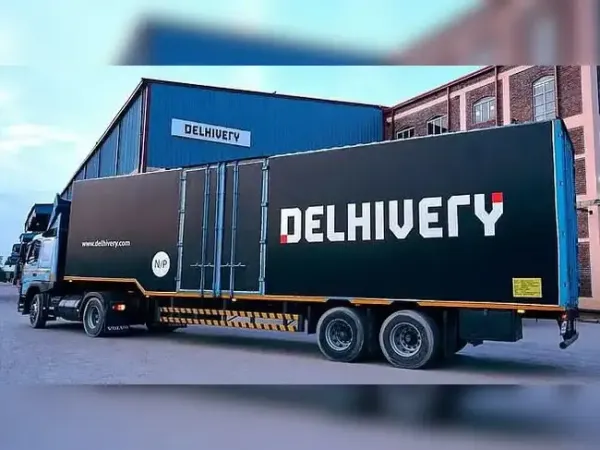
New-age logistics company Delhivery reported a 30% year-on-year jump in operating revenue for the January-March quarter to Rs 2,849 crore, even as its net profit remained flat at Rs 72 crore, according to a regulatory filing.
Delhivery’s revenue growth was driven by its express parcel business — the company’s largest vertical — which posted a 72% increase in volumes during the quarter to 306 million shipments, despite volumes typically moderating after the festive-season peak in the third quarter.
“The operating environment in Q4 and going into Q1 has remained volatile and inflationary. Disruptions due to the Iran war have led to inflation in input energy costs, labour supply has tightened owing to state elections, and labour costs continue to inflate with changes to minimum wages and regulation,” Delhivery said in a letter to shareholders.
“While quarterly volumes may vary in the short term, we remain confident of a sustained 15-20% annual growth trajectory over the medium term, as long as we continue to maintain our unique combination of network speed, service quality and cost leadership,” it added.
On the bottom line, the company’s profit after tax remained largely unchanged during the fourth quarter despite improved operating efficiencies. Total expenses rose 27% year-on-year, slower than revenue growth, but costs related to the integration of Ecom Express weighed on profitability.
The impact of the acquisition, which closed in July 2025, continued into the March quarter, with Delhivery reporting a profit of Rs 87 crore excluding integration costs and exceptional items.
War impact
Delhivery said that despite disruptions in energy supply chains resulting from the West Asia conflict, the company maintained its operational leverage.
“Fuel volatility and supply shortages — specifically for LNG and certain trucking consumables such as AdBlue — previously caused localised delays and purchase caps in certain cities. We mitigated this through active route shuffling of fleet and rapid changes to our operational protocols to mandate odd-time refuelling in order to avoid queuing,” the company said.
It added that it has built up an inventory buffer of essential consumables, while rising input costs are being managed through pass-through mechanisms.
“This limits our exposure to any fuel-driven margin volatility. Importantly, while the operating environment continues to remain uncertain, customer sentiment has remained positive during this period,” the company said.
Delhivery also announced on Saturday that independent director Romesh Sobti has stepped down upon completion of his term. He has been replaced by Kabir Ahmed Shakir.
Delhivery’s revenue growth was driven by its express parcel business — the company’s largest vertical — which posted a 72% increase in volumes during the quarter to 306 million shipments, despite volumes typically moderating after the festive-season peak in the third quarter.
“The operating environment in Q4 and going into Q1 has remained volatile and inflationary. Disruptions due to the Iran war have led to inflation in input energy costs, labour supply has tightened owing to state elections, and labour costs continue to inflate with changes to minimum wages and regulation,” Delhivery said in a letter to shareholders.
“While quarterly volumes may vary in the short term, we remain confident of a sustained 15-20% annual growth trajectory over the medium term, as long as we continue to maintain our unique combination of network speed, service quality and cost leadership,” it added.
On the bottom line, the company’s profit after tax remained largely unchanged during the fourth quarter despite improved operating efficiencies. Total expenses rose 27% year-on-year, slower than revenue growth, but costs related to the integration of Ecom Express weighed on profitability.
The impact of the acquisition, which closed in July 2025, continued into the March quarter, with Delhivery reporting a profit of Rs 87 crore excluding integration costs and exceptional items.
War impact
Delhivery said that despite disruptions in energy supply chains resulting from the West Asia conflict, the company maintained its operational leverage.
“Fuel volatility and supply shortages — specifically for LNG and certain trucking consumables such as AdBlue — previously caused localised delays and purchase caps in certain cities. We mitigated this through active route shuffling of fleet and rapid changes to our operational protocols to mandate odd-time refuelling in order to avoid queuing,” the company said.
It added that it has built up an inventory buffer of essential consumables, while rising input costs are being managed through pass-through mechanisms.
“This limits our exposure to any fuel-driven margin volatility. Importantly, while the operating environment continues to remain uncertain, customer sentiment has remained positive during this period,” the company said.
Delhivery also announced on Saturday that independent director Romesh Sobti has stepped down upon completion of his term. He has been replaced by Kabir Ahmed Shakir.