Four months after starting to send her daughter to preschool in Brussels, Belgium, Hanoi native Kim Ngoc, 33, was surprised to be asked to meet the principal. The reasons: her 18-month-old daughter was frequently soiling her pants and her father was rarely seen at school.
At the meeting, the questions from the teachers startled her: “Have you and your husband been arguing loudly in front of your child?” “Has there been any recent change at home, such as moving house or relatives coming to stay?”
They said a sudden regression by a toilet-trained child could be a sign of psychological instability. The atmosphere grew tense when teachers raised concerns about the father’s absence.
Ngoc said she was a full-time homemaker and managed family matters so that her husband could focus on his career. The school did not accept this reasoning.
In Belgium, the father’s presence is considered indispensable during early childhood for a child’s character development, and economic reasons are not seen as valid grounds for prolonged absence during a child’s formative years.
After that, Ngoc’s husband had to rearrange his schedule for school pick-ups and attending performances.
“I was truly shocked. Their educational mindset is so different from the protective, role-divided family model we’re used to in Vietnam,” Ngoc says.
|
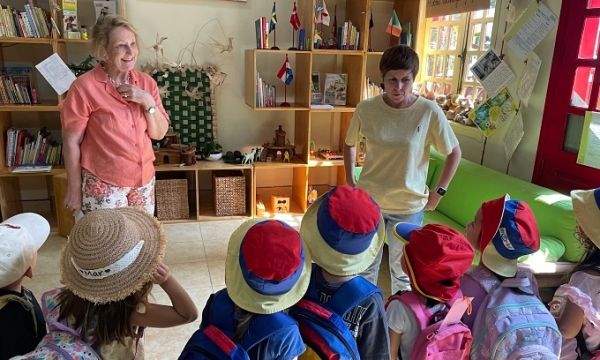
Joke Otter van Zuijlen (in orange) at SmartKids International in An Khanh Ward, HCMC, at noon on May 8, 2026. Photo by Ngoc Ngan |
Ngoc’s was just one of many culture shocks Vietnamese parents get when putting their children through Western education systems.
On Vietnamese community forums in Belgium, discussions about fostering independence at mealtimes often draw strong reactions. The mother of a two-year-old described her distress during her child’s early days at school at the fact that children are required to feed themselves rather than being coaxed by teachers.
If a child refuses lunch, teachers might cursorily tell them, but the tray is cleared away after 30 minutes even if a child has not eaten.
Many Vietnamese parents see this as neglect, but schools claim it is designed to make children listen to their bodies and learn about consequences since they will feel hungry if they refuse food.
Children are also allowed to decide how much they want to eat. Differences extend beyond just meals.
When Ngoc’s daughter turned two, she received notice about swimming lessons. Given her child’s tendency to fall ill, Ngoc could not imagine letting her swim in cold weather. But her husband was unfazed.
Outdoor activities, regardless of weather, are mandatory at schools to build resilience. Parents’ experiences are being researched.
In a study on “cultural dissonance” among Asian immigrant families in Western countries, Professor Désirée Baolian Qin of Michigan State University, U.S.A, found that 60-70% of immigrants reported experiencing acculturative stress in their first two years, mostly caused by the gap between family expectations and the realities of the local education system.
Joke Otter van Zuijlen, principal of an international preschool in Ho Chi Minh City’s An Khanh Ward with 30 years of experience in European education, believes the root of the tension lies in fundamental cultural philosophies.
East Asian cultures place the family at the center of life and emphasize multigenerational bonds. Children often grow up under close care from parents and grandparents. Spoon-feeding, carrying children to the classroom door, or worrying when they walk barefoot are expressions of protective love.
But Western societies emphasize individualism. Children are trained from as early as 18 months old to independently manage daily tasks like putting on shoes, carrying backpacks, and handling solid food.
Economics also plays a role. In Vietnam, middle-class families can easily hire domestic helpers, but not people in countries such as the Netherlands or Belgium, meaning children are forced to develop independence to adapt to their parents’ busy schedules.
Recognizing the inevitable differences, many Vietnamese parents now prepare their children proactively rather than have culture shock spring on them.
 |
|
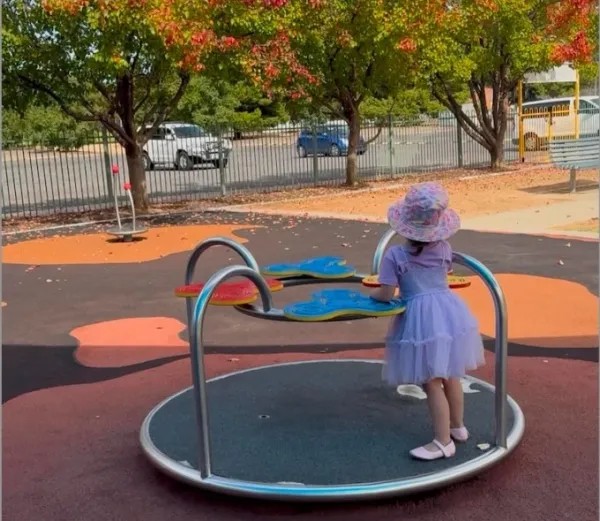
Ngo Thi Bac’s daughter at a playground in Melbourne, Australia. Photo courtesy of the family |
Ngo Thi Bac, 40, who lives in Melbourne, Australia, realized she needed to change after seeing neighborhood children play freely in mud and cold puddles while her own child was bundled in layers.
To prepare her three-year-old daughter for local preschool, Bac gradually loosened control. From the time she was 11 months old, the child was allowed to feed herself, even if food spilled everywhere.
On weekends, instead of keeping her indoors, Bac took her to public playgrounds.
Bac concludes: “I let my child get used to dirt, weather changes and minor bumps. Learning through real-life experiences helps build immunity and confidence, making the first days of school much smoother.”
Education experts too advise parents to move away from a defensive mindset. The biggest barrier is not language but attitude. “Children should learn to face small inconveniences early on, because that is the foundation for adaptability in a constantly changing world,” van Zuijlen adds.
-
Dennis Locorriere dead: 70s music legend dies after 'long and courageous' health battle

-
Days after deadly storms, India braces for severe heatwave as temperatures set to touch 45°C
-
Drone Attack Sparks Fire Near UAE Nuclear Facility: What You Need to Know
-
Police and air ambulance flood Catford Tesco car park as man stabbed 'after fight'

-
Katrina Kaif Calls Vicky Kaushal an 'Expert on Make Up,' Shares Glimpse of Vihaan in Special Birthday Post