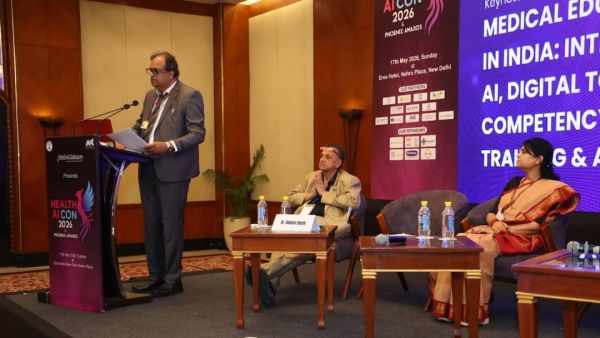
New Delhi witnessed a significant coming together of minds as HealthAIcon 2026 concluded on May 17 at Eros Hotel. Positioned as a first-of-its-kind national platform, the conference placed artificial intelligence at the centre of healthcare conversations, bringing policymakers, clinicians, researchers and innovators onto a shared stage.
Organised by Medical Dialogues in association with the National Medical Forum, the event focused on one key question, how can AI move beyond theory and truly transform patient care in India?
Leaders And Experts Drive The Conversation
The conference drew participation from some of the most influential voices in India’s healthcare ecosystem. Among them were Dr Abhijat Sheth, Chairperson, National Medical Commission (NMC) & President, NBEMS; Dr Anil Kohli, Padma Bhushan awardee and former President of the Dental Council of India; Dr Sanghamitra Pati, Additional Director General, ICMR; Sunita Verma from the Ministry of Electronics & IT; Dr Sanjay Tewari, Chairperson, National Dental Commission; and Dr Arvind Lal, Executive Chairman of Dr Lal PathLabs.
Chairing the summit, Dr Prem Aggarwal set the tone for the day’s discussions.
‘The National AI Doctors Mission aims to build awareness, create structured learning pathways, and ensure the responsible and ethical clinical use of AI in healthcare.”
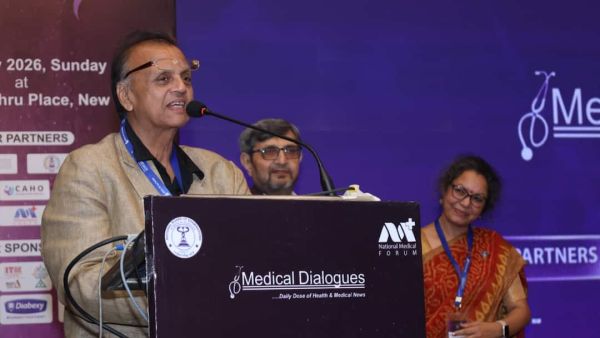
He further talked about the the long-term vision behind the initiative.
“We are not preparing for the hype around artificial intelligence; we are preparing doctors, researchers, institutions, and policymakers to use AI responsibly. The goal is to create a structured national movement for safe and effective AI adoption in healthcare.”
“The future of healthcare will be shaped not only by doctors and hospitals, but also by how responsibly we integrate Artificial Intelligence into the system. AI has the power to improve diagnosis, speed up treatment, and bridge the gap between public and private healthcare, but its success depends on trust and ethical implementation. Every dataset, every algorithm, and every innovation must work towards one common mission making healthcare more compassionate, inclusive, and accessible for every individual, regardless of their background.”
AI Adoption Must Be Ethical And Scalable
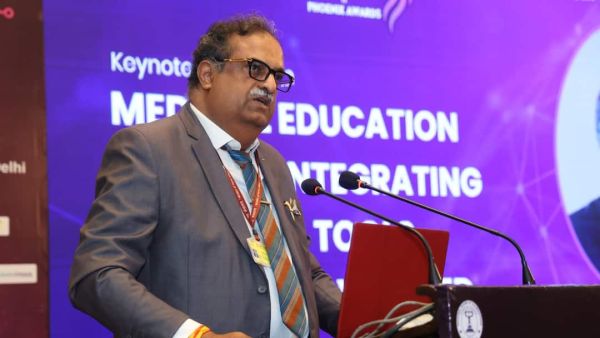
In his keynote address, Dr Abhijat Sheth highlighted the importance of responsible implementation as AI becomes more deeply embedded in healthcare systems.
AI in healthcare must evolve in a manner that is ethical, safe, equitable, and aligned with clinical realities. We are not just adopting AI, we are adopting it at scale across a diverse healthcare system, and that brings both opportunity and responsibility.”
He also raised concerns about how medical education must adapt to this shift.
“As chairman of the NMC, my primary concern is medical education. Because ultimately, the future of healthcare will depend on how we prepare our doctors for tomorrow. If we continue to train doctors only within the traditional framework, we risk creating a gap between what is taught and what is practised. AI is already a part of the clinical environment now. Our education system must accept and deflect that reality. And certainly, that gives us more responsibility to work on regulatory issues related to AI.”
On the role of doctors, he added that understanding AI is no longer optional.
This is not about turning a doctor into a technologist. It is about ensuring that every doctor understands what AI can and can’t. It can interpret AI output critically, use AI safely in clinical practice, and maintain independent clinical judgement.
Doctors, Technology And The Human Touch
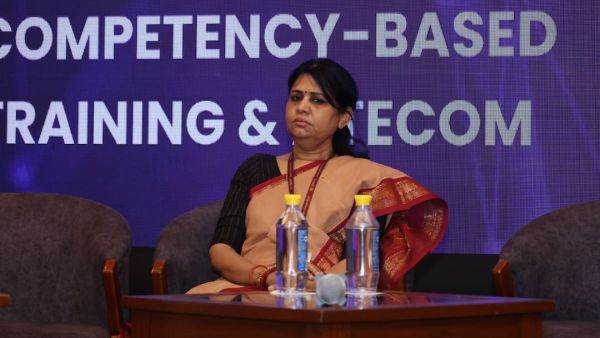
Dr Sanghamitra Pati offered a balanced perspective on the evolving relationship between doctors and technology.
“AI is not going to replace doctors, but doctors who use AI may replace those who do not. At the same time, technology can never replace the healing touch, empathy, and human connection that define medical care. AI must therefore be used intelligently, ethically, and responsibly in healthcare.”
She also stressed India’s potential to lead in this space.
“India should not only become the largest consumer of AI, but also one of the largest creators of AI in healthcare. AI has the potential to empower every healthcare professional, improve medical education and research, and ensure better, more cost-effective healthcare delivery across the country.”
Data Security And Responsible Innovation
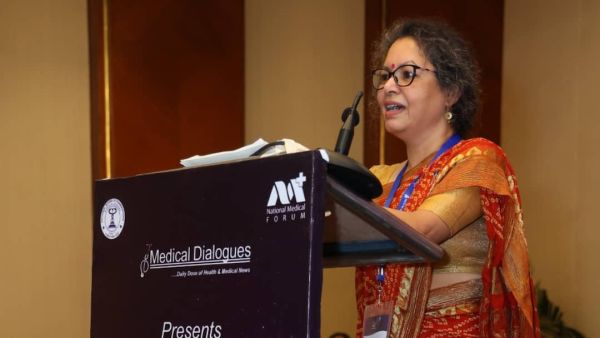
Highlighting the importance of data protection, Sunita Verma underlined the need for strong safeguards as AI systems evolve.
She noted that healthcare data must remain secure, protected and within the country, with ethical AI relying on unbiased datasets, transparency and proper auditing.
She also pointed out that AI is meant to support, not replace, medical professionals, and that collaboration between healthcare and technology sectors can significantly improve access and efficiency.
National AI Doctors Mission Takes Centre Stage
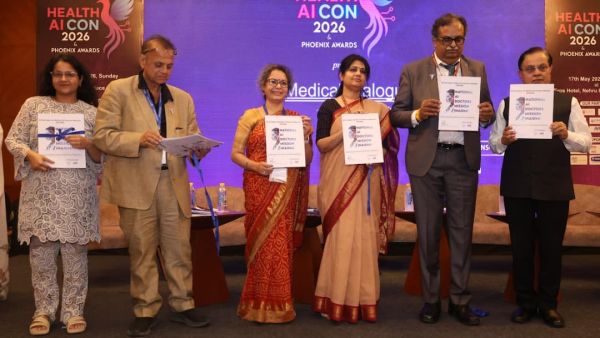
One of the key highlights of the event was the launch of the National AI Doctors Mission (NAIDM), an initiative designed to promote “AI for All Doctors”. The programme aims to build AI literacy and equip healthcare professionals with the skills needed for the future.
The conference also hosted the Phoenix Awards, recognising individuals and organisations for their contributions to advancing AI in healthcare.
Understanding Vaginoplasty: Types, Recovery, Costs, And All You Need To Know
A Clear Roadmap Ahead
As the event drew to a close, one message stood out, AI in healthcare is no longer a distant concept. It is already here.
What matters now is how responsibly it is used. With collaboration, strong policy frameworks and a focus on patient-centric care, experts believe India is well-positioned to lead the global shift towards ethical, AI-driven healthcare.
-
Gautam Adani meets Bihar Chief Minister Samrat Chaudhary, announces investment of Rs 60 thousand crore in the state
-
Animmoov Digital Media Secures Double Triumph at Connected TV Asia Symposium 2026
-
‘Nitish was buried alive, Tiger is alive’, Anand Mohan’s explosive attack on JDU
-
Former MLC Ram Lali Mishra sentenced to 10 years imprisonment in property grabbing case, sent to Lucknow Women’s Prison Home
-
MBA after BA: Can you pursue an MBA after a BA? What is the scope in this field for those with a background in Geography or History?