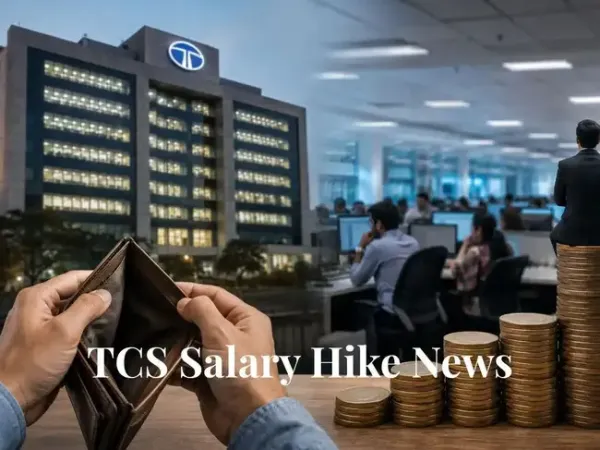
Employees at Tata Consultancy Services have claimed that their monthly salaries actually fell after appraisal even as India’s largest IT employer announced that it has awarded 5-8% average pay hikes for FY26. This also comes at the a time when company’s annual report revealed CEO K Krithivasan earned more than ₹28 crore in FY26. The salary revision exercise, announced on May 18, included changes linked to India’s upcoming Labour Codes. While TCS said the revised structure was designed to standardise wages and protect take-home pay, some employees claimed the opposite happened after the restructuring of salary components and variable pay.
However, employees in lower bands reported smaller hikes. Many in the B category received increments between 1 per cent and 3.5 per cent, while some workers in the C band claimed their revised salary figures actually went down.
“Salary actually decreased by ₹3000,” one employee from the C3A grade told Moneycontrol. “Our annual CTC had fallen by ₹1,000- ₹10,000 despite receiving appraisal letters,” another employee said anonymously. “Mine decreased at C band,” another employee added.
Some workers also alleged that portions of their monthly variable pay had either been reduced or shifted to quarterly and annual payout cycles, affecting regular monthly income.
“Performance pay and bonus both are now calculated on the basis of WFO compliance,” one employee told Moneycontrol.
The company has not publicly detailed any direct linkage between office attendance and bonus calculations beyond the employee claims mentioned in the report.
TCS says revised structure follows labour code compliance
TCS defended the revised salary structure and said the changes were part of a broader compliance exercise tied to India’s new Labour Codes.
“The revised salary structure that the employees have received are guided by three key principles that include, compliance with the new labour codes, standardisation of wage structures across our India workforce, and protection of employees’ take-home salary, while allowing flexibility for tax efficiency,” a TCS spokesperson told Moneycontrol.
“TCS has consistently maintained a track record of awarding annual increments to its associate’s year-on-year, reinforcing its commitment to employee growth and long-term value creation,” the spokesperson added.
The company had earlier set aside ₹2,128 crore as a one-time expense during the October-December quarter to align compensation structures with the new labour code requirements.
The annual report also disclosed compensation details of Aarthi Subramanian, who took over as executive director and chief operating officer from May 1, 2025. She received nearly ₹1.51 crore in salary, ₹1.83 crore in benefits and allowances, and ₹15 crore as commission.
“Enterprises will need an AI Operating System,” Chandrasekaran said. “This Operating System will be a foundation of infrastructure, data, models, context, agents, and governance."
Krithivasan said companies were now looking for AI systems that could safely scale across day-to-day operations.
“This control plane - an AI Operating System - makes AI repeatable and governable through orchestration in an enterprise’s context and embeds trust mechanisms such as security, monitoring, evaluation, and auditability,” he said.
The company said it plans to focus on AI infrastructure, industry-specific AI systems, partnerships with hyperscalers and sovereign AI platforms as global businesses continue increasing technology investments despite economic uncertainty.
Employees claim take-home salary reduced after appraisal
According to a Moneycontrol report, TCS followed its usual performance-based appraisal system using rating bands such as A+, A, B and C. Employees in the highest-rated A+ category reportedly received hikes between 9 per cent and 13 per cent. Workers in the A band said they got increments ranging from 5 per cent to 9 per cent.However, employees in lower bands reported smaller hikes. Many in the B category received increments between 1 per cent and 3.5 per cent, while some workers in the C band claimed their revised salary figures actually went down.
“Salary actually decreased by ₹3000,” one employee from the C3A grade told Moneycontrol. “Our annual CTC had fallen by ₹1,000- ₹10,000 despite receiving appraisal letters,” another employee said anonymously. “Mine decreased at C band,” another employee added.
Some workers also alleged that portions of their monthly variable pay had either been reduced or shifted to quarterly and annual payout cycles, affecting regular monthly income.
Work-from-office policy linked to payouts, employees allege
The appraisal season also triggered fresh discussion around return-to-office policies inside the company. Some employees claimed performance-linked payouts and bonuses were now connected to work-from-office compliance.“Performance pay and bonus both are now calculated on the basis of WFO compliance,” one employee told Moneycontrol.
The company has not publicly detailed any direct linkage between office attendance and bonus calculations beyond the employee claims mentioned in the report.
TCS says revised structure follows labour code compliance
TCS defended the revised salary structure and said the changes were part of a broader compliance exercise tied to India’s new Labour Codes.“The revised salary structure that the employees have received are guided by three key principles that include, compliance with the new labour codes, standardisation of wage structures across our India workforce, and protection of employees’ take-home salary, while allowing flexibility for tax efficiency,” a TCS spokesperson told Moneycontrol.
“TCS has consistently maintained a track record of awarding annual increments to its associate’s year-on-year, reinforcing its commitment to employee growth and long-term value creation,” the spokesperson added.
The company had earlier set aside ₹2,128 crore as a one-time expense during the October-December quarter to align compensation structures with the new labour code requirements.
TCS CEO salary crosses ₹28 crore in FY26
The employee concerns arrived alongside fresh disclosures from the company’s annual report showing Krithivasan’s remuneration rose 6.3 per cent in FY26. The report showed the TCS chief earned more than ₹28 crore during the financial year, including over ₹1.67 crore as salary, ₹1.43 crore in benefits and allowances, and ₹25 crore in commissions. His compensation stood at nearly 333 times the median employee remuneration at the company.The annual report also disclosed compensation details of Aarthi Subramanian, who took over as executive director and chief operating officer from May 1, 2025. She received nearly ₹1.51 crore in salary, ₹1.83 crore in benefits and allowances, and ₹15 crore as commission.
TCS sharpens focus on AI systems for enterprises
Beyond salary discussions, the annual report also highlighted TCS’ long-term push into enterprise AI systems. Chairman N Chandrasekaran said businesses would increasingly need integrated AI infrastructure capable of managing data, governance and AI agents together.“Enterprises will need an AI Operating System,” Chandrasekaran said. “This Operating System will be a foundation of infrastructure, data, models, context, agents, and governance."
Krithivasan said companies were now looking for AI systems that could safely scale across day-to-day operations.
“This control plane - an AI Operating System - makes AI repeatable and governable through orchestration in an enterprise’s context and embeds trust mechanisms such as security, monitoring, evaluation, and auditability,” he said.
The company said it plans to focus on AI infrastructure, industry-specific AI systems, partnerships with hyperscalers and sovereign AI platforms as global businesses continue increasing technology investments despite economic uncertainty.