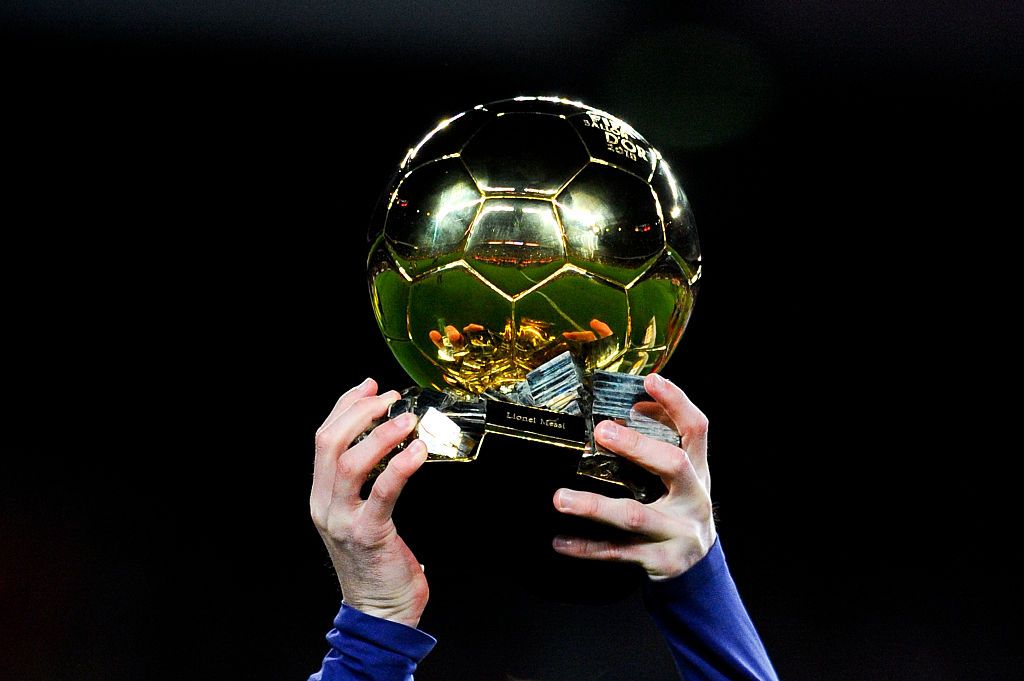
The Ballon d'Or stands as football’s most illustrious individual honour, awarded to the finest players in the world since its inception in 1956.
Created by France Football, the Ballon d'Or has long symbolised the highest recognition of excellence in the sport. It has been a benchmark for greatness, celebrating footballers who have shaped the game’s history.
While recent years have seen familiar names like Lionel Messi and Cristiano Ronaldo dominate, the near seven-decade-long history of the award has also delivered unexpected winners and captivating stories. The full list of recipients reads like a roll call of football’s greatest icons.
Here’s the complete list of Ballon d’Or winners through the years. Does your all-time favourite feature here?
In 1956, Sir Stanley Matthews of Blackpool became the first-ever Ballon d'Or winner, edging past Real Madrid legends Alfredo Di Stefano and Raymond Kopa. At 41, Matthews remains the oldest player to have claimed the award.
Alfredo Di Stefano followed with the 1957 Ballon d’Or, securing 72 points. Wolverhampton Wanderers’ Billy Wright finished second with 19, while Duncan Edwards of Manchester United and Raymond Kopa tied for third with 16 points each.
Kopa eventually took his turn in 1958, surpassing Helmut Rahn of Rot-Weiss Essen and World Cup Golden Boot winner Just Fontaine of Reims.
In 1959, Di Stefano became the first player to win two Ballon d’Ors, with Raymond Kopa finishing second and Juventus’ John Charles becoming the first Welshman to make the podium.
Spain’s Luis Suarez captured the first award of the 1960s, finishing ahead of Real Madrid’s Ferenc Puskas and Hamburg’s Uwe Seeler.
In 1961, Argentina-born Omar Sivori, representing Juventus, became the first player from an Italian club to win the Ballon d’Or. Luis Suarez of Barcelona claimed second, and Fulham’s Johnny Haynes took third.
Josef Masopust triumphed in 1962, ahead of Mozambique-born Portuguese forward Eusebio, who had just secured his second consecutive European Cup with Benfica. Karl-Heinz Schnellinger of Koln finished third.
Legendary Soviet goalkeeper Lev Yashin remains the only keeper ever to win the Ballon d’Or, taking the honour in 1963. AC Milan’s Gianni Rivera came second, while Tottenham’s Jimmy Greaves took third.
Manchester United’s Dennis Law became both the club’s and Scotland’s first Ballon d’Or winner in 1964, despite United not winning any major trophy that season. Luis Suarez, then with Inter Milan, and Real Madrid’s Amancio completed the podium.
Eusebio made history in 1965 as the first African-born player to win the Ballon d’Or. Inter Milan’s Giacinto Facchetti and Luis Suarez followed in second and third.
In 1966, England’s World Cup triumph was mirrored by Bobby Charlton’s Ballon d’Or victory, earning a record 81 votes. Eusebio came a close second with 80, while West Germany’s Franz Beckenbauer finished third.
Florian Albert of Ferencvaros won in 1967, with Bobby Charlton coming second and Celtic’s Jimmy Johnstone taking third, marking the Glasgow club’s first podium finish.
George Best’s brilliance saw him win the 1968 Ballon d’Or, completing a trio of Manchester United winners. Bobby Charlton finished second, while Red Star Belgrade’s Dragan Dzajic was third.
In 1969, AC Milan’s Gianni Rivera claimed the award, narrowly beating Gigi Riva of Cagliari, with Bayern Munich’s Gerd Muller earning third place.
Gerd Muller, nicknamed “Der Bomber,” became the first German to lift the trophy in 1970 after scoring ten goals at the World Cup in Mexico. England’s Bobby Moore came second, and Gigi Riva placed third.
Johan Cruyff earned his first Ballon d’Or in 1971 following Ajax’s European Cup triumph. Inter’s Sandro Mazzola and Manchester United’s George Best completed the top three.
1972 marked an all-German podium, with Franz Beckenbauer taking gold, Gerd Muller silver, and Borussia Monchengladbach’s Gunter Netzer bronze.
Cruyff reclaimed the top spot in 1973, becoming the first player to win the award at two different clubs. Juventus goalkeeper Dino Zoff finished second, and Muller was third once again.
Cruyff made history in 1974 as the first three-time Ballon d’Or winner, finishing ahead of Beckenbauer and Poland’s Kazimierz Deyna.
In 1975, Oleg Blokhin of Dynamo Kyiv dominated the vote, amassing a record 122 points, with Beckenbauer second and Cruyff third.
Beckenbauer returned to win again in 1976 after leading Bayern Munich to their third straight European Cup. Rob Rensenbrink and Ivo Viktor rounded out the podium.
Allan Simonsen became Denmark’s first winner in 1977, guiding Borussia Monchengladbach to the European Cup final. Kevin Keegan of Hamburg finished second, and Michel Platini was third.
Keegan went on to win back-to-back titles in 1978 and 1979, with Hans Krankl and Karl-Heinz Rummenigge finishing as runners-up in successive years. Keegan remains the only Englishman to have won twice.
Rummenigge took over in 1980, leading an all-German podium with Paul Breitner second and Bernd Schuster third.
Italy’s Paolo Rossi claimed the 1982 award after his World Cup heroics, ahead of Alain Giresse and Zbigniew Boniek.
Michel Platini’s 1983 triumph marked his first of three consecutive wins, followed by Kenny Dalglish and Allan Simonsen. He retained the crown in 1984 and 1985, achieving an unprecedented hat-trick of Ballon d’Ors.
Igor Belanov of the Soviet Union won in 1986, narrowly beating Gary Lineker, while Emilio Butragueno came third.
Ruud Gullit of AC Milan lifted the 1987 award, followed by Paulo Futre and Butragueno. In 1988, Marco van Basten took the honour as part of a Milan sweep, with Gullit and Rijkaard completing the podium.
Van Basten repeated his triumph in 1989, while Rijkaard and Franco Baresi followed. In 1990, Lothar Matthaus won the Ballon d’Or for his World Cup-winning heroics, ahead of Salvatore Schillaci and Andreas Brehme.
Jean-Pierre Papin claimed the 1991 title with a record vote count, followed by Dejan Savicevic, Darko Pancev, and Matthaus tying for second.
Van Basten clinched his third Ballon d’Or in 1992, with Hristo Stoichkov and Dennis Bergkamp completing the top three.
Roberto Baggio’s 1993 victory came with 142 votes, followed by Bergkamp and Eric Cantona. Stoichkov won the 1994 Ballon d’Or, with Baggio and Paolo Maldini behind him.
George Weah made history in 1995 as the first African winner after a stellar season with AC Milan. Jurgen Klinsmann and Jari Litmanen took second and third.
Germany’s Matthias Sammer won in 1996 after Euro 96 glory, followed by Ronaldo and Alan Shearer. Ronaldo then claimed the 1997 Ballon d’Or after a stunning season with Barcelona.
Zinedine Zidane’s iconic 1998 earned him the award, with Davor Suker and Ronaldo trailing. Rivaldo continued Barcelona’s legacy in 1999, beating David Beckham and Andriy Shevchenko.
In 2000, Luis Figo’s controversial move to Real Madrid was matched with Ballon d’Or success. Zidane and Shevchenko followed him.
Michael Owen became England’s third winner in 2001 after his treble-winning season with Liverpool, ahead of Raul and Oliver Kahn.
Ronaldo reclaimed the trophy in 2002 after his World Cup heroics, while Roberto Carlos and Kahn completed the podium.
Pavel Nedved won the 2003 Ballon d’Or, followed by Thierry Henry and Paolo Maldini. Shevchenko claimed 2004’s title, ahead of Deco and Ronaldinho.
Ronaldinho’s flair was rewarded in 2005, with Frank Lampard and Steven Gerrard following. Fabio Cannavaro’s 2006 World Cup triumph earned him the award, with Gianluigi Buffon and Thierry Henry behind.
Kaka was crowned in 2007 after leading AC Milan to Champions League glory, ahead of Cristiano Ronaldo and Lionel Messi.
Ronaldo took his first Ballon d’Or in 2008, leading Manchester United to a league and European double. Messi came second, and Fernando Torres third.
Messi began his dominance in 2009, winning his first Ballon d’Or after Barcelona’s historic treble. Ronaldo and Xavi completed the podium.
Messi repeated in 2010, 2011, and 2012, setting numerous records along the way. His 2012 season, featuring 91 goals, remains unmatched.
Ronaldo responded with wins in 2013 and 2014, before Messi reclaimed the throne in 2015. Ronaldo then captured back-to-back titles in 2016 and 2017.
Luka Modric broke the Messi-Ronaldo duopoly in 2018, recognised for his World Cup and Champions League exploits. Messi responded with a sixth win in 2019, narrowly edging Virgil van Dijk.
The 2020 award was cancelled due to the COVID-19 pandemic, though Robert Lewandowski was widely considered the deserving winner.
Messi added a seventh in 2021, after winning the Copa America with Argentina, followed by Lewandowski and Jorginho. Karim Benzema lifted the 2022 Ballon d’Or after leading Real Madrid to La Liga and Champions League glory, and France to Nations League success.
-
Twisha Sharma Case: Samarth Singh's Licence Gets Suspended By Bar Council
-
Manchester City Renames Etihad Stand After Pep Guardiola As Legendary Manager Departs After Decade
-
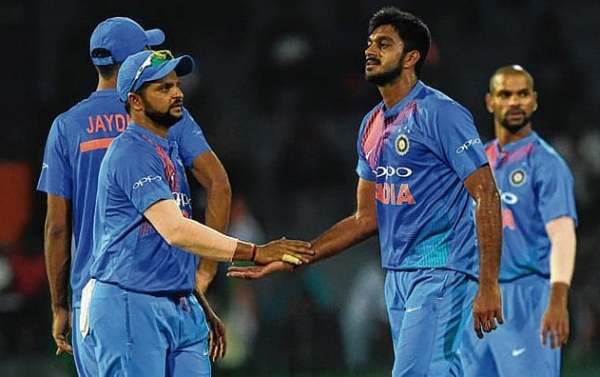
'Eternally Grateful': Ex-CSK Star Vijay Shankar Retires From IPL & Domestic Cricket To Pursue 'New Opportunities'
-
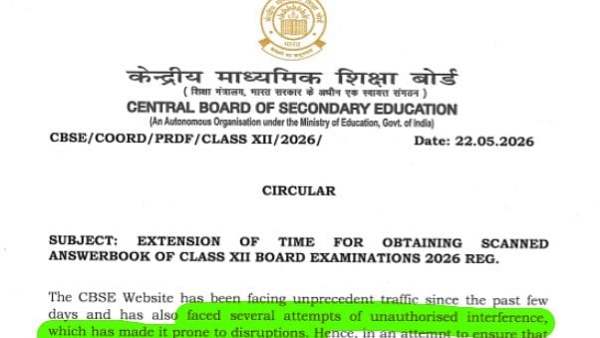
CBSE Extends Deadline To Apply For Class 12 Scanned Answer Books Till May 24
-
Ranked: The 20 Greatest Strikers in World Football Today