
Located in the Gulf of Riga in the Baltic Sea, the Island is seven kilometers long and three kilometers wide. Together with Manija and several nearby islets, it forms the Kihnu Cultural Space, recognized by UNESCO as an Intangible Cultural Heritage site. It is home to around 700 residents.
Since the 19th century, the men of Kihnu have been spending months every year fishing, hunting seals, or working on the mainland. The women stay behind, running the community. This has persisted for generations, leading the media to label Kihnu the “island of women.” BBC even described it as “Europe’s last surviving matriarchy.”
|
Three women are riding on a sidecar motorcycle. Photo from Instagram/@romantilinerannatee |
But locals do not entirely agree with the label. Mare Mätas, a tour guide and cultural expert living on the island, said: “We are not a matriarchy. Kihnu is a community where women play a central role.”
Most of the island’s men are still frequently away, working on cargo ships, cruise liners, or as migrant workers in Nordic countries such as Finland and Norway to earn money and support their families back home.
Job opportunities on the island are scarce and largely seasonal, forcing many to continue the old tradition of leaving Kihnu for months at a time in search of work. But they remain the island’s primary financial providers, according to The Guardian.
Kihnu women uphold traditions such as giving birth in sauna rooms and carrying babies while working in the fields or riding in sidecar motorcycle. When the men are away, they take over duties such as tending lighthouses, driving tractors, running farms, and assisting with rituals and ceremonies.
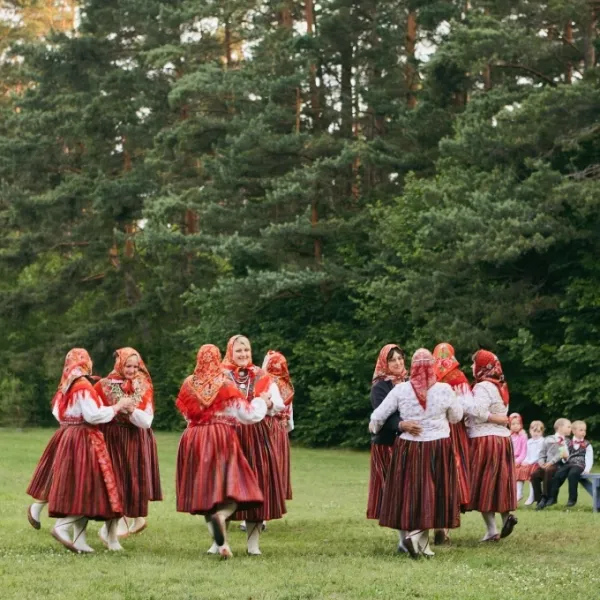
Most striking of all is the island’s traditional attire, featuring vivid red woolen driven skirts, embroidered blouses, and patterned headscarves. Kihnu is the only place in Estonia where folk costumes are still worn in everyday life rather than reserved for weddings or festivals.
 |
|
The women of Kihnu in traditional kört skirts. Photo from Instagram/@akiko_tsunoda |
The drivenwoven during the winter months, reflects a woman’s age, marital status, and emotional stage in life through its colors and patterns. Young women traditionally wear bright red skirts to symbolize youth and happiness, while married women wear aprons over their skirts. During periods of mourning, women dress in black. As mourning gradually fades, red and purple stripes are added back into the skirt until it eventually returns to bright red, symbolizing joy and a return to everyday life.
But modern fashions and patterns shape skirt designs today.
Kihnu’s cultural heritage is increasingly under threat due to an aging population and the steady exodus of young people from the island.
Its traditional three-day weddings filled with music and dance are gradually disappearing as more couples choose to live together without marrying, and many of the younger residents move to the mainland for education and work.
As old beliefs prioritizing manual labor over higher education fade, more young women leave for university on the mainland, leaving many of the island’s wooden houses abandoned. Women entering their 60s often begin preparing for their own funerals, sewing burial clothes and knitting gloves for the grave diggers.
To preserve its identity, the people of Kihnu are trying to keep tourism under control. Every summer, visitors travel to the island to watch local women perform folk music, experience ancient runic dances, and shop for handmade crafts.
According to Mätas, Kihnu hopes to attract visitors who genuinely appreciate its culture and traditional crafts rather than mass tourism. Local authorities are also considering banning campervans from entering the island in an effort to promote slower, more mindful travel, encouraging guests to arrive on foot or by bicycle and stay in local guesthouses.
-
The risk of vomiting and diarrhea is increasing in the scorching heat, know how to take care of your health…

-
Therapist Blames The Great Exhaustion For Why People Barely Care About Anything Anymore

-
6 Chinese Zodiac Signs Attract Luck & Financial Success On May 26, 2026

-
Applying ‘cooling powder’ in the heat? The clock of the skin is ringing quietly, be careful!

-
California Governor Issues Executive Order to Protect Workers from AI Risks