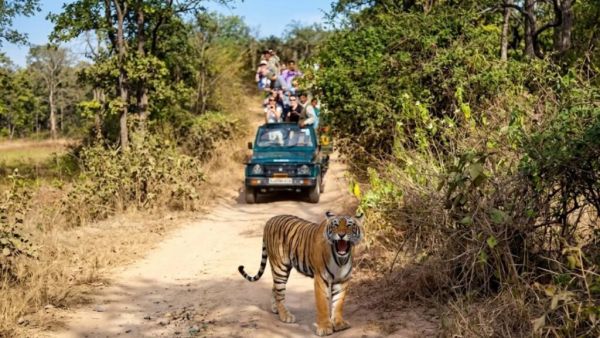
That scene is exactly why several tiger reserves across India have been seen in various viral videos. However, safari operators are now tightening rules on mobile phone use during safaris.
From Ranthambore National Park to Kanha Tiger Reserve and Tadoba-Andhari Tiger Reserve, authorities are increasingly moving towards stricter “mobile-controlled” safari policies, with some reserves reportedly enforcing complete bans inside core zones.
The push comes after growing concerns over wildlife disturbance, unsafe tourist behaviour, and forests slowly turning into content creation zones instead of conservation spaces.
Recent reports have linked the tighter regulations to Supreme Court-backed conservation guidelines introduced in 2025, which encouraged stricter management of tourism inside sensitive wildlife habitats.
But should safaris really ban mobile phones entirely? Or is stricter regulation enough?
We asked experts.
The Rise Of The “Phone-Free Safari”
According to recent reports, reserves such as Ranthambore National Park now prohibit visitors from carrying phones during safari drives, with devices often deposited before entry.
Similar restrictions have also been reported in reserves including Bandhavgarh Tiger Reserve, Panna National Park, and Umred Karhandla Wildlife Sanctuary.
Authorities are increasingly moving towards stricter “mobile-controlled” safari policies. Photo: Unsplash
Globally too, several safari operators in countries like Kenya, Botswana and South Africa have begun discouraging excessive phone use during game drives, especially near sensitive wildlife sightings. However, unlike India, most international restrictions are lodge or operator policies rather than blanket reserve-wide rules.
For many conservationists and safari experts, the issue is no longer just about etiquette. They believe phones are fundamentally changing wildlife tourism itself.
‘Forests Are Becoming Social Media Sets’
Sumit Juneja, Founder, Owner & Managing Director, Big Cat Safari India, believes mobile phone restrictions inside tiger reserves have become “extremely important”.
“Recently, the Supreme Court and various courts have also raised serious concerns regarding uncontrolled wildlife tourism, disturbance in core forest zones, and excessive human interference,” he says.
“In many places, people are beginning to treat forests more as locations for social media content and viral videos rather than spaces for experiencing nature,” he says.
According to Juneja, one of the biggest problems begins the moment an animal is spotted.
“The location is instantly shared with other vehicles through mobile phones. Within minutes, several safari vehicles gather at the same spot, turning the peaceful forest environment into a crowded and stressful situation,” he adds.
He explains that such crowding can place “significant psychological pressure” on wildlife.
-
MS Dhoni As CSK Head Coach? CEO Drops Big Hint About Future Role

-
Amit Shah Orders Crackdown On Illegal Constructions Near India-Pakistan Border

-
Mamata Banerjee's Close Aide Dilip Mondal Detained From Hotel In Odisha

-
Why ‘Glowmads’ Are The Most Talked-About Travel Trend Of 2026

-
Norway Chess 2026, Round 2: Praggnanandhaa Falls To Firouzja, Divya Wins All-Indian Duel