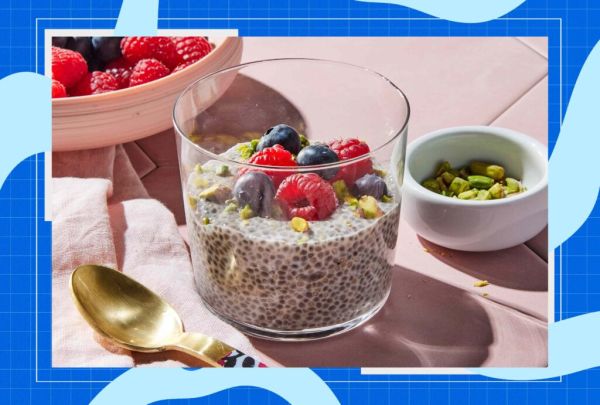
A new study makes the case for pairing fiber-rich ingredients with healthy fats.
Reviewed by Dietitian Jessica Ball, M.S., RD
Key Points
- Research suggests omega-3 fats and fermentable fiber could help suppress colon cancer.
- The two nutrients appear to work together—their combined effect is especially noteworthy.
- The study was done in cells and mice, with a small human pilot in healthy adults.
You’ve probably heard that a Mediterranean diet rich in fish and plants is good for your heart. Now, new research is finding it may also protect your colon by clearing out damaged cells before they have a chance to turn cancerous. That process is called ferroptosis, and it has emerged as a target for cancer researchers.
Cancer cells are notorious for evading the body’s normal signals to self-destruct, which is part of how they manage to grow and spread. A 2026 study in The Journal of Nutrition tested whether two specific nutrients (omega-3 fatty acids from fish and fermentable fiber from plants) could work together to activate ferroptosis in the colon. Researchers used cell experiments, mouse experiments and a small human pilot trial to find out. The results suggest these two nutrients are far more powerful together than either is alone.
How Was This Study Conducted?
The study used three different approaches to examine how omega-3s and fiber might work together in the colon.
First, in lab experiments, researchers exposed mouse colon cells to either an omega-3 fatty acid called DHA (found in fish oil) or a different fatty acid, with or without butyrate. Butyrate is a short-chain fatty acid your gut bacteria produce when they ferment fiber from foods like fruits, vegetables and whole grains.
Second, the researchers fed mice one of two diets for three weeks. One group got fish oil paired with pectin, a type of fermentable fiber found in apples and other fruits. The other group got corn oil paired with cellulose, a fiber that doesn’t ferment well in the gut. After three weeks, the team examined cells from the mice’s colons.
Finally, the researchers ran a trial in 30 healthy adults ages 50 to 75. Participants received either 33 grams of soluble corn fiber plus 7.7 grams of omega-3 fatty acids per day, or a placebo combination of maltodextrin and corn oil. Each phase lasted 30 days, with a 60-day washout period in between. The team analyzed colon cells shed in stool samples to assess how each diet affected the participants’ gut.
What Did the Study Find?
In the cell experiments, the combination of DHA and butyrate produced effects greater than either compound alone. Cell viability dropped more sharply when the two were combined, and lipid peroxidation, a key marker of ferroptosis, rose significantly. The researchers describe the relationship as synergistic, meaning the two nutrients amplify each other’s effects.
“Their effects are more than additive,” Robert Chapkin, Ph.D.who led the research, said in a press release. “They were somehow multiplying the outcomes in a way that was very provocative, and suppressed colon cancer in preclinical models.”
In the mice, the fish-oil-and-pectin diet led to elevated levels of cell death precursors in colon cells compared with the control diet, along with the activation of ferroptosis- gene networks. This activation was seen specifically in the cells lining the colon and not in other types of cells.
In humans, the soluble fiber and fish oil combination produced changes in gene expression consistent with the activation of ferroptosis pathways in the gut. The placebo group, by contrast, showed the opposite pattern: these protective pathways seemed to be suppressed.
“The death of cells is part of a normal process—it is a defense mechanism we have to get rid of bad stuff,” Chapkin explained. “In cancer, that process is often suppressed, and the dangerous cells survive and thrive.”
The study has some important limitations to keep in mind. Most of the cancer suppression evidence comes from past mouse experiments rather than this study itself. The human pilot was small and conducted in healthy adults—not people with colorectal cancer or at high risk for it—and the researchers acknowledge that follow-up studies in those populations are still needed.
How Does This Apply to Real Life?
Most Americans fall short on both of the nutrients in this study. The average adult eats far less fiber than the recommended 25 to 38 grams per day, and most don’t regularly eat fish high in omega-3s. The good news is that you don’t need to commit to a fully pesco-vegetarian diet to start moving in the right direction.
Some practical steps to consider:
- Add fatty fish to your weekly menu. Salmon, sardines, mackerel and trout are rich in EPA and DHA, the omega-3s used in this study. Aim for two servings per week, in line with American Heart Association guidance for heart health.
- Prioritize fermentable fibers. Pectin (in apples, berries, citrus and carrots), inulin (in onions, garlic and chicory) and beta-glucan (in oats and barley) are especially good at feeding the gut bacteria that produce butyrate. Beans, lentils and other legumes are also excellent sources.
- Pair them in the same meal. Since these nutrients seem to work synergistically, combining them in the same dishes—a salmon bowl over barley with roasted vegetables, for example—may be especially worthwhile.
- Lean on whole foods. The participants in the human pilot received supplements, but most nutrition experts recommend getting these nutrients from whole foods when possible, since whole foods deliver additional benefits like vitamins, minerals and antioxidants.
Need some recipe inspiration to help you pair filling fiber with those helpful omega-3s? Here are a few of our favorites:
Our Expert Take
A recent study in The Journal of Nutrition adds to a growing body of evidence that omega-3 fats from fish and fermentable fiber from plants may work together to suppress colon cancer through a cell-death pathway called ferroptosis. The most direct evidence comes from cell and mouse experiments, but a small human pilot showed similar patterns in gene activity in the gut. The research is still preliminary, and more studies are needed before specific recommendations can be made. But the takeaway is consistent with broader nutrition guidance: Eat fish regularly, eat plenty of fiber from plants and try to do both at the same meal when you can.
-
E-sanjeevani will make healthcare and eye care easier! The patients in rural areas will get expert doctor’s advice

-
IRCTC Vs RailOne: Railways Launches Super App For Passengers

-
Lottery started for OTT lovers, spend ₹ 3.30 daily and see 20+ apps like Netflix-Prime

-
BSNL vs Vi: Vi Big Shock! Govt did its own thing to BSNL leaving Vodafone idea, ordering 4200 employees to change Sim

-
Google is preparing an army of ‘masculine mosquitoes’! Know what is the reason