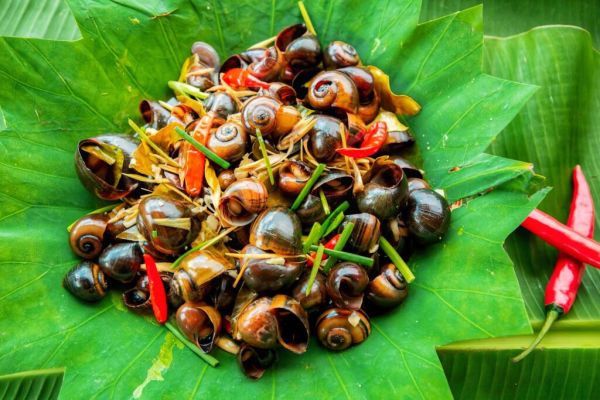
Family connections are often built through conversations, shared memories, and traditions passed down through generations. But what happens when language itself becomes a barrier? For one writer, the answer came not through words, but through food — specifically, a humble bowl of snails shared with a beloved grandfather.
Growing up in the United States, many children of immigrant families find themselves caught between two worlds. While parents and grandparents hold tightly to their native language and customs, younger generations often become more comfortable speaking English. Over time, this can create an invisible distance between family members who love each other deeply but struggle to communicate.
That was the reality for the writer and their grandfather. The grandfather spoke only Lao, while the younger generation gradually lost fluency in the language. Simple conversations became difficult, and many thoughts and emotions remained unspoken.
Yet despite the language gap, one family tradition continued to bring them together: eating snails.
For the grandfather, gathering, preparing, and cooking snails was more than a meal. It was a connection to his homeland, culture, and childhood memories. The process required patience, skill, and knowledge passed down through generations.
As they sat together sharing the dish, words became less important. The act of preparing food side by side created a form of communication that transcended language. Through gestures, smiles, laughter, and shared experiences, they found ways to understand each other.
Food became a bridge between generations.
Every bite carried stories of migration, family history, and cultural identity. Even without perfect language skills, the writer learned valuable lessons about heritage, resilience, and belonging simply by participating in these meals.
The experience highlights something many families understand deeply: communication is not limited to spoken words. Love can be expressed through cooking a favorite meal, teaching a traditional recipe, or sharing a table together.
For immigrant families especially, food often serves as a powerful cultural anchor. Recipes become living memories, preserving traditions long after languages begin to fade. A single dish can carry decades of history and help younger generations reconnect with their roots.
Looking back, the writer realized that those moments spent eating snails with their grandfather were never really about the food alone. They were about connection, understanding, and finding common ground despite cultural and linguistic differences.
In a world where language barriers can sometimes create distance, this simple meal proved that family bonds are often strongest when expressed through shared experiences. Sometimes, a bowl of food can say what words cannot.
The story serves as a touching reminder that culture is not only preserved through language. It also lives in traditions, rituals, recipes, and the moments we share with the people we love.
-
Arsenal to Intensify Chase for Bruno Guimaraes as Newcastle Prepare for Incoming Offer

-
IMD warns of extremely heavy rain in Gujarat, Rajasthan and Konkan; flash flood risk issued for hill states: What travellers need to know
-
Kaylee Hottle passes away at 18: All about the deaf actress who lit up 'Godzilla vs. Kong' as Jia

-
'Argentina players shouldn't be suspended': Spain's Gavi breaks silence on Leandro Paredes clash after World Cup final

-
TOI's XI: The stars who lit up the FIFA World Cup 2026