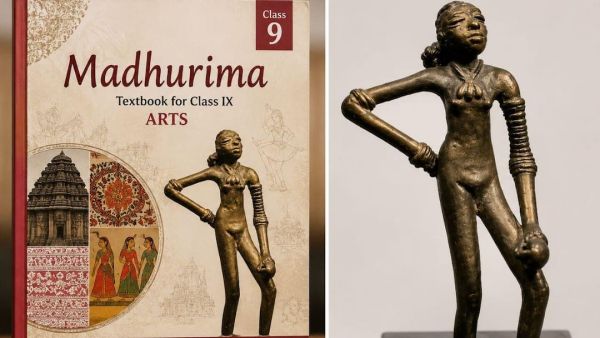
The National Council of Educational Research and Training (NCERT) has decided to reinstate the original image of the famous "Dancing Girl" figurine from Mohenjo-daro in its Class 9 Arts textbook, following widespread criticism over the modified version featured in the newly introduced publication.
The issue sparked discussions among educators, historians and academics after the renowned artefact from the Indus Valley Civilisation appeared in the textbook with its bare torso visually covered. The depiction drew attention because it differed significantly from the original bronze sculpture that has long been recognised as one of the most iconic archaeological discoveries from ancient India.
According to media reports, when asked whether the NCERT will replace the retouched image of the 'Dancing Girl' in the Class 9 Arts textbook with the original version, its Director Dinesh Saklani replied in the affirmative.
Controversy Surrounds Modified Illustration
The altered image appears in the opening chapter, "History of Arts", of Madhurima, NCERT's new Class 9 Arts textbook. In the published version, shading was used across the upper portion of the figurine, making it look different from the original artefact discovered at Mohenjo-daro.
The change attracted criticism because NCERT's Class 6 Social Science textbook already includes an image of the same figurine that closely resembles the original sculpture.
Why the Dancing Girl Remains Significant
The chapter identifies the Dancing Girl as a bronze figurine from Mohenjo-daro dating back to around 2600 BCE. According to the textbook, the sculpture was created using the "lost-wax technique prevalent in West Bengal, Jharkhand, and Chhattisgarh".
"This sculpture depicts a posture with one knee bent, one hand on the waist and a slightly lifted chin," it added.
Discussing the importance of the artefact, Danino said researchers continue to debate its exact meaning and cultural context. However, he pointed out that similar postures have been identified on artefacts found at the Harappan site of Bhirrana in Rajasthan, suggesting that it held "a precise cultural value, probably an artistic one".
Discovered at Mohenjo-daro, the Dancing Girl remains one of the most recognised symbols of the Indus Valley Civilisation and continues to hold a prominent place in discussions on India's artistic and archaeological heritage.
-
NEET UG 2026 Admit Card: Over 10 Lakh Downloads Recorded In 24 Hours, NTA Addresses Server Load Concerns

-
5 Films Releasing This Friday; Rashmika Mandana And Samantha Ruth Prabhu To Compete At Box Office

-
Iran Hold New Zealand to a 2-2 Draw in 2026 World Cup Group G Clash

-
FIFA World Cup 2026: Cape Verde Stun Euro Winners Spain In Stunning 0-0 Draw At Atlanta

-
India’s Emergency Weather Alert 'Cell Broadcast' Tech System Faces An Overuse Trust Crisis: Here's Why 'Alert Fatigue' Could Be Damaging