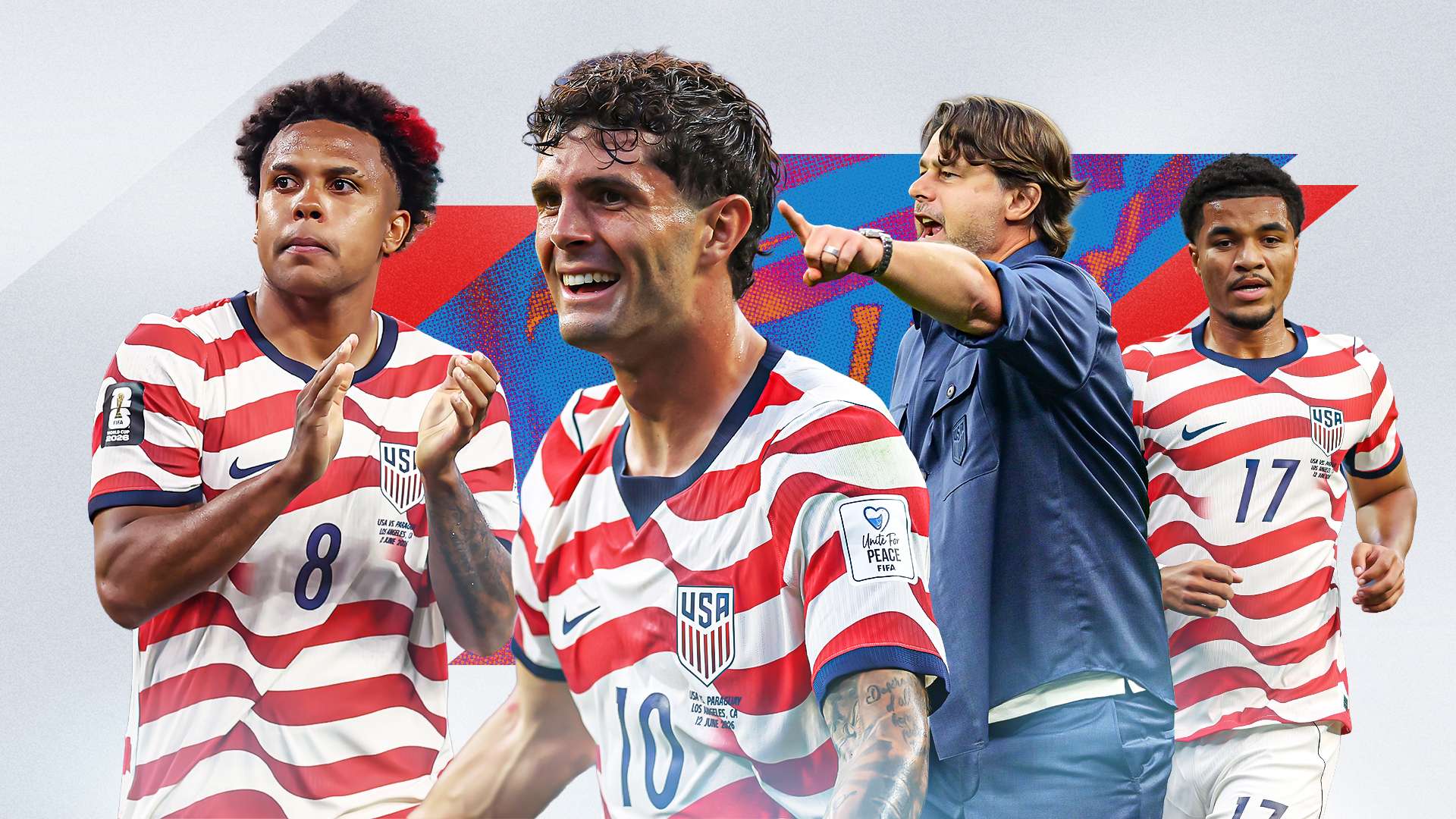
With Christian Pulisic’s availability still uncertain, the U.S. Men’s National Team (USMNT) must find solutions to counter Australia’s towering defence, handle the Socceroos’ physical approach, and maintain tactical balance in a pivotal World Cup group stage clash.
SEATTLE – The mood remains upbeat within the USMNT camp, and understandably so. A commanding 4-1 victory over Paraguay in their World Cup opener has provided optimism and a boost in confidence heading into their next challenge.
However, momentum can shift swiftly in tournament football. That early joy has gradually given way to a more focused mindset as attention turns to the next hurdle – Australia – a match likely to be even more decisive in shaping their World Cup journey.
The equation is straightforward: a win would all but secure top spot in the group and a favourable path to the knockout rounds. A draw would leave everything to play for in their final fixture against Turkey, while a defeat could quickly erase the positive energy from their opening triumph.
In short, Friday’s match carries immense significance for both sides. Here are the five key aspects that could decide the outcome of the second group stage fixture between the USMNT and Australia.
The Pulisic situation
This is the major storyline. Everything depends on one man’s calf. If Pulisic is fit, it’s business as usual. If not, the strategy could change dramatically.
Throughout the week, there has been little clarity on his condition. The American captain has been restricted to individual gym sessions and light drills, observed only briefly by the media. When questioned on Thursday, Mauricio Pochettino indicated that the decision would come down to the final moments before the match.
“He was training individually the whole week, but as always, tonight – the day before the game – we’ll meet with the medical team to assess all players and decide what’s best,” Pochettino explained. “He’s improving, much better than on Friday. We’ll see. If he’s not ready for tomorrow, he’ll be available for the next one. He’s making a huge effort to be ready.”
“For every player who loves their country, this is a special opportunity to perform and help the team win. When injuries happen, it’s tough, but Christian is strong-minded and doing everything possible to return quickly.”
If Pulisic is fit, Pochettino is unlikely to alter the starting XI. If not, a reshuffle will be inevitable. Options include pushing Malik Tillman higher up, giving Gio Reyna a start after his goal against Paraguay, or deploying Tim Weah’s speed, Brenden Aaronson’s relentless energy, or Alex Zendejas’ creativity.
“Christian is amazing, as he showed against Paraguay,” said Weah. “His skill and what he brings to the team are incredible. He’s one of the best players I’ve played with, and I hope he’s ready for the next match.”
Breaking down Australia
The term of the week has been “man-mountain.” The smallest of Australia’s three central defenders, Alessandro Circati, stands at 6 feet 3 inches. The Socceroos’ backline is not only tall but also well-drilled and physically imposing.
That was evident in their previous match against Turkey, where even elite talents like Arda Guler, Kenan Yildiz, and Hakan Calhanoglu struggled to penetrate a disciplined Australian defence. Their success wasn’t down to luck but to structure, discipline, and sheer physical presence.
“Their backline is very solid,” Aaronson noted. “They’re hard to play against – a back five full of big, strong players.”
The USMNT have players accustomed to physical contests – Tillman, Folarin Balogun, Weston McKennie, and Sergino Dest have all faced similar challenges in Europe. The question is whether they can now create openings against a side that thrives on defensive resilience.
Guarding against the counter
Against Paraguay, the Americans pressed relentlessly, recovering the ball high up the pitch and smothering any counterattacks before they began. Their centre-backs often pushed beyond midfield, confident in their ability to recover possession quickly.
Australia, however, pose a different threat. With the explosive pace of Nestory Irakunda, they can transition from defence to attack in seconds – a danger for a US backline featuring an experienced 38-year-old and another player returning from injury.
“It’s about staying balanced and proactive,” said Antonee Robinson. “When we lose the ball, we need to react immediately and position ourselves to prevent dangerous counterattacks.”
Pochettino must decide how aggressive his press should be. A full-throttle approach could expose vulnerabilities, while a more cautious stance risks surrendering initiative. Finding the right equilibrium will be crucial.
The midfield duel
The USMNT’s attacking setup against Paraguay combined complexity with simplicity – and the key lay in midfield movement.
Repeatedly, McKennie and Tillman surged into Paraguay’s defensive zones, drawing markers and opening gaps for teammates like Pulisic, Balogun, or Dest to exploit. This dynamic interplay produced a chain reaction of space and opportunity that powered their attack.
“On the eve of the match, Mauricio walked us through how we needed to cover each other and transition both ways,” captain Tyler Adams said. “We felt prepared for the movement patterns we’d practised.”
It was a tactical masterstroke – but can lightning strike twice? Australia possess technically sound midfielders capable of matching that intensity. They may also use physical challenges to disrupt rhythm and flow.
With the USMNT expected to dominate possession, their ability to adapt to Australia’s adjustments will be key. Should the Socceroos solve the puzzle, the Americans may find themselves frustrated as Turkey were previously.
‘That was not a friendly’
Pochettino encourages his squad to play with emotion – feeding off the crowd’s energy and turning it into intensity. But Australia are no strangers to that approach.
When these teams met last autumn, the USMNT emerged 2-1 victors, but it was a bruising affair. Pulisic sustained an injury, and several players left the pitch battered after a physical encounter.
“That was not a friendly,” Pochettino emphasised. “Did you see it? That was not a friendly match.”
That level of intensity is now the baseline, especially in a World Cup setting. The stakes will be even higher this time.
Adding further fuel is a recent exchange of words between pundits from both nations, each claiming the other side is underestimating them. With group supremacy on the line – and new tiebreaker rules adding pressure – Friday’s winner will be well placed to finish first.
Ultimately, the match will hinge on composure amid chaos. There will be collisions, fouls, and flashpoints. The team that maintains focus under pressure will likely walk away with three points and momentum on their side.
-
Marcus Rashford focused solely on Barcelona move despite Anthony Gordon’s signing
-
'He’ll never be Lionel Messi!' – Cristiano Ronaldo labelled a 'burden' on Portugal as Roberto Martinez urged to drop him to the bench at World Cup
-
Production Spec Tata Sierra EV Shown, Dual Motor Expected

-
PoJK Protest Crackdown: 2 Killed, 8 Injured As Rangers Open Fire Near LoC
-
Will The US-Iran Agreement Force Israel Out Of Southern Lebanon?