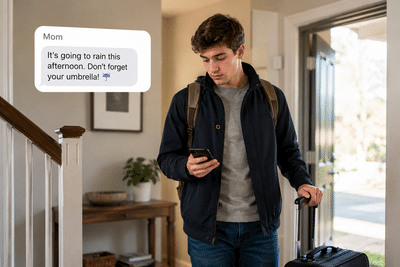
This scene plays out in millions of households every week. A grown professional is walking out the door for a job interview or packing for a weekend trip when their phone buzzes. It is a text message from a parent warning them that it is going to rain this afternoon and to make sure they take an umbrella. Or perhaps it is a casual phone call that ends with a sudden reminder not to forget an upcoming dentist appointment or a basic weekend errand.
It can be very irritating for the adult who receives these text messages out of nowhere. At that moment, a reminder about the weather or another task can feel like a subtle challenge to your competence. It can make you feel controlled, or seem like sheer stubbornness on their part, as if they are not accepting you as a capable adult.
However, research in behavioural psychology and family dynamics suggests a more nuanced explanation. When parents send these practical reminders, they may be acting out of habit and concern rather than a desire to control your life. Instead, they are navigating a deep-seated neurological reality: the habits of intensive caregiving do not simply shut off when a child turns 18 or moves out. Those protective behaviours can remain highly active in a parent's brain long after their children no longer strictly need them.
A parent's protective radar never really switches off
To understand why a parent continues to track your daily logistics, you have to look at the sheer amount of time they spend doing exactly that. For more than two decades, a parent's primary biological and psychological directive was to keep a child safe, healthy, and organised. They spent years scanning the physical environment for small threats, checking for freezing temperatures, monitoring calendar deadlines and ensuring developmental milestones were met.
The ongoing feeling of responsibility creates what is known by psychologists as a “caregiving schema,” which is a mental construct that will go on to shape the interpretation of information throughout a lifetime.
In a study published in the, researchers examined the different fears parents and adult children have about each other to better understand this lifelong protection process. The results showed clear differences between the generations. While adult children are mainly concerned about their parents’ health issues due to ageing, parental worries are extremely diverse and detailed. They may continue to think frequently about their children's well-being.
When a parent texts you about a rainstorm, they are not necessarily doubting your judgment. It may simply be a habit that still fires automatically.

The momentum of a decades-long logistical habit
The effort of organising daily life can leave a lasting psychological habit. Adult micro-parenting can be understood as the product of habits built over many years.
This continuity is demonstrated in , where scientists have studied the relationship between midlife parents and their grown children. The research found that many parents communicate with their grown children weekly, and about half think about, interact with, or keep track of them every day. As the model explains, the parent's brain keeps doing this work because it has managed your life for decades.
Giving a daily reminder can be an automatic extension of a deeply hardwired habit of caring about your comfort and success. It is a familiar language of care that many parents use naturally.
When you were seven, making sure you wore a coat or got to an appointment was a critical act of protection. Now that you are an adult, the reminder may look the same even though the stakes have changed. It may not be an active decision to baby you; it can be a behavioural loop running automatically in the background.
Reframing the reminder as a gesture of connection
Recognising these practical alerts as habits rather than controls can improve parent-child relationships. The next time you get a reminder about a chore or the weather, pause before reacting defensively.
Instead of reading the message as a sign that your parents think you are incompetent, take it at face value: it may simply reflect an active protective instinct. Your parents' caregiving habits may simply be running on old patterns that helped keep you safe as a child.
-
Manchester United and Arsenal eye Bournemouth star Alex Scott valued at £60m after World Cup snub

-
Kidney Health: Want to keep your kidneys healthy? Adopt these simple habits in your daily life

-
Yoga For Hair Growth: These 3 yoga asanas are effective in reducing hair fall and growing new hair.

-
New Realme smartphone launch with stylish look! Equipped with an 8,000mAh battery… the price and features have increased the curiosity among users

-
From WhatsApp to AI, Indian minds are at the helm of the world’s biggest companies.