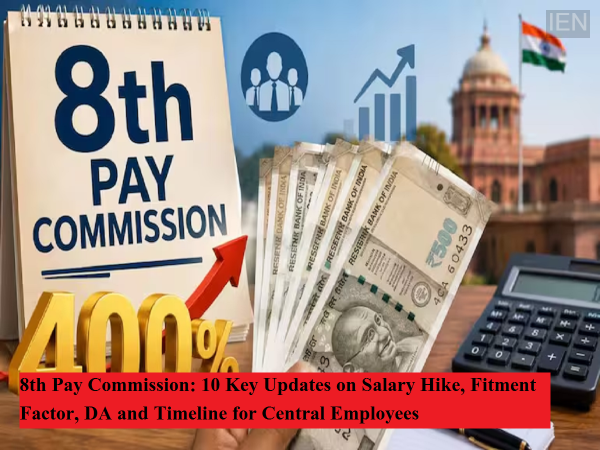
The 8th Pay Commission has entered an important phase, bringing fresh developments for nearly 50 lakh Central Government employees and over 65 lakh pensioners across India. The commission is currently conducting nationwide consultations to gather feedback from employee unions, pensioners' associations, and government departments before preparing its recommendations on salaries, pensions, allowances, and other service benefits.
Headed by former Supreme Court judge Justice Ranjana Prakash Desai, the commission is collecting stakeholder inputs through both physical meetings and an online portal, which will remain open for data submission until June 30, 2026.
While no final recommendations have been announced yet, several employee organizations have submitted proposals seeking a substantial increase in minimum basic pay, a higher fitment factor, and changes in the Dearness Allowance (DA) calculation system.
Here are the ten biggest updates from the 8th Pay Commission process.
1. Employee Unions Seek Higher Minimum Basic Salary
One of the biggest demands placed before the commission concerns the revision of the minimum basic salary.
Major employee organizations, including the National Council (JCM) and the All India Defence Employees Federation (AIDEF), have proposed increasing the minimum basic pay from the current ₹18,000 to ₹69,000.
Another employee body, the Maharashtra Old Pension Organisation, has suggested a revised minimum salary of ₹65,000.
These are proposals submitted to the commission and have not yet been approved by the government.
2. Railway Associations Have Separate Salary Proposals
Railway employee organizations have also submitted independent recommendations.
The Indian Railway Technical Supervisors Association (IRTSA) has proposed fixing the minimum salary at ₹52,600, citing changes in economic conditions and cost of living.
Meanwhile, the Railway Senior Citizens Welfare Society (RSCWS) has recommended that salary calculations should be based on the Consumer Price Index as of January 1, 2026.
3. Fitment Factor Remains a Key Issue
The fitment factor plays a crucial role in determining revised salaries under every Central Pay Commission.
Several employee organizations have requested a higher fitment factor to ensure a meaningful increase in pay. The IRTSA has suggested different fitment factors such as 2.92, 3.50, and 3.80, particularly for safety-category employees in higher pay levels.
The final fitment factor will be decided only after the commission completes its review and submits recommendations.
4. Fresh Proposals on Dearness Allowance
Employee organizations have also proposed changes to the method of calculating Dearness Allowance (DA).
Among the major suggestions are:
-
Linking wages more closely with inflation.
-
Providing a minimum 4% DA increase.
-
Merging DA with the basic salary once it reaches 50%.
No decision has been taken on these proposals so far.
5. Online Data Submission Continues Until June 30
Although the deadline for submitting formal memorandums ended on June 15, 2026, the commission has kept its online portal open until June 30, 2026 for additional stakeholder data and feedback.
The information collected will help the commission prepare its recommendations.
6. Current Members of the Commission
The 8th Pay Commission is chaired by Justice Ranjana Prakash Desai, former judge of the Supreme Court of India.
Other key members include:
-
Professor Pulak Ghosh, member of the Prime Minister's Economic Advisory Council.
-
Pankaj Jain, former IAS officer, serving as Member Secretary.
The panel is responsible for reviewing salaries, pensions, allowances, and other service conditions for Central Government employees.
7. More Consultation Meetings Scheduled
The commission continues to interact with employee organizations across the country.
Upcoming consultation visits include:
-
Bhubaneswar (Odisha): July 6–7, 2026
-
Kolkata (West Bengal): July 9–10, 2026
These meetings are expected to gather additional feedback before drafting the final recommendations.
8. More Than One Crore Beneficiaries
The recommendations of the 8th Pay Commission are expected to affect more than 1.15 crore people, including approximately:
-
50 lakh Central Government employees
-
65 lakh pensioners
The beneficiaries include personnel from departments such as Railways, Defence, Central Ministries, and various government agencies.
9. When Could the Final Report Be Ready?
Traditionally, Central Pay Commissions take around 18 months to complete their work.
Based on this timeline, the commission's final recommendations are unlikely to be submitted before early 2027.
While some employee representatives expect major announcements during the 2027–28 financial year, there has been no official confirmation regarding the exact implementation schedule.
10. When Might Employees Receive Revised Salaries?
Even after the commission submits its report, implementation requires government approval and administrative processing.
Looking at previous Pay Commission cycles, salary revisions have typically taken two to three years from the formation of the commission to full implementation.
As a result, if the government's approval process follows a similar timeline, revised salaries and pension benefits may be implemented sometime between 2029 and 2030. However, the final schedule will depend entirely on decisions taken by the Central Government after reviewing the commission's recommendations.
What Employees Should Keep in Mind
The 8th Pay Commission is currently in the consultation stage, and many of the figures circulating—including proposed minimum salaries, fitment factors, and DA changes—are demands submitted by employee organizations rather than approved government decisions.
Central Government employees and pensioners should rely on official announcements for confirmed information regarding salary revisions, pension reforms, and implementation timelines. Until the commission submits its report and the government accepts its recommendations, all proposed figures remain under consideration.
-
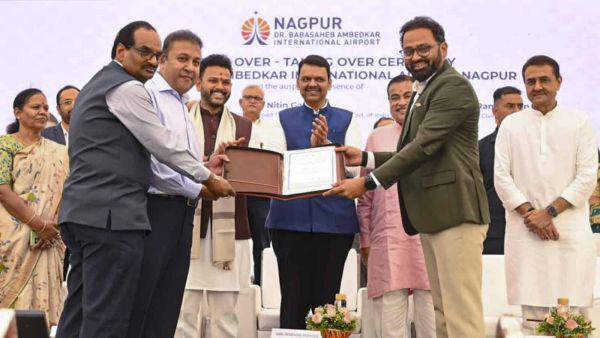
GMR Aero takes over operations of Nagpur Airport
-
Why FNP Is The Best Place To Order Cakes Online

-
'Expression of patience, care': Sheikha Bodour sits down with weavers in Jaipur

-
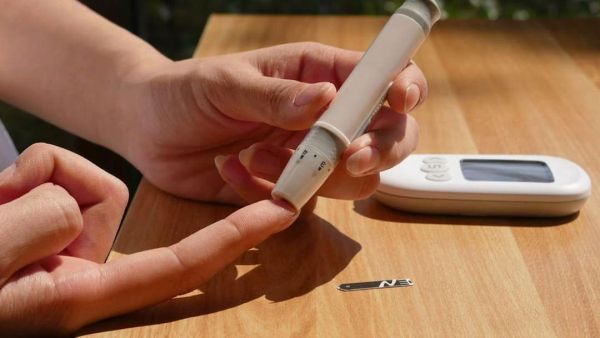
First Drug To Delay Type 1 Diabetes Gets UK Approval, Offers New Hope
-
Neuroscience Driven Footwear: Can Sensory Stimulation Improve Focus?