
On Friday, Union Home Minister Amit Shah highlighted the next three years as pivotal in determining whether drugs will dominate the nation or if India can decisively combat the narcotics trade. While presiding over the 10th high-level meeting of the Narcotics Coordination Centre (NCORD) at Vigyan Bhawan in New Delhi, he unveiled a vision document for drug control covering the period from 2026 to 2029. This document outlines a collaborative roadmap addressing the drug issue through strategies such as reducing demand, curbing supply, and minimizing harm.
Launch of New Initiatives
Shah also released the annual report of the Narcotics Control Bureau (NCB) for 2025 and virtually inaugurated new zonal offices in Jammu and Guwahati. Additionally, he initiated the 'Online Drugs Disposal Fortnight Campaign,' aimed at destroying over 209,500 kilograms of narcotics valued at more than ₹6,000 crores. Earlier this year, he instructed all central and state government departments to develop a clear roadmap by March 31, 2026, ahead of a nationwide campaign against drug abuse.
Collective Responsibility in the Fight Against Drugs Three Years Are Crucial
Shah emphasized that the battle against drugs is not solely the responsibility of law enforcement or a single agency; it requires a collective effort from the entire nation. He called upon state governments, central agencies, security forces, society, educators, youth, religious leaders, and women to actively participate in this campaign. He stated that for India to become a developed nation by 2047, protecting its youth from drugs is essential. Thus, a drug-free India is not just a law and order issue but also a matter of national security, social stability, and economic growth.
Narco-Terrorism: A Growing Threat Drug Trafficking and Terrorism
The Home Minister pointed out that drug trafficking has evolved beyond mere illegal trade; it has become intertwined with narco-terrorism. He noted that profits from drug trade are being funneled into funding terrorist organizations, organized crime syndicates, and cross-border terrorist networks. Shah explained that India is situated between the 'Death Triangle' and the 'Death Crescent,' making it highly vulnerable to international drug trafficking.
He further mentioned that traffickers are increasingly utilizing advanced technologies such as drones, shipping containers, the dark web, cryptocurrencies, online orders, and parcel delivery services to facilitate drug smuggling, presenting new challenges for security agencies.
-
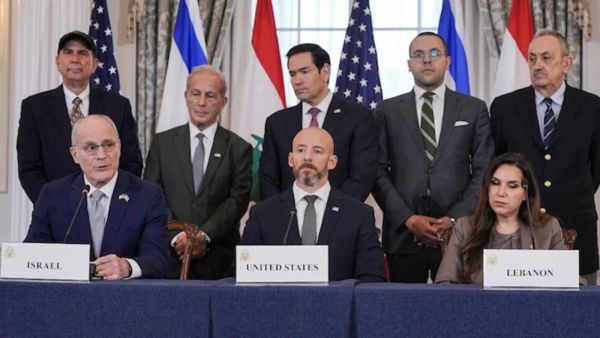
US, Lebanon, Israel sign trilateral agreement for peace deal
-
OPINION | America’s AI Kill Switch And The Quest For Digital Sovereignty

-
Mason Greenwood’s future sees new Fenerbahce development amid Marseille and United interests

-
Three Key Adjustments Thomas Tuchel Should Make for England Before Facing Panama

-
How Canada's inconsistent immigration rules are affecting international students