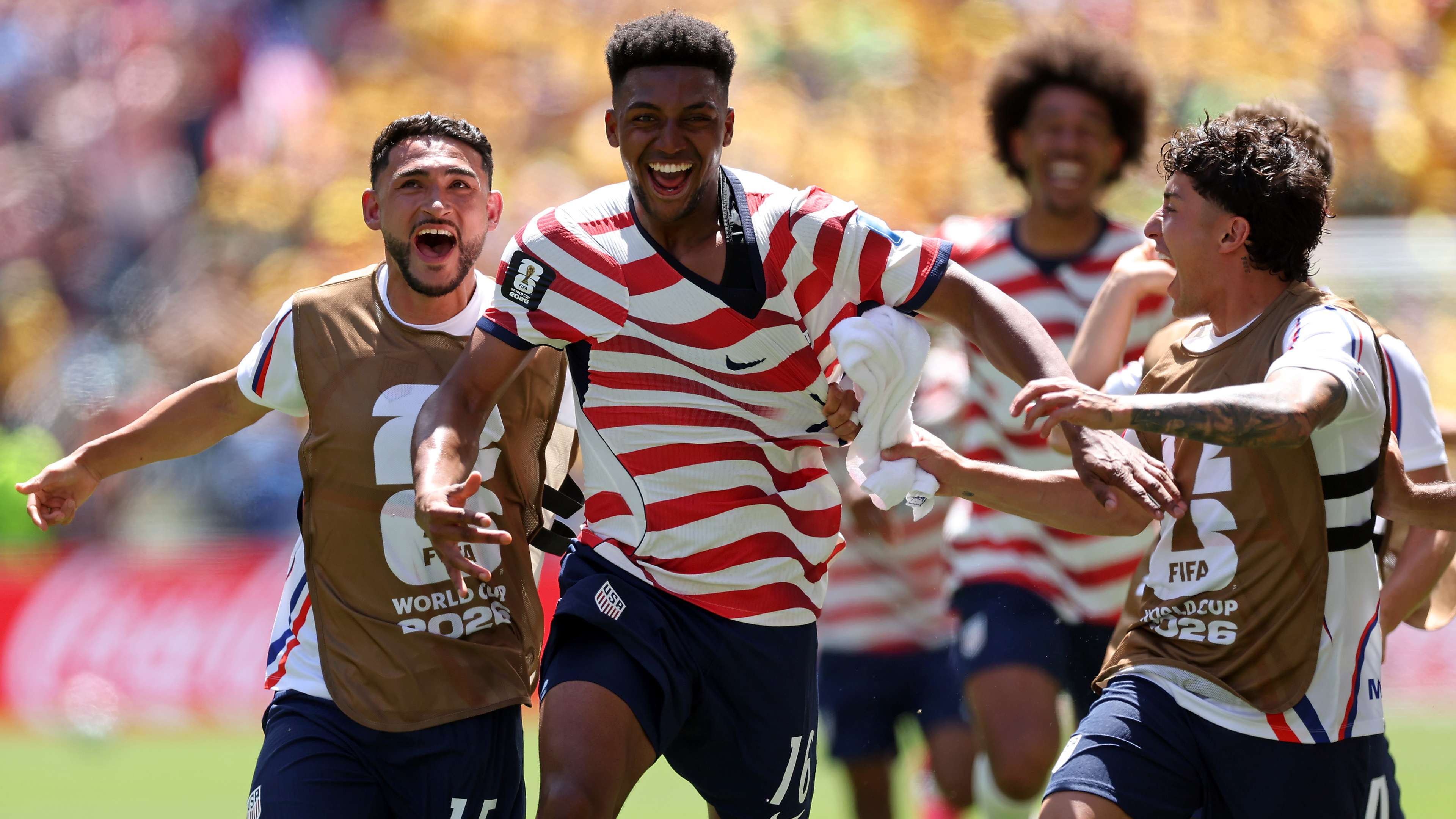
All three host nations have made a strong impression at the 2026 World Cup, and there’s growing optimism that each could make deep runs this summer.
With the group stage now complete for the United States, Mexico, and Canada, the good news is that all three have advanced comfortably to the Round of 32. The U.S. and Mexico secured qualification after just two matches, while Canada, though their progress was slightly complicated by group circumstances, also made it through.
It’s undoubtedly positive for the tournament that all host nations are performing well — it keeps the atmosphere vibrant and the crowds engaged.
Adding to that, each team has been handed relatively favourable knockout fixtures. The U.S. will face Bosnia, a team they are expected to beat. Mexico’s opponent will be one of Ecuador, Sweden, Cape Verde, or Senegal, while Canada will meet South Africa. All of these are winnable games. However, group-stage success tends to fade from memory quickly. In a few years, few will recall a solid win over Australia in Seattle — what matters now are results when the stakes rise. The real question becomes: can any of these teams — Canada, Mexico, or the U.S. — actually go all the way and win the World Cup? Here’s how GOAL’s writers break it down in this edition of The Rondo.
Which team among the USMNT, Mexico, and Canada has impressed the most?
Tom Hindle: Probably the USMNT. Mexico have looked good but haven’t fully convinced, even though they’ve earned the most points. El Tri’s main concern remains their struggles in front of goal. The U.S. are far from flawless, but they’ve shown they can adapt their style depending on the situation.
Alex Labidou: The U.S. have displayed high peaks, but questions persist about how they’ll handle European opponents and whether their defence can withstand sustained pressure. So I’ll go with Mexico — they’ve been consistent and remain unbeaten in 2026. Though still leaning on veterans, El Tri have also integrated some exciting young players. Gilberto Mora continues to show why he might be something special, and time will tell if the U.S. regret not using Brian Gutierrez more before his one-time switch.
Ryan Tolmich: Despite the defeat, I’d still say the USMNT. Everyone expected Mexico to thrive at the Azteca, and they did. Canada, meanwhile, stumbled into the knockouts. At full strength, the U.S. defeated two teams in ways few anticipated before the tournament. That outweighs their 3-2 loss to a strong Turkey side, especially considering the heavy rotation that day.
Which team raises the most concerns?
TH: Ironically, also the USMNT — mainly because it’s unclear what happens if injuries or suspensions hit. Pochettino’s plan A is working well, but is there a plan B? If there is, it hasn’t been evident. The U.S. can demolish weaker teams, but their ability to unlock compact, disciplined defences like Bosnia’s is questionable.
Canada are coping with several injuries, but Jesse Marsch’s knack for big-game setups could help them. The truth is that all three teams have flaws — which is part of what makes this tournament fascinating.
AL: Perhaps it’s a bit harsh given their injury situation, but Canada have looked shaky on both ends, particularly at striker, where neither Jonathan David nor Cyle Larin has nailed down the role.
Marsch deserves credit for motivating a squad that’s inexperienced at this level and dealing with major absences — Alphonso Davies, Moises Bombito, and Ismael Kone. Still, in pure performance terms, Canada trail both Mexico and the U.S. right now.
RT: Canada. Without a fully fit Davies, they just lack that game-changing spark. Sadly, it doesn’t look like we’ll see Davies at full strength this tournament.
Which player has stood out the most — and who’s been the biggest concern?
TH: Julian Quinones of Mexico has been a revelation — a wildcard who’s added unpredictability to El Tri’s attack. Most of the U.S. players have performed as expected, but Quinones brings something different. He doesn’t seem a natural tactical fit, yet he’s been one of the most dangerous players in the competition. As for concerns? Hard to point to one, but Canada’s lack of Alphonso Davies is glaring.
AL: Both answers come from the USMNT. They’ve relied more on moments of individual brilliance than Mexico’s collective approach. On the positive side, Folarin Balogun and Chris Richards have been standout performers in the group stage, and their absence was clearly felt in the loss to Turkiye.
On the other hand, Tim Weah’s form is worrying. He was one of the USMNT’s best players at the last World Cup, but his group-stage finale might have been his worst international outing. He also didn’t play against Australia, raising doubts about his current form and fit.
RT: Balogun stands out — he looks like the type of player who could decide a World Cup game on his own. Davies remains the biggest concern given his fitness issues.
Which team is likely to go the farthest?
TH: As much as Canada would make for a great story — Marsch getting one over his home nation — the USMNT seem best equipped for a deep run. Their attacking intensity is unmatched, and they look capable of winning multiple knockout matches. For Mexico and Canada, one knockout win might be the ceiling. Mexico’s home advantage at the Azteca could help, but their technical shortcomings will likely be exposed sooner or later.
AL: Despite Mexico’s consistency, their lack of sharpness up front could cost them in the knockouts. So I’ll back the U.S. again — their path to the semifinals looks clear, with winnable ties ahead. Beyond that, it’ll come down to form and belief.
RT: The USMNT have the clearest route ahead. Mexico may benefit from home support for a few rounds, but they’ll probably face England soon — a daunting task, especially if they first have to get past a solid Ecuador side.
Do any of the three have a realistic chance to win the World Cup?
TH: No.
AL: As mentioned earlier, the U.S. have the most straightforward path to the semifinals — which in itself would be historic. With home crowds behind them, if they catch a top side on an off day, anything’s possible.
RT: Unlikely, but football is unpredictable. Only a handful of teams have ever lifted the trophy, which makes it hard to picture a new winner — but it’ll happen someday. Why not now?
Does Pochettino deserve a new contract?
TH: Honestly, it depends. He’s spent the past couple of years building toward this World Cup with a tightly defined core of about 26 players. It’s worked well so far, but whether that merits another four-year deal is debatable. If he does stay, the next challenge will be to not just replicate this run but also push U.S. football forward. Perhaps an internal candidate might be better suited for that longer-term goal.
AL: It really comes down to how the team finishes this tournament. Reports suggest talks have been sensibly postponed until after the World Cup. Pochettino is undeniably one of the world’s top managers, but his recent “where’s my congratulations?” remark hints at some frustration. International cycles are tricky — repeat tenures rarely work unless you make history or win it all. For now, it’s too soon to call.
RT: Ask me again in a week. At this stage, nothing matters more than the next match or two.
-
Do not make these mistakes while planting a money plant, know the right direction and rules according to Vastu.

-
Beyond The Trend, What It Will Take For Regional Indian Food To Truly Belong On The National Table

-
This historical place of MP becomes a paradise during monsoon, every view from the palace floating in water to the echoing valleys will astonish you!

-
What is testicle bra and its benefits for men?

-
Why even the most expensive shampoo will not be able to stop hair fall?