
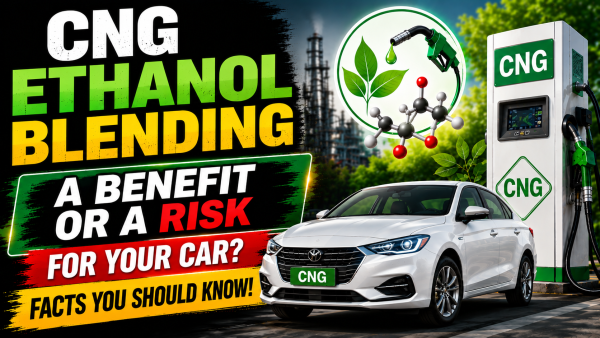
However, one question concerns millions of CNG vehicle owners: Will ethanol-blended CNG damage my car's engine, or will it offer long-term benefits? Here's a closer look at what experts and ongoing research suggest. What Is CNG Blending with Ethanol?
CNG primarily consists of methane (CH4). Under the proposed blending program, a small percentage of bio-ethanol or other clean fuels, such as hydrogen, may be mixed with CNG. Initial trials are expected to test blending levels between 5% and 10%.
The government's objective is to reduce dependence on imported natural gas while promoting cleaner and more sustainable fuels.
Experts believe the impact of ethanol blending in CNG differs from ethanol-blended petrol.
Improved Combustion Performance
Ethanol has a high octane rating. When blended in controlled proportions, it can improve combustion efficiency, allowing fuel to burn more effectively inside the engine. This may lead to smoother performance and slightly better throttle response.
Risk of Corrosion in Older Vehicles
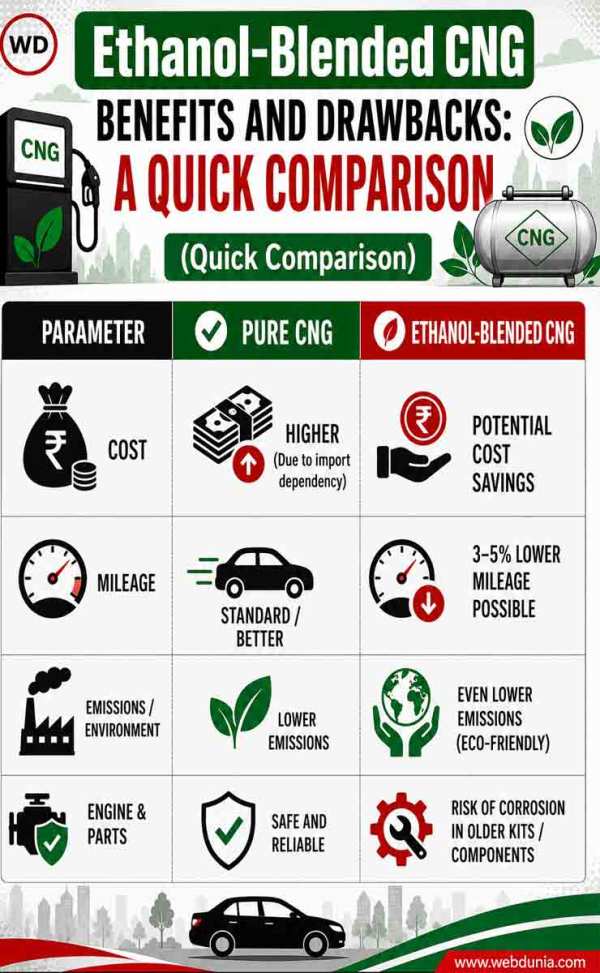
One characteristic of ethanol is that it absorbs moisture. If the blending percentage exceeds recommended limits, it could increase the risk of corrosion in older CNG kits, rubber seals, and fuel lines.
However, modern BS6-compliant vehicles and future CNG models are expected to be engineered to handle these fuel blends safely.
Lower Fuel Costs
India imports more than half of its natural gas requirements. Blending domestically produced ethanol with CNG could reduce fuel costs over time, potentially helping stabilize or lower CNG prices.
Cleaner Emissions
CNG is already considered a clean-burning fuel. Adding ethanol could further reduce carbon emissions, making it an even more environmentally friendly option and helping improve urban air quality.
Better Engine Efficiency
Optimized fuel combustion may enhance engine efficiency and deliver slightly improved acceleration and driving performance.
Challenges and Potential DrawbacksSlight Reduction in Mileage
Ethanol has a lower energy density than pure CNG. As a result, vehicles running on blended CNG may experience a 3% to 5% drop in fuel economy, depending on the blending ratio.
Older Aftermarket CNG Kits May Face Issues
Vehicles fitted with older aftermarket CNG conversion kits could be more vulnerable to wear and tear. Ethanol may cause aging rubber seals and fuel pipes to deteriorate faster if they are not designed for blended fuels.
At this stage, experts say there is no reason for concern.
Organizations such as the Automotive Research Association of India (ARAI) and leading engineering institutes are extensively testing ethanol-CNG blends before any nationwide rollout. The government is expected to approve only blending levels that are safe for existing CNG engines, with around 5% blending being the most likely starting point.
If you're planning to buy a new CNG vehicle, experts recommend choosing a factory-fitted CNG model, as these vehicles are designed to comply with future fuel standards and technological upgrades.
As India moves toward cleaner mobility, ethanol-blended CNG could become another important step in reducing fuel imports and cutting emissions—provided the technology is implemented carefully and supported by compatible vehicle designs.
-
Intense Competition Expected in SSC CGL 2026 Exam with New Changes

-
RRB Technician Recruitment 2026: Apply for 6,565 Vacancies

-
Exciting Job Openings for Probationary Officers at SBI

-
NBEMS Announces Revised Schedule for Recruitment of 53 Group B and C Positions

-
NHSRCL Recruitment: 224 Positions Open for India's First Bullet Train Project