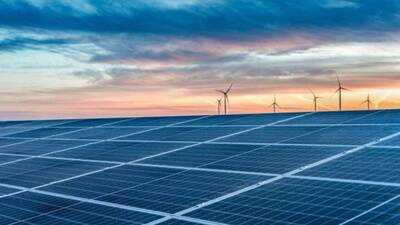
Solar energy is a renewable and clean source of energy which is expanding rapidly around the world. As its adoption grows, it is driving a market for innovation that makes solar technology more efficient.
According to BGR, scientists have revealed an interesting fact that building solar farms on degraded land can benefit wildlife and biodiversity.
In the Netherlands, researchers have launched an innovative project at the Bomhofsplas Floating Solar Farm . Built on the surface of a lake this is a solar power installation. Researchers established around 20 “Biohuts” underwater as a part of the project. It was installed to create safe habitats for fish and other aquatic organisms.
What are Biohuts ?Between the years 2020 and 2023, the Dutch researchers have conducted research and studied the Biohuts. These are essentially underwater cages designed for serving the sources of food to small fish. It will also provide artificial shelters for them.
This had an effect and researchers found that the Biohuts have gradually developed into self-sustaining miniature ecosystems, supporting microorganisms, insects and other wildlife, demonstrating how the artificial habitats can strengthen biodiversity.
The benefits were not only restricted to life underwater, but also it was revealed in 2021, in a journal, Sustainability that birds could be heard beneath the floating solar panels , suggesting that birds may have built nests in that area. The findings indicate that floating solar farms can provide habitat for both aquatic and bird species.
How was it useful?The end of the study showcased that the Biohuts installed beneath the Bomhofsplas Floating Solar Farm had attracted more than 400 fish and nearly 2,000 invertebrates, including mussels and sponges.
The results focused on the fact that that these artificial habitats flourish biodiversity by providing food, shelter and breeding spaces for aquatic life.
Researchers claimed the results make floating solar farms even more efficient for combining renewable energy with nature conservation.
The floating solar panels also provide many other environmental benefits by shading the water. It helps in reducing evaporation, while the water naturally cools the panels, improving their efficiency.
Boosting wildlifeAccording to the results of the Floating Solar Farm, researchers suggest that renewable energy projects can be planned well to benefit wildlife and also to generate clean electricity.
The possibility that birds are nesting beneath the floating solar panels is particularly noteworthy because wind and solar energy projects have often been linked to negative impacts on bird populations.
By combining floating solar panels with underwater Biohuts, the project has created habitats for fish, invertebrates as well.
Similar approaches are being adopted in other parts of the world. In California, for example, some solar farms have been designed with specially built fences that allow the endangered San Joaquin kit fox to enter safely while keeping larger predators out.
Researchers say such initiatives direct that renewable energy projects can be planned to protect local wildlife. Beyond generating carbon-free electricity, these projects can also conserve biodiversity, improve ecosystems and provide wider environmental and social benefits for nearby communities.
-
Govt protecting AIMIM: Union Ministers on Fatima College row

-
Karnataka seer ends 33-day Shivayoga Samadhi in Gadag

-
Jaishankar, Qatar PM review energy, trade, security ties

-
Gavi defends Cristiano Ronaldo from criticism as Spain and Barcelona midfielder praises the Portuguese legend ahead of World Cup clash

-
Manchester United considering move for Chelsea’s Andrey Santos