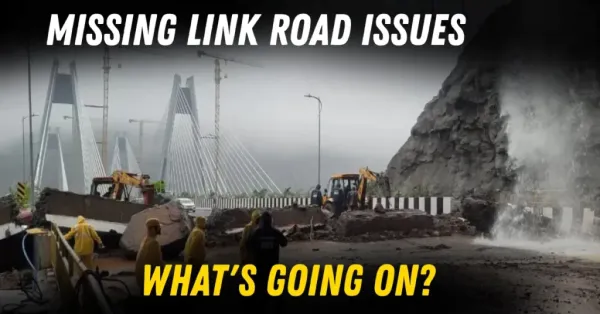
The Mumbai-Pune Expressway’s Missing Link section was originally intended to solve one of its biggest traffic bottlenecks. In under three months of opening, the Missing Link road has run into its first major disruption. A recent landslide blocked a key section of the corridor and caused structural damage to the Missing Link tunnel. What really happened here? We explain.
Khandala has many climatic and geographical challenges. The area receives heavy rainfall every year- averaging 551 mm annually. It has been raining heavily in Khandala in the past few days. In the early hours of July 6, 2026, sustained rainfall altered the natural flow of water along the hillside near the Missing Link alignment.
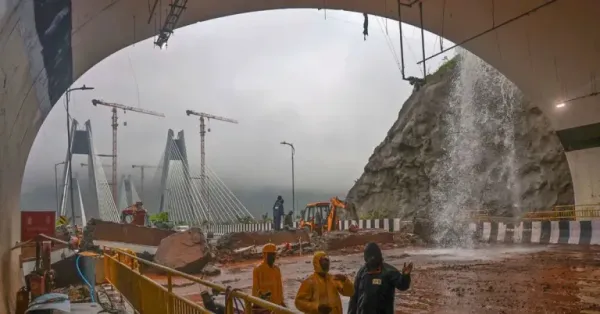
The sudden shift increased pressure on rocks and loose soil and soon triggered a landslide near the second tunnel’s entry (on the Pune-to-Mumbai side). Mud, rocks and debris came crashing down onto the road and the tunnel.
It has been reported that the impact caused a protective reinforced concrete slab of the tunnel to collapse and even damaged a portion of the retaining wall near the entrance. Reports further state that the tunnel itself hasn’t been affected structurally. Officials soon restricted access to the corridor and redirected traffic to the old ghat section.
This project stands out for its complexity and scale. The fact that it could not stand the first monsoon season since inauguration, is simply unacceptable. The two tunnels which are part of this project are equipped with advanced ventilation and safety systems. The alignments were designed to avoid sharp curves and known landslide-prone areas of the older route.
Spanning 8.9 kilometres in length, these are one of India’s longest road tunnels. Maharashtra State Road Development Corporation Ltd (MSRDC) was highly confident in designing and building the Missing Link road.
In a conversation with Lokmat Times, MSRDC Vice Chairman & MD Anil Gaikwad had spoken in detail about the various challenges his team had to tackle during the design and construction of the project. They were fully aware of the geographical and climatic challenges posed by the place. He even assured that the Missing Link was completely safe and designed to withstand the region’s demanding weather conditions. (Time stamp 2:03 in the video). He said that all safety precautions were taken during the construction and even post construction.
Despite these claims, a few days of intense monsoon rains have caused structural damage to the Missing Link! That’s alarming and unacceptable. The visuals emerging from the site make us question the authority of the claims (read ‘reassurances’) made by MSRDC over the project’s safety. This is too soon for a brand-new project of this scale to be damaged by the monsoons. The question now is of accountability. Who should be held responsible for this incident? What corrective measures will be implemented? Time remains before we find out.
This road was backed by a Rs 6,695-crore project. It was meant to bypass a the expressway’s 19.8km-long Khandala ghat section, effectively reducing the net travel time by around 25 minutes and travel distance by 6 km. This section is 13.3 km long and has two tunnels and a cable-stayed bridge. The Khandala section is infamous for its massive traffic jams and accidents, which the missing link would comfortably bypass. The missing link road aims to do three things- improve safety, ease traffic flow, and make intercity travel faster and more predictable.
The Missing Link was originally conceptualised in the 1990s. It actually opened on May 1,2026. That’s such a long time in making. The complexities posed by the terrain and the unpredictable geology were important reasons for the delay in completion.
Additionally, complex excavation work, environmental clearances, land acquisition hurdles, design changes and even pandemic- disruptions led to a delay in completion. Actual construction, by the way, began in 2019.
The landslide and the damage it has caused have already tuned into a political issue. Opposition parties have questioned how a project costing nearly Rs 7,000 crore could face such disruption in its very first monsoon season. Some even pointed to earlier reports of surface defects appearing after initial rains, and demanded accountability.
Maharashtra Public Works Minister Shivendrasinh raje Bhosale inspected the site along with officials from MSRDC and the police. According to the government, the landslide was caused by natural factors.
The minister confirmed that the tunnel structure remains safe and only the protective slab and part of the retaining wall were damaged. A detailed technical inspection will be carried out once the weather improves. A joint safety clearance will be required before the road reopens.
-
From Ekitike to Manzambi: Why Newcastle United Keep Missing Out on Top Premier League Targets

-
Rafflesia: The world’s largest and unique flower

-
Papaya peel is not trash but a treasure! Withered plants will become green as soon as they are planted

-
Can heavily fragranced body washes increase cancer risk?

-
Pakistan to make historic Miss World debut with Aneeka Meraj