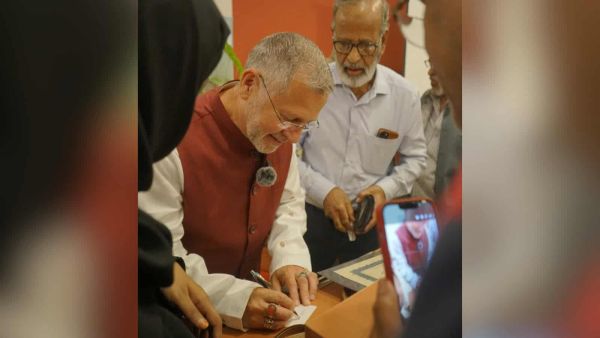
Hyderabad: Michael D Calabria has spent over 40 years studying Islam, first as an Egyptology student in Cairo, later as a Franciscan friar who now runs the Center for Arab and Islamic Studies at St Bonaventure University in New York. His 2021 book, “The Language of the Taj Mahal,” argues that the monument isn’t just a symbol of love but a spiritual text, built from Quranic verses meant to be read as a journey.
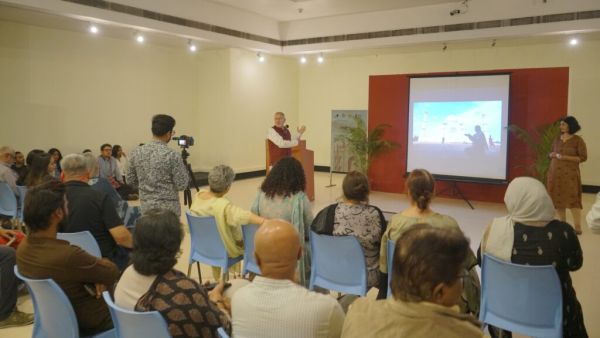
He brought that argument to Hyderabad on Wednesday, July 8, delivering “Reading the Taj Mahal Beyond Marble” at the Salar Jung Museum, in collaboration with Delhi Art Gallery and tied to Rana Safvi’s exhibition “The Mute Eloquence of the Taj Mahal: Ba-zaban-e Be-zabani.”
Siasat.com sat down with Prof Calabria after the lecture to talk about religious plurality, the interconnectivity of faiths and what gives him hope at a time of polarisation.

Excerpts…
Q. Your work bridges Christianity and Islam at a time when religious polarisation is increasing. As somebody who has studied this so deeply, what gives you hope?
Michael Calabria (MC): What gives me hope is the kindness that people show one another. There is a lot of evil in the world. People are getting killed, wars, all kinds of destruction, in which lives are destroyed, particularly young lives and those of the most vulnerable. It can become overwhelming. But a small act of kindness goes a long way — that could be just a smile. This is a very important concept in Islam, this idea of zakat, of charity. But your sadaqa can be a gesture of friendship, of caring. As long as I experience that, I can make it through the difficulties.
Also, I derive a lot of inspiration from the natural world. Where I live, we’re right in the migratory path of Canada geese. Every fall, they move from Canada to the south, because they know winter’s coming, and then the reverse will happen. They will head north in the summer months. And when I hear them honking, it gives me great hope. I’m very joyful when I hear them, because it says to me that in spite of all the terrible things going on in the world, the natural order continues.
And so, really, when I need some bit of solace, I look to the natural world. Even the texts of the Taj Mahal tell us that. In the central chamber of the tomb, in Surat al-Mulk, God says, “Do they not see the birds in the sky opening their wings and folding them in? Who upholds them?” And it’s absolutely true. If we take a moment to look at the wonders of the natural world, a bird in flight, who upholds that bird?
Q. So, you’ve been studying the Quran. How has that deepened your understanding of your own religion, Christianity?
MC: The Holy Quran is a text of fathomless depth. There is no end to the meaning that it conveys to humanity. We can never think that we know it, and that’s it. It always invites us to know it more. And there is such a power to the Quran. I always tell my students, there’s a certain imperative in the Quran. Allah says, you know these things, you have heard them from the prophets I have sent you. I have given you the tablets of the Torah. I have given you the Psalms of David. I have given you the Gospel. And now I give you the Quran. How much more will it take for you to understand? So, there’s this imperative.
But there is such great beauty in the language of the Quran. And I really appreciate its theological content, couched in some of the most profound, beautiful and sophisticated ways.
Q. On that note, what do you think are the misconceptions that Christians and Muslims have about each other?
MC: Oh, we have a lot of misconceptions about one another. Most of that has been churned up century after century by people who want power. Because history shows us that Christians and Muslims have worked together, have lived with one another, have created, have discovered together — and the best of what humanity offers is what has come about through the interaction of people of different religions, different cultures, different ethnicities.
So, I think, in short, there is a myth that Christians and Muslims have always been at odds, whereas when I look at the history of Christianity and Islam, I see more periods of good things happening than animosity.
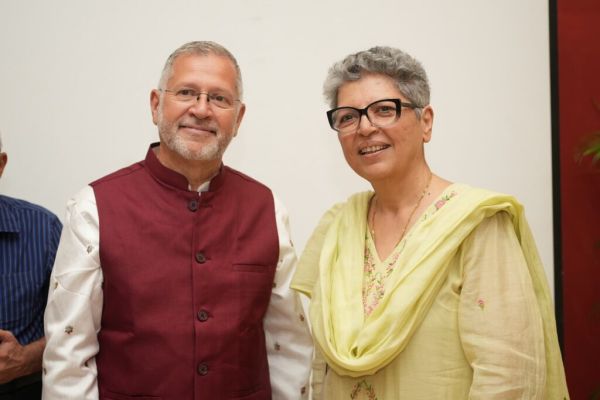
Q. India has centuries of shared religious traditions. So, what lessons can the world learn from this, even though it’s under attack at the moment?
MC: My expertise was really in the Middle East, and I spent a lot of time there. But when I discovered the Mughal period in South Asia, I shifted everything. Why? Because of that pluralism and that diversity that together created such magnificence. The Mughal period is a fantastic example of religious communities, ethnicities, and cultures coming together to create extraordinary things.
So, it troubles me when I hear about contemporary tensions, because India’s great gift to the world has been her pluralism, particularly religious pluralism.
Q. With the conflicts in West Asia forming more along religious lines, how do you think leaders can help prevent the weaponisation of religion?
MC: By looking at the victims of their decisions. What leader goes and sees the shattered bodies of children being buried by their parents? That’s the only thing, I think, that will stop us from doing such horrible things to one another.
Q. Has that, though?
MC: I don’t think the people who make the decisions see it. They don’t see it. They don’t want to see it.
-
Bruno Guimaraes Informs Newcastle United of Desire to Join Arsenal

-
Srihari says Surekha ‘misunderstood’ meeting with officials
-
BRS won’t revert to TRS, but won’t let Kavitha keep name either
-
Petrol tanker, milk lorry catch fire in accident in Bengaluru

-
Warangal couple suicide: Son claims neighbours forced conversion