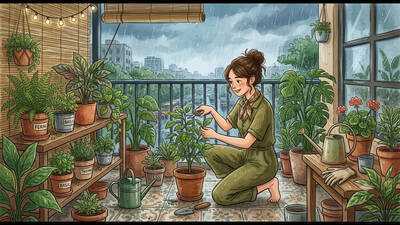
Monsoon may be the most rewarding season for balcony gardeners, but it is also the easiest time to make mistakes that can undo months of careful nurturing. The sight of rain-soaked plants often creates the comforting illusion that nature is taking care of everything, encouraging many gardeners to step back completely. In reality, the rainy season demands a different kind of attention rather than less attention. Excess moisture, high humidity and reduced sunlight create ideal conditions not only for vigorous plant growth but also for fungal diseases, root rot and pest infestations. Understanding a few common pitfalls can make the difference between a thriving balcony garden and one that begins to decline just when it should be flourishing.
You need to water your plants despite rainOne of the biggest misconceptions is that plants no longer need monitoring because it is raining every day. While rainfall certainly reduces the need for regular watering, not every pot receives the same amount of rain, particularly on covered balconies where many containers remain surprisingly dry. At the same time, repeatedly watering pots simply because it has become part of a daily routine can leave the soil permanently saturated. Roots require oxygen as much as they require moisture, and waterlogged soil deprives them of the air pockets they need to stay healthy. Before reaching for the watering can, it is always worth checking the moisture level by inserting a finger a couple of inches into the soil. If it still feels damp, the plant is usually better left alone.
No stagnant water, pleaseDrainage becomes even more critical during the rainy season. Every pot should have adequate drainage holes that allow excess water to escape quickly, yet many gardeners unknowingly block these openings with compacted soil or decorative liners. Equally problematic are the saucers placed beneath containers to protect balcony floors. While useful during summer, these trays can collect rainwater during the monsoon and leave pots standing in stagnant water for days, eventually causing root rot. Emptying saucers regularly and ensuring that excess water flows away freely are among the simplest but most effective ways to keep plants healthy.
Your plants can have fungal diseasesHumidity also creates the perfect environment for fungal diseases, which often appear as powdery white patches, black spots or yellowing leaves. Instead of ignoring these early warning signs, gardeners should remove infected foliage promptly to prevent the disease from spreading. The same principle applies to dead flowers, broken stems and damaged leaves, all of which should be pruned regularly. Removing unhealthy growth not only improves air circulation but also encourages the plant to direct its energy towards producing fresh, vigorous shoots rather than trying to sustain damaged tissue.
Finally, balcony gardeners should remain vigilant about standing water beyond their plant pots. Decorative containers, watering cans, empty planters and even folded tarpaulins can collect rainwater and become breeding grounds for mosquitoes within days. A quick inspection after every heavy shower takes only a few minutes but helps protect both the garden and the household.
-
Can Gregor Kobel Stop Lionel Messi? Switzerland Faces Argentina in World Cup Quarter-Final

-
Karbi Anglong's Land Rights and Job Security Issues Ahead of 2027 Elections

-
UPESSC Recruitment 2026: Applications for Assistant Professor posts reopen; opportunity to fill out the form until July 20..

-
Job opportunity for Class 12 pass-outs: Applications open for Aadhaar Operator and Supervisor recruitment—here's how to apply..

-
UIDAI Recruitment 2026: CSC Invites Applications for Aadhaar Supervisor and Operator Posts Across 17 States