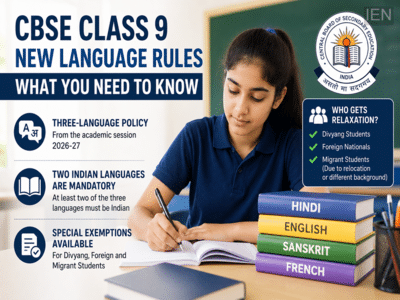
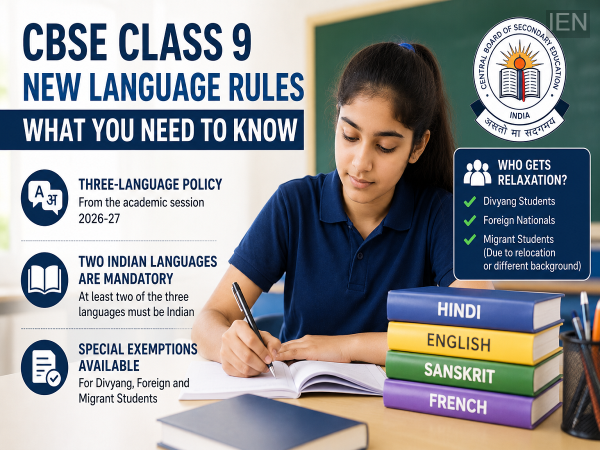
The Central Board of Secondary Education (CBSE) has introduced a revised Three-Language Policy for students entering Class 9 from the 2026–27 academic session. Under the updated guidelines, students will generally be required to study three languages, with at least two of them being Indian languages.
However, the board has also announced several exemptions for specific categories of students, ensuring that those facing unique circumstances are not disadvantaged. Here's a detailed look at the new policy and who qualifies for special relaxation.
What Has Changed in the New CBSE Policy?Beginning with the 2026–27 academic year, CBSE-affiliated schools will implement the revised language framework for Class 9. The policy aligns with the objectives of the National Education Policy (NEP) and aims to promote multilingual learning while encouraging students to gain proficiency in Indian languages.
According to the updated rules, students will normally study three languages during their secondary education, and two of these languages must be Indian languages.
Is the Third Language Mandatory?For most students, the answer is yes. Under the new CBSE guidelines, Class 9 students are expected to follow the three-language structure prescribed by the board.
The policy is intended to strengthen language skills, preserve India's linguistic diversity, and encourage students to become proficient in multiple languages during their school education.
Who Is Exempt from the Rule?Recognising that some students may face practical challenges, CBSE has provided exemptions for certain categories.
Students who may receive relaxation under the revised policy include:
-
Students with disabilities (Divyang students)
-
Foreign nationals studying in CBSE-affiliated schools
-
Students who have migrated from another region or educational system and face language-related difficulties
These exemptions are intended to ensure that students with special circumstances can continue their education without unnecessary academic barriers.
Why Has CBSE Introduced This Policy?The revised language policy supports the broader vision of promoting multilingual education in schools. Learning multiple languages is expected to improve communication skills, enhance cultural understanding, and provide students with greater flexibility in higher education and future careers.
The board has also attempted to balance these objectives with practical considerations by allowing exemptions where necessary.
What Should Students and Parents Do?Students entering Class 9 in the 2026–27 academic session should review their school's language options and understand how the revised policy applies to them.
Parents of students who fall under the exempted categories should consult their school authorities regarding the documentation and procedures required to claim the available relaxation under the new CBSE guidelines.
Final TakeCBSE's revised Three-Language Policy marks an important change for Class 9 students starting from the 2026–27 academic session. While most students will be required to study three languages, with two being Indian languages, the board has provided special exemptions for Divyang students, foreign nationals, and eligible migrant students. Understanding these updated rules will help students and parents prepare for the upcoming academic year with clarity.
-
AC Milan Manager Ruben Amorim Shows Interest in Noussair Mazraoui as Third Manchester United Target This Transfer Window

-
Jude Bellingham Shares Crucial Chat with His Mother Before England’s Win Over Norway

-
Airport security first, says Suvendu on Kolkata mosque access
-
England Test: Yastika Bhatia first woman to hit Test ton at Lord's
-
Middle East firms shift focus from AI adoption to AI ownership