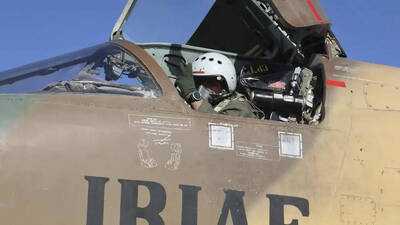
The Islamic Revolutionary Guard Corps (IRGC) of Iran has announced its involvement in a series of missile and drone strikes aimed at American military facilities in Bahrain. This operation is described as part of a broader retaliatory strategy against US forces in the Middle East. The announcement followed a confirmation from US Central Command (CENTCOM) regarding a significant offensive targeting military sites in southern Iran.
According to Iranian state media, the IRGC claimed to have attacked a US drone command center at Sheikh Issa Airbase in Bahrain, as well as a crucial helicopter maintenance facility and a hangar for P-8 electronic warfare aircraft. The IRGC referred to these actions as part of "Operation Nasr 2." However, these claims have not been independently verified, and US officials have yet to confirm any damage to the facilities mentioned.
Further Attacks on Military Installations IRGC Expands Claims Across Bahrain
The IRGC also reported that additional strikes targeted the Al Juffair military base in Bahrain, asserting that missile and drone attacks hit various facilities, including weapons storage sites, a satellite communications center, and a building utilized by American personnel. Iranian officials indicated that the operation is ongoing and warned of potential further phases if US military actions persist.
This latest announcement follows previous claims by Iran that the IRGC had destroyed fuel and ammunition depots at a US-affiliated airbase in Jordan. As with earlier statements from Tehran, no independent evidence has been provided to confirm the reported damage, and neither US nor Bahraini officials have validated Iran's assertions.
CENTCOM Conducts Coordinated Strikes CENTCOM Reports Five-Hour Offensive
While Iran publicized its retaliatory actions, CENTCOM reported that US forces had completed another series of coordinated strikes against Iranian military infrastructure on July 13. The five-hour operation targeted facilities in Bushehr, Chah Bahar, Jask, Konarak, Abu Musa, and Bandar Abbas, all situated along Iran's southern coast.
CENTCOM stated that precision-guided munitions were used against Iranian coastal defense systems, missile launch sites, drone facilities, and maritime capabilities. The aim was to further diminish Iran's capacity to threaten commercial shipping in the strategically vital Strait of Hormuz. The American military noted that over 50,000 US service members remain stationed in the Middle East, maintaining a high state of readiness. "American forces remain vigilant, lethal, and ready," CENTCOM emphasized, indicating that further operations could occur if regional tensions escalate.
This exchange marks a significant escalation in a conflict that has broadened beyond direct strikes within Iran to include reciprocal attacks on US military installations throughout the Gulf. Despite ongoing military operations, many claims from both sides remain challenging to verify independently.
-
Home remedies to get glowing skin

-
MP government surrounded by transfer dispute, Umang Singhar questions Narayan Singh Kushwaha’s allegations, demands investigation

-
Truecaller in trouble? TRAI sought special powers from the government; If approved, big action can be taken

-
Abhishek Sharma Personality Rights Case Explained: Delhi High Court Cracks Down on AI-Generated Fake Content

-
FIFA World Cup 2030 will be historic! Will 64 teams get a chance? Allusion to FIFA President Infantino