New Delhi: The Ministry of Power has released the draft Corporate Average Fuel Economy 2027 rules, widely referred to as CAFE III, for public feedback. The proposed standards will cover M1 passenger vehicles made or imported for sale in India from April 1, 2027. This category includes cars with up to eight passenger seats, apart from the driver.
For car buyers, this may sound like another thick government document. In real life, it could influence which engines, hybrids and electric cars reach showrooms. We have seen similar rules quietly change product plans before. Features such as automatic start-stop and six-speed gearboxes once felt premium. They are now common on many cars.
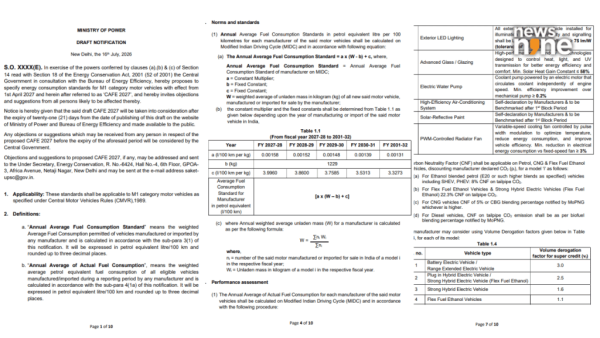
Cafe-III draft notification
What changes under Draft CAFE III?The rules will judge each manufacturer on the average fuel use of its full passenger vehicle fleet. A brand selling several heavy SUVs may need cleaner cars, hybrids or electric vehicles to balance its numbers.
Targets will get tighter each year between FY 2027-28 and FY 2031-32. Companies must report vehicle sales, weight, fuel use and carbon dioxide emissions.
The draft offers benefits for several technologies:
- Battery electric and range-extended cars receive a 3.0 super-credit factor
- Plug-in hybrids receive a 2.5 factor
- Strong hybrids receive a 1.6 factor
- Flex-fuel vehicles receive a 1.1 factor
- Start-stop systems, regenerative braking, LED lights and tyre-pressure monitoring can reduce a carmaker’s calculated fuel-use score
Manufacturers that beat their target can earn credits. These can be carried forward or traded with another carmaker. Firms missing their target may buy credits from the Bureau of Energy Efficiency.
The proposed credit price starts at ₹2,500 per gram of CO2 per kilometre in FY 2028 and rises to ₹4,500 by FY 2032. That could turn fuel efficiency into a direct business cost, not just an engineering target.
Small-volume manufacturers selling fewer than 1,000 eligible vehicles a year will remain exempt.
What car buyers could seeCAFE III may lead to more hybrids, electric cars, smaller turbo engines and fuel-saving equipment across price bands. Large petrol SUVs may become harder to sell without cleaner models elsewhere in the company’s line-up.
The government has opened a 21-day window for objections and suggestions. The final rules may still change, but the direction is fairly clear. India’s next car battle will be fought using kilometres per litre, battery packs and a rather serious compliance passbook.
-
US: Indian Muslim man stabbed in Utah over his religion

-
Aurum PropTech To Acquire Housing.com For ₹458 Cr

-
E20 Petrol Engine Damage Case: Raipur Consumer Court Orders Carmaker to Give New Car or Refund Rs.20 Lakh
-
E20 fuel row: FIR against content creators for 'defamatory posts' about Nitin Gadkari
-
Maiden FATs Of Indigenously Built Water Jets At M/S MJP Goa - 14 FPVs Project