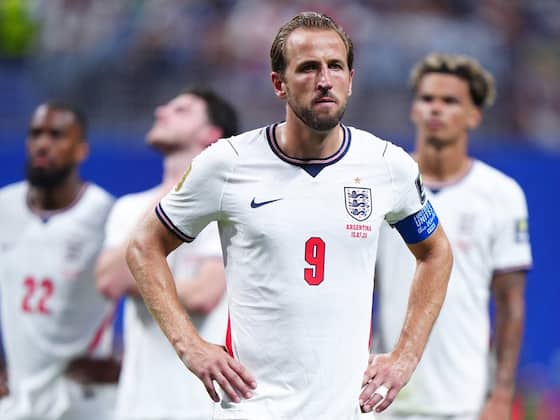
England’s exit from the World Cup might normally spark deep reflection in most footballing nations, but the Football Association (FA) appears to be showing little sign of self-examination.
After issuing a routine public statement saying “the players and Thomas gave it everything”, there were clear private hints that no major changes were being considered — or even discussed.
The FA seems fully committed, more convinced than ever that Thomas Tuchel remains the right man to lead England to glory at the home Euro 2028.
While broader debates about the future may come later, there is already a significant risk that Tuchel’s rapport with the players could fracture.
Tuchel was appointed for his reputation as a tactical mastermind and proven winner, a coach known for taking teams past the finish line. Yet, England’s play at this World Cup was alarmingly basic — a tactical regression that cost the players a genuine shot at history, accompanied by subtle suggestions that the squad lacked “belief”.
Thomas Tuchel has been under heavy criticism since England’s semi-final defeat, and the question now is whether he can retain the trust of his players.
It’s not difficult to see how this situation could deteriorate further. Within England’s camp, there’s a shared sense of regret — and, for some, a feeling of cosmic frustration — that perhaps it’s just never meant to be, that another major trophy might still be decades away.
That failure feels like a kind of reverse alchemy, especially given how much the FA has invested financially. Yet, paradoxically, that’s what makes this outcome feel like poetic football justice.
It’s a hard truth for many England supporters to accept, but one that sections of the FA arguably need to confront.
England were stunned late in the match by Argentina, and despite spending heavily to bring Tuchel on board, the team appears to have made little progress under his leadership.
Perhaps it’s healthy for international football that one of the richest nations — already endowed with countless advantages — doesn’t triumph simply because it can afford the costliest coach on the market.
What would that achievement represent? What lesson would it send? That money alone ensures victory? That success can be bought by hiring a “winner”?
That mentality already dominates club football. It’s fortunate that international football still demands something deeper — real ideas, identity and vision — and perhaps the FA’s current disappointment will force them to think more profoundly about these aspects.
However, the FA’s response thus far suggests otherwise.
The greater irony is that much of the groundwork has already been done. English football has used its immense wealth to build one of the world’s most admired talent development systems. The Elite Player Performance Plan has generated a steady flow of top-quality players, particularly in certain positions.
Yet this entire structure still lacks a cohesive overarching philosophy.
This is where Tuchel’s appointment reflects a deeper issue — and why this setback may, in some ways, be deserved.
Mark Bullingham has publicly backed Tuchel, but the FA should be asking what kind of team they truly want England to be. What should the national identity of English football look like? Which inherent qualities should be nurtured and translated into a modern tactical framework?
To his credit, Tuchel spoke about wanting England to play with a “Premier League style” — a game built on intensity and speed, aligning with the best attributes of English football. However, the reality was far removed from those words. Aside from a brief 15-minute spell against Croatia, England never resembled that vision.
In truth, Tuchel’s appointment mirrored a distinctly Premier League approach: when faced with a problem, just spend your way out of it instead of thinking it through.
It’s telling, if not inevitable, that the FA has adopted this mindset during a period when it enjoys independence from the Premier League’s direct control.
To be fair to Tuchel, some of England’s shortcomings stem from structural issues. The country still struggles to produce a midfield orchestrator — the type of intelligent playmaker capable of dictating the tempo. This limitation ties back to the argument that England lack tactical maturity and composure at critical moments.
It’s remarkable how familiar this all feels, as though nothing has changed since 2016, 2010, or even 1998: England unable to control a match, falling short when facing elite opposition.
Such criticism might seem harsh, given England were on the verge of a second straight major final — and a third in four tournaments — but that fine margin defines the difference between success and failure.
England’s vast resources can produce a wave of high-quality players capable of reaching the latter stages, but crossing the final hurdle requires something deeper — a coherent footballing philosophy.
Interestingly, this tournament could have marked the fourth consecutive year that Spain met England in a major final — across men’s and women’s competitions. And while some might resist comparing the two, the parallels are striking and revealing.
Each of those encounters followed the same pattern: Spain dictating play, England chasing shadows and struggling to impose their rhythm. England’s sole triumph, under Sarina Wiegman, owed much to her tactical sharpness, a touch of fortune, and the squad’s strength in depth.
Sarina Wiegman’s Lionesses have managed to overcome some of the structural weaknesses that still hinder the men’s side, yet the broader issue remains — what does England stand for as a footballing identity?
In contrast, look at the two managers who eliminated England from recent men’s tournaments — Lionel Scaloni and Luis de la Fuente — both deeply rooted in their national football cultures. They are products of their federations, not global club systems.
Such coaches would never even cross the FA’s radar — they lack glamorous club credentials or Champions League titles — yet their greatest strength lies in their intimate understanding of their nations’ footballing DNA. De la Fuente, for instance, has worked with many of Spain’s current stars since their youth days.
England, by comparison, lacks such an internal identity. While it’s true that the country hasn’t yet produced enough elite coaches to match its players, promising figures are emerging. Lee Carsley, for instance, demonstrated a clearer tactical vision in just six games than Tuchel managed in his entire tenure so far.
And while some might scoff at the idea of appointing a relatively unknown figure like Carsley, it’s worth remembering that similar doubts surrounded both Scaloni and De la Fuente when they were first chosen.
Ultimately, this debate isn’t about Tuchel’s nationality. It’s about the FA’s ongoing inability to define what it truly means to be an English football team — and until they do, history may continue to repeat itself.
-
Basil leaves can become a natural support for hair, will reduce hairfall in rainy season.

-
Basil leaves can become a natural support for hair, will reduce hairfall in rainy season.

-
3 Zodiac Signs Enter A Powerful New Era Starting On July 17, 2026

-
Southeast Asia’s second largest economy welcomes 16.7 million tourists amid visa changes

-
The face is full of acne-spots, don’t you keep the sponge wet after the make-up?