
It may rain in Delhi on 19th July.
Monsoon rain came in Delhi but went away sulking. Now it is raining in UP-Bihar but Delhi is again a victim of heat. In simple words, this difference is not just a game of luck. There are many reasons behind this like wind, clouds, temperature, mountains, rivers, sea and local weather. Monsoon is a large and complex seasonal system, so its behavior may be different in every city and district. Come, let us understand why this happens? Why does monsoon often move through different areas?
Monsoon is not just the name of rain. This is a seasonal process of changing wind direction. The land of India becomes very hot in summer. The air above the heated ground becomes lighter and rises up. This creates an area of low pressure. The air over the sea remains relatively cool and moist. This moist air moves towards the ground. This air forms clouds. The clouds thicken and it starts raining. The south-west monsoon in India mainly brings moisture from the Arabian Sea and the Bay of Bengal.
Why is the weather of Delhi and UP-Bihar different?
Delhi, Uttar Pradesh and Bihar are in the same large geographical area. Still their weather is not the same. Delhi is located in north-west India. Uttar Pradesh and Bihar are spread in the Ganga plains. Bihar is relatively closer to the moist winds coming from the Bay of Bengal. Monsoon winds coming from the Bay of Bengal first move towards eastern India. There is plenty of moisture in these winds. When these winds pass through Bihar, eastern Uttar Pradesh and surrounding areas, there may be heavy rain. Many times the humidity of the air reduces by the time we reach Delhi. If the wind direction is not favourable, then clouds are visible in Delhi, but there is no rain. The Meteorological Department says that it may rain in Delhi on July 19.
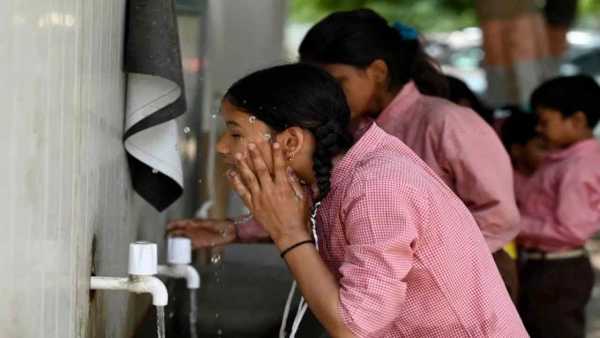
the humidity bothered me
Big role of monsoon trough
Monsoon trough is a long low pressure area. It is formed over North India. Its status keeps changing. Sometimes it goes closer to the foothills of the Himalayas. Sometimes it becomes active over the plains of Ganga. When the monsoon trough is over or near Uttar Pradesh and Bihar, rainfall may increase there. Clouds form continuously. There may also be heavy rain along with thunder and lightning.
If this trough shifts away from Delhi, then rainfall in the capital may reduce. Humidity increases in Delhi. Temperature can also cause trouble. People feel that the monsoon has become sullen.
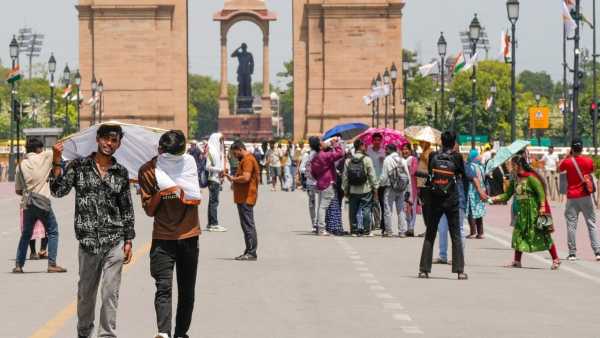
Condition of Delhi.
How does a low pressure area change the game?
Low pressure areas often form in the Bay of Bengal. This is also called low pressure area. This area attracts moist winds towards itself. Due to this, clouds are formed on a large scale. If this low pressure area moves in the direction of Odisha, Jharkhand, Bihar or eastern Uttar Pradesh, then there may be heavy rain in these states. Many times the same system remains active for several days. This causes continuous rainfall. But if this system moves towards Central India or Rajasthan, then the rain pattern of Delhi and Ganga plains may change. Therefore, the Meteorological Department repeatedly monitors the situation of low pressure, cyclone and monsoon trough.
How much impact does the Himalayas have on the monsoon?
The Himalayas play a very important role in India's monsoon. This mountain range prevents monsoon winds from moving towards the north. Humid winds hit the Himalayas. Due to this the clouds rise and it rains. When monsoon winds become more active in the Himalayan foothills, heavy rains may occur over Uttarakhand, Himachal, Nepal border, Terai areas of Uttar Pradesh and northern parts of Bihar. Many times the water level of rivers increases rapidly. Delhi is at some distance from the foothills of the Himalayas. Therefore the same effect is not always achieved there. If the wind direction and pressure conditions are not right, then Delhi may be deprived of rain.
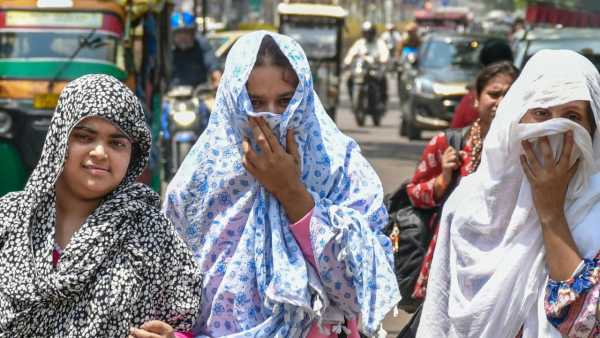
People are in distress due to heatwave
How responsible is Delhi's urban structure?
The local weather also changes in big cities like Delhi. There are big buildings, roads, vehicles, concrete and pollution here. These things can increase the temperature of the city. This is called the urban heat island effect. Temperature may vary in different parts of the city. Somewhere clouds form, somewhere the wind carries them forward. Many times it rains heavily in one part of Delhi and not even a drop falls in the other part. Pollution particles can also affect the process of cloud formation. Its effect is not the same every time, but it definitely complicates the local weather.
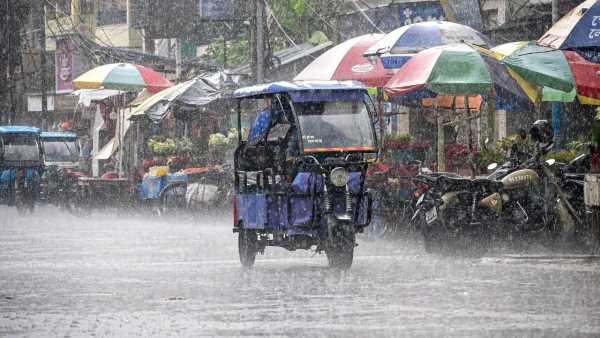
More rain has been recorded in UP and Bihar. (PTI-Photo)
Rain distribution is not always uniform
Monsoon does not mean that there will be equal rainfall everywhere every day. There are active and weak periods in monsoon. It rains heavily some days. Then rain may reduce for several days. It is also called monsoon break. Rainfall may reduce in some parts of north-west India during the monsoon break. Rain may continue in the Himalayan regions and eastern India. Drought may be felt in Delhi, while flood situation may arise in Bihar. Therefore, the entire monsoon cannot be decided on the basis of any one day or one week. It is important to look at the total seasonal rainfall, number of rainy days and intensity of rainfall.
Danger of more rain in UP and Bihar
Heavy rain can be useful for farming. Crops like paddy get sufficient water. Ponds, canals and groundwater fill sources, but too much rain also causes damage. Many areas of Bihar and eastern Uttar Pradesh are connected by rivers. The water level of Ganga, Ghaghra, Gandak, Kosi and other rivers may increase. The rain water in Nepal and hilly areas also reaches the plains. This increases the risk of floods. Farms may sink. Roads may collapse. Villages may be cut off from contact. Therefore, more rain cannot be seen merely as a relief.
Problem of less rain in Delhi
When monsoon is weak in Delhi, heat and humidity increases. Demand for electricity increases. The need for water also increases. Less rainfall may affect the process of groundwater replenishment. If there is less rain, there may be more dust in the air. Greenery may be affected. But the irony is that if it rains heavily in a short period of time, the city also becomes waterlogged. The reason for this is the weak drainage system and rapidly expanding concrete structure.
Increasing impact of climate change
Climate change is making the nature of monsoon more uncertain. In many places it does not rain for a long time. Then suddenly within a few hours it rains heavily. This can be called an event of excessive rainfall. As the temperature increases, the air can hold more moisture. When this moisture rains together, the risk of floods and waterlogging increases. On the other hand, long gaps between rains can create drought-like conditions. However, it is not correct to directly link every rain or drought to climate change. But in long-term data, weather uncertainty seems to be increasing.


-
Radek Vitek eager to depart Manchester United for regular starting role at Celtic

-
When will the next World Cup take place? Dates and host nations revealed

-
Aina Raises $5.5 Mn From Info Edge, Others To Build AI Hardware Interface

-
Avanse Financial Services Introduces Avanse EduSure & Avanse EduSure+

-
Inside Cosmos Diamonds' Bootstrapped Push Into India's Lab-Grown Jewellery Market