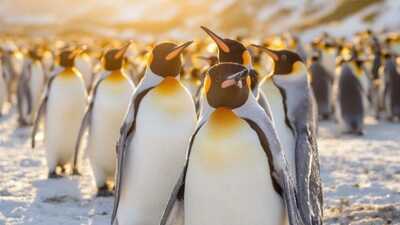
New Delhi: Few animals are as instantly lovable as penguins. Watching hundreds of them stand shoulder to shoulder in Antarctica, gently shuffling and swaying as though they are deep in conversation, is enough to make anyone smile. The heart-warming spectacle, however, has little to do with friendship. Hidden behind this charming behaviour is an extraordinary survival strategy that allows emperor penguins to endure one of the harshest climates on Earth, where freezing temperatures and powerful winds can turn every Antarctic winter into a battle for survival. In Antarctica, where winter temperatures can plunge below −40°C and icy winds often exceed 150 km/h, standing close together is not a display of affection.
Why penguins huddle together They stay warm by sharing body heatThe biggest reason penguins huddle is to reduce heat loss. By standing shoulder to shoulder, each bird shields the others from freezing winds, reducing the amount of body surface exposed to the cold. Studies have found that the temperature inside a densely packed emperor penguin huddle can become significantly warmer than the surrounding air, creating a protective microclimate.
To survive Antarctica’s brutal wintersUnlike many animals that avoid harsh winters, emperor penguins breed during the coldest months of the year. They remain on sea ice despite blizzards and sub-zero temperatures, making huddling essential for surviving the long breeding season while using as little energy as possible.
Behaviour conserves precious energyMale emperor penguins spend nearly two months fasting while incubating their eggs. Since they cannot feed during this period, every bit of saved energy matters. Huddling reduces the amount of energy needed to maintain body temperature, allowing them to survive until the females return from the sea with food.
Every penguin gets chance to stay in middleThe warmest spot inside a huddle is at its centre, but penguins do not compete for it. Instead, the group keeps moving slowly, allowing birds exposed to the freezing outer edge to gradually make their way towards the middle while others rotate outward. This constant movement ensures that warmth is shared fairly across the colony.
Eggs and chicks remain protectedDuring incubation, male emperor penguins carefully balance a single egg on their feet and cover it with a fold of warm skin known as the brood pouch. Even brief contact with the icy ground can be fatal for the developing chick. Huddling protects the incubating males from strong winds and helps maintain the stable warmth needed for eggs and newly hatched chicks.
Not every penguin species huddlesAlthough emperor penguins are best known for this remarkable behaviour, king penguins also gather in groups when temperatures drop. Species living in warmer regions, including Galápagos, African and little blue penguins, do not form large, tightly packed huddles because they do not experience the same extreme climatic conditions.
The next time you see a colony of penguins standing close together, remember that the scene is about much more than cuteness. Every gentle shuffle and every shared space within the huddle is part of a remarkable survival strategy that has helped these birds thrive in one of the coldest places on Earth.
-
Bored with ladyfinger curry? Now try these 4 tasty and unique recipes
-
Do you think too much, are you stressed? This lesson from Srimad Bhagavad Gita will be useful

-
Which Town Is Called The Ice Cream Capital Of The World?

-
What is Carboxy-THC ganja, cricketer Mohammad Nawaz is accused of taking it, its effect remains in the body for so many days

-
Jude Bellingham reflects on England’s ‘unforgettable’ World Cup journey