Edited by: Karl Sexton
The US Trade Representative's office (USTR) has said it will impose a 25% tariff on most imports from Brazil. The charges are set to come into effect in a week, on July 22.
The trade barriers are the first of their kind since the Supreme Court annulled the cornerstone of US President Donald Trump's prior sweeping tariff regime, famously announced on what Trump dubbed "Liberation Day" in 2025.
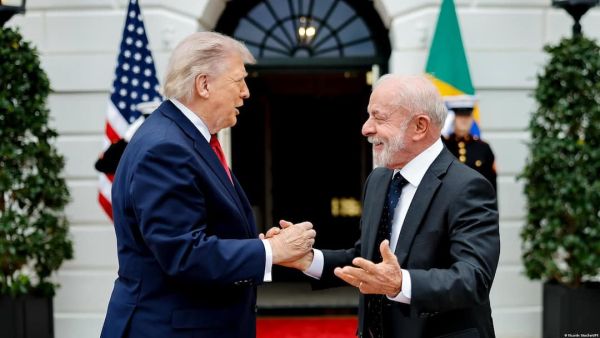
It also comes amid friction between the Trump administration and Brazil's President Luiz Inacio "Lula" da Silva, not least because of Trump's ties to Brazil's former right-wing populist president Jair Bolsonaro and his family. Brazil votes in general elections this October.
What US Measures Are Planned Against Brazil?
Following an investigation, the USTR argued that Brazil's trade practices on a range of issues from digital trade to illegal deforestation were unfair. It also singled out Brazil's instant payment system, Pix, arguing that this disadvantages US credit card companies.
"Extensive negotiations with Brazil over the past year have not resolved these issues, but we remain open to continuing negotiations with Brazil to bring about long-needed changes to the problems identified in this investigation," the USTR's Jamieson Greer said in a statement issued on Wednesday.
Greer called safeguarding American economic interests against unfair practices the "bedrock of President Trump's America First policies."
The tariffs will apply to most Brazilian imports, including sugar, agricultural machinery, clothing, electrical machinery, paper and steel.
But various products that are in considerable demand among US consumers or businesses are exempt, including beef, coffee, rare earths, energy products, aircraft and aircraft parts, organic honey and pig iron.
US Secretary of State Marco Rubio said that the blame lay with Lula and his administration, asserting that they had not negotiated with the US in good faith.
"[Lula's] economic policies are bad for Americans and bad for Brazilians," Rubio wrote. "For the past year, Lula has put his own ego ahead of making a deal for the welfare of the Brazilian people, and these tariffs are the price for that."
How Do Trump's Ties To Lula And The Bolsonaros Fit In?
Brazil's President Lula on Thursday called the move a "lamentable milestone" in bilateral ties.
He said there was "no justification" for the "unilateral imposition" of tariffs, and played a somewhat Trumpian card in reverse, alluding to the US' sizeable trade surplus with Brazil. He said Brazil would seek reciprocal measures via a World Trade Organization dispute mechanism.
Lula also alleged that the move was "part of the plot built with the active collaboration of the Bolsonaro family," a reference to former President Jair Bolsonaro, who is facing a jail sentence for plotting a coup following his attempts to cling to power after his narrow defeat in 2022's presidential election.
Trump and Bolsonaro, who for a time fled to Florida when facing prosecution in Brazil, are considered to be close allies. Senator Flavio Bolsonaro, one of Jair's sons, held talks with Trump in the Oval Office in late May, a few weeks after the last meeting between Trump and Lula.
Presidential hopeful Bolsonaro the younger, however, appealed at a USTR meeting in May not to impose tariffs on Brazil, arguing that this was liable to help Lula's bid for a record fourth term in office this October.
Why Is The Trump Administration Having To Revisit Its Tariff Policies?
The new tariffs are imposed based on investigations into supposed unfair trade practices under Section 301 of the US Trade Act.
This became necessary because of the Supreme Court nullifying the prior wave of tariffs imposed by US President Donald Trump's administration, deeming that they had overstepped his authority.
The USTR has since launched almost 80 investigations of this nature, seemingly as it tries to lay the groundwork to impose replacement barriers to trade. All manner of major and minor powers face such investigations, including China, the EU, India, Japan, South Korea and Mexico.
Disclaimer: This report first appeared on Deutsche Welle, and has been republished on ABP Live as part of a special arrangement. Apart from the headline, no changes have been made in the report by ABP Live.
-
Radek Vitek eager to depart Manchester United for regular starting role at Celtic
-
When will the next World Cup take place? Dates and host nations revealed

-
Aina Raises $5.5 Mn From Info Edge, Others To Build AI Hardware Interface

-
Avanse Financial Services Introduces Avanse EduSure & Avanse EduSure+

-
Inside Cosmos Diamonds' Bootstrapped Push Into India's Lab-Grown Jewellery Market