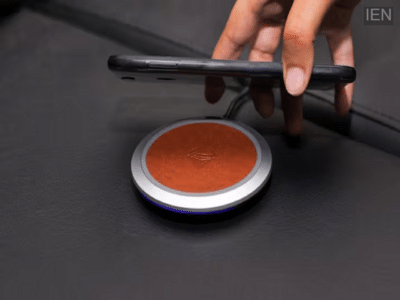
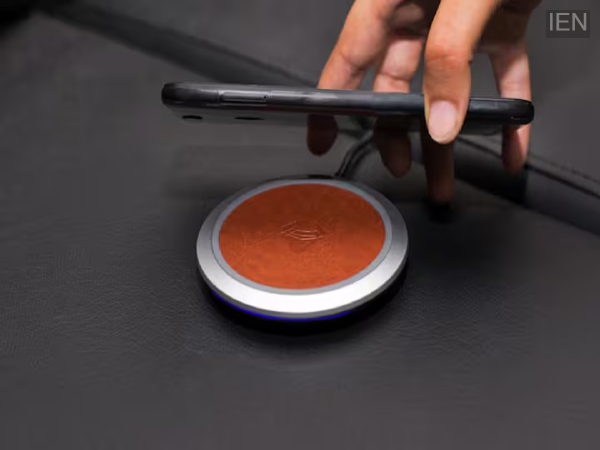
Wireless Charger: Wireless charging operates on inductive technology. Power is transferred via a magnetic field between coils located inside the charger and the phone.
With technological advancements, wireless charging is now available for smartphones. Many premium smartphones offer this feature to users. Wireless charging has significantly simplified the way smartphones are charged; users no longer need to constantly search for a charger. However, this convenience comes at a cost. Wireless charging consumes more electricity and takes longer to charge the device. Consequently, in many situations, traditional wired charging proves to be the more sensible option.
To elaborate, wireless charging works on inductive technology. Power is transferred through a magnetic field between the coils inside the charger and the phone. During this process, electricity undergoes various conversions, causing a portion of the energy to be lost as heat.
This is why phones often heat up during wireless charging. If the phone is not positioned correctly on the charging pad, or if it has a thick case, charging efficiency can drop further.
A wireless charger remains ready for use at all times. Therefore, even when no device is placed on it, it continues to consume a small amount of electricity. In contrast, most wired chargers stop drawing power almost entirely when not in use.
Additionally, a portion of the electricity is wasted during wireless charging. Even with advanced technologies like Qi2 or MagSafe, energy loss can range from 12% to 20%. With standard Qi wireless charging, this loss can reach 25% to 40%.
In comparison, wired charging methods like USB-C typically waste only 5% to 10% of the electricity. In such a scenario, if multiple smartphones, earbuds, or smartwatches in the house are charged using wireless charging, both electricity consumption and your utility bill could increase over time.
It is worth noting that the biggest drawback of wireless charging is its slower speed. Most wireless chargers are slower than wired chargers. Today, many smartphones support fast wired charging—ranging from 30W and 60W to 80W or even 100W—allowing a significant portion of the battery to charge in just a few minutes.
If you are in a rush to get to the office or your phone's battery has suddenly run out, wired charging proves to be far faster and more convenient. However, wireless charging is not without its merits; it is highly convenient for use while driving, at your office desk, or on a bedside table. Multi-device wireless chargers also allow you to charge several gadgets simultaneously, eliminating the hassle of dealing with multiple cables.
-
Stellantis Appoints New CEOs for Jeep and Ram in Major Leadership Restructuring

-
Kangana Ranaut reached Parliament in pink saree on the second day, what did the actress say about CJP protest: 6 PHOTOS

-
PM Modi in Mangal Milan: ‘NEET-Youth and Opposition’, what did PM Modi say to NDA leaders… | Pm Modi To Nda His Stance On Neet Youth Opposition

-
Karnataka: Massive fire broke out in Chikkaballapur, 3 shops burnt to ashes due to short circuit. Karnataka Fire Three Shops Gutted In Late Night Blaze In Chikkaballapur

-
How is Sonam Wangchuk’s condition? Didn’t eat or drink anything for 24 days..Doctors told what is the danger. Sonam Wangchuk Health Update Safdarjung Hospital Reports Stable Vitals Amid Ongoing Supervision CJP Strike Jantarmantar