Plus more good news this week.
Reviewed by Dietitian Emily Lachtrupp, M.S., RD
Key Points
- Vertical farming offers year-round crops, uses less water and reduces pesticide use for sustainability.
- Planted Detroit’s strict food safety measures help lower the risk of cyclosporiasis in leafy greens.
- Plus more good news, like how vitamin K-rich foods may improve lung function.
This is Good Food Newsyour weekly installment of positive food and health news from around the world. These feel-good stories are hand-picked by EatingWell editors to help make your week just a little bit brighter.
Featured Story: What Is Vertical Farming, and How Does It Keep Produce Safe?
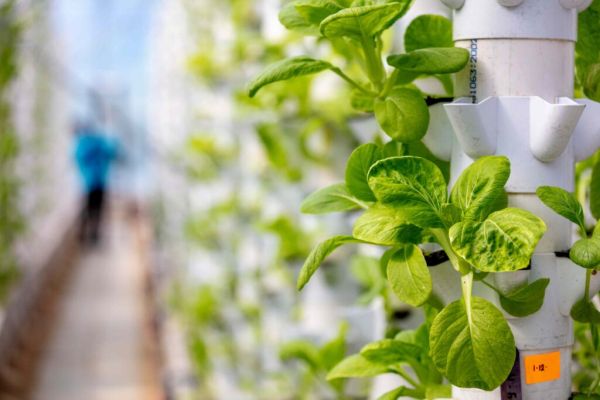
Have you ever heard of vertical farming? It sounds futuristic, but it’s a temperature-controlled method currently being practiced around the world.
The name isn’t deceiving; vertical farming grows crops indoors in stacked layers versus your typical outdoor horizontal farming. The obvious benefit of vertical farming is that it allows farmers to grow certain seasonal crops year-round. A benefit for the consumer is the additional sustainability practices: vertical farming uses a fraction of the amount of water that conventional farming uses, and because the produce is grown in a controlled environment, it typically promises less pesticide use.
But it also has some food safety perks—which is especially important right now amid the cyclosporiasis outbreak.
One vertical farm in particular, Planted Detroit (which offers a salad subscription service), is doing everything it can to keep its greens extraordinarily clean. To even enter the farm, all workers and visitors must wear hair nets, lab coats, shoe covers and gloves.
And before seeds are even planted inside the farm, they are tested for foodborne illnesses like E. coli, Listeria and Salmonella. Plus, the water the farm uses for the crops is filtered, and water can be a carrier of bacteria such as cyclospora, so filtration lowers the risk factor.
The farm has noted it’s “very unlikely” for its greens to carry the stomach parasite that is spreading across the country, giving Detroit residents that use the farm peace of mind.
“Our risk isn’t zero… however a lot of the standards we maintain and practices we have operating this farm, those risks are dramatically mitigated,” Dorian Ahler, chief operating officer of Planted Detroit, tells WXYZ Detroit. “While we get our water from the City main like everyone else does for drinking water, it does go through an extra filtration process.”
The Centers for Disease Control and Prevention (CDC) has reported over 1,600 cases of the foodborne illness cyclosporiasis across the U.S. since May 1. It’s measures like this that can help keep vulnerable produce like leafy greens safe from the diarrhea-causing bacteria.
If you don’t manage your own garden, or you do not have a farm promising extra-food safe practices that you can purchase your produce from, there are other ways to mitigate your risk:
- Cook your produce to at least 158°F before consuming.
- Wash your fruits and vegetables thoroughly with water and vinegar before consuming.
- Consider avoiding foods with softer exteriors like berries, bagged leafy greens and herbs, and swap them for easier-to-clean heads of lettuce, bananas, onions and other produce with protective skins or peels.
More Good News This Week
New Study Shows Surprising Benefit of Vitamin K
A recent study published in The American Journal of Clinical Nutrition found that vitamin K, a nutrient notably found in dark leafy greens, asparagus, Brussels sprouts and kiwi, can do more than just support your bone health and heart health. It can actually help improve lung function—all the more reason to double-clean your greens and enjoy that kale salad for lunch!
Sam’s Club Just Added a New Perk for Members
If you’re a Sam’s Club Plus member, you can now get three months of a free Weight Watchers membership and save up to 50% on various Weight Watchers programs and telehealth services. We had dietitians help break down the benefits, including what you should know before trying it out.
Sleep Experts Reveal the Best Time of Day to Nap
According to sleep experts and recent research, the best time of day to nap is peak afternoon—between 1 p.m. and 3 p.m.—for boosted focus, mood and alertness. Plus, even just a 10- to 30-minute rest can be beneficial for energy levels, so this is your sign to close your laptop and take a snooze.
Video of the Week
Amy Poehler doesn’t like eggplant, and y’know what? That’s okay. Like Poehler, we’re big fans of kale, and we think she’d love some of these kale recipes during peak eggplant season:
-
EPFO has launched the 'Vishwas 2026' scheme for six months to resolve PF-related disputes..

-
Special Trains: Special trains announced for Shravani Mela; find out the routes..

-
When can household members apply for a separate ration card, and what are the options for unmarried individuals?

-
Gold has become cheaper by ₹2,200 and silver by over ₹4,900; find out from experts if prices will fall further..

-
Bihar Pink Bus: 'Pink Bus' for women starts in Saharsa, will get many safety features along with GPS tracking..