Can You Get Pregnant With One Ovary?
Pregatips | July 18, 2026 5:39 PM CST
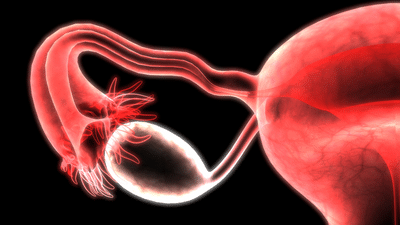
You can get pregnant with one ovary. Each month, the remaining ovary releases an egg. If the fallopian tube on that side is open and healthy, fertilisation can happen naturally, just as it would with two ovaries. Studieson women who underwent unilateral oophorectomy (surgical removal of one ovary) show natural conception rates close to those of women with both ovaries intact. However, the response to ovarian stimulation may be less pronounced in fertility treatments. What matters more than the ovary count is whether the remaining ovary has a normal egg reserve and a functioning fallopian tube on the same side.
Why Does Pregnancy Still Happen With One Ovary?Ovulation does not alternate strictly between the left and right ovary every month, even in women with both ovaries. Researchtracking thousands of menstrual cycles shows the right ovary releases the egg slightly more often, in about 55 to 64 per cent of cycles, and which ovary ovulates depends on which follicle matures fastest that month, not a fixed left-right pattern. This is why one ovary can maintain regular monthly ovulation on its own: it was already handling a share of the ovulating work before the other one was removed.
With only one ovary left, it takes over ovulation every single month instead of sharing the task. Ultrasound studies in adolescents who underwent unilateral oophorectomy show the remaining ovary can grow larger, a change called compensatory ovarian hypertrophy, which is well documented in animal studies and increasingly observed in human ultrasound data as well.
A larger ovary with more antral follicles available each cycle supports a steady monthly egg supply, so the chance of ovulation, and therefore conception, in any given cycle stays largely unaffected by having only one ovary.

What Causes a Woman to Have Only One Ovary?The two main causes of a single ovary are diagnosed and managed differently.
This does not mean IVF cannot succeed with one ovary; it means a fertility specialist may need to adjust the stimulation protocol.
What Affects Pregnancy Chances With One Ovary?Three factors decide the outcome more than the ovary count itself:
You’re not alone in your journey when trying to conceive. Join our supportive community to connect with others, share experiences, and find encouragement every step of the way.
FAQs on Can You Get Pregnant With One Ovary?Can I get pregnant naturally with one ovary and one fallopian tube on the opposite side?
No, natural conception needs the ovary and tube to be on the same side, or an egg to travel across the pelvis to the opposite tube, which is less reliable. IUI or IVF is usually recommended in this situation.
Does having one ovary mean fewer eggs released per cycle?
No, one ovary still releases one egg per month, the same as two ovaries do together, since only one egg ovulates in a typical cycle regardless of ovary count.
At what age should I see a doctor if I have one ovary and I am trying to conceive?
See a gynaecologist after six months of trying if you are under 35, or after three months if you are 35 or older.
Why Does Pregnancy Still Happen With One Ovary?Ovulation does not alternate strictly between the left and right ovary every month, even in women with both ovaries. Researchtracking thousands of menstrual cycles shows the right ovary releases the egg slightly more often, in about 55 to 64 per cent of cycles, and which ovary ovulates depends on which follicle matures fastest that month, not a fixed left-right pattern. This is why one ovary can maintain regular monthly ovulation on its own: it was already handling a share of the ovulating work before the other one was removed.
With only one ovary left, it takes over ovulation every single month instead of sharing the task. Ultrasound studies in adolescents who underwent unilateral oophorectomy show the remaining ovary can grow larger, a change called compensatory ovarian hypertrophy, which is well documented in animal studies and increasingly observed in human ultrasound data as well.
A larger ovary with more antral follicles available each cycle supports a steady monthly egg supply, so the chance of ovulation, and therefore conception, in any given cycle stays largely unaffected by having only one ovary.
What Causes a Woman to Have Only One Ovary?The two main causes of a single ovary are diagnosed and managed differently.
- Congenital absence (absent from birth): Unilateral ovarian agenesis is rare, affecting an estimated 1 in 11,240 women, and is primarily caused by a vascular accident, such as torsion of the ovary before or shortly after birth, or by a defect during embryonic development that prevents the ovary from forming on one side. Most women with this condition are unaware of it until an unrelated scan or surgery reveals only one ovary, since fertility is largely unaffected.
- Surgical removal (unilateral oophorectomy): This is far more common and is usually performed for one of the following reasons:
- Ovarian cysts: Large or complex cysts, including dermoid cysts and endometriomas, that cannot be safely treated by removing only the cyst.
- Ovarian torsion: A medical emergency where the ovary twists around its supporting ligament, cutting off blood supply; if the tissue does not recover quickly, the ovary has to be removed.
- Endometriosis: Severe endometriosis can damage ovarian tissue enough that the affected ovary has to be removed during surgery.
- Higher genetic cancer risk: Women carrying BRCA1 or BRCA2 mutations are sometimes advised to have one or both ovaries removed as a preventive measure.
- Ectopic pregnancy or infection: In rare cases, a ruptured ectopic pregnancy or a severe pelvic infectioncan damage an ovary beyond repair.
This does not mean IVF cannot succeed with one ovary; it means a fertility specialist may need to adjust the stimulation protocol.
What Affects Pregnancy Chances With One Ovary?Three factors decide the outcome more than the ovary count itself:
- Fallopian tube health on the working side: If the tube next to the remaining ovary is blocked or removed, the egg cannot meet sperm naturally.
- Ovarian reserve: AMH (Anti-Mullerian Hormone) levels and a transvaginal ultrasound antral follicle count (AFC) can provide a clearer picture.
- Underlying cause of ovary loss: Removal due to endometriosis or repeated cyst surgery can sometimes affect reserve on the remaining side, while removal due to torsion or a one-off cyst usually does not.
- Track ovulation using a basal body temperaturechart or ovulation predictor kits to identify the fertile window.
- Maintain a healthy body weight, since both underweight and overweight status can disrupt ovulation.
- Get an AMH test and pelvic ultrasound done before trying, especially if conception does not happen within six months of regular, unprotected intercourse.
- Avoid smoking, as it is independently linked to earlier ovarian ageing.
- If you are over 35, consult a gynaecologist early, as age affects egg quality regardless of ovarian reserve.
You’re not alone in your journey when trying to conceive. Join our supportive community to connect with others, share experiences, and find encouragement every step of the way.
FAQs on Can You Get Pregnant With One Ovary?
No, natural conception needs the ovary and tube to be on the same side, or an egg to travel across the pelvis to the opposite tube, which is less reliable. IUI or IVF is usually recommended in this situation.
No, one ovary still releases one egg per month, the same as two ovaries do together, since only one egg ovulates in a typical cycle regardless of ovary count.
See a gynaecologist after six months of trying if you are under 35, or after three months if you are 35 or older.
READ NEXT
-
Dhoke ka makaan: KTR dares CM to prove Congress filled 70K jobs

-
Uttarakhand: Man asked for ID, prevented from offering namaz

-
Indians among expats losing jobs in Dubai amid Iran war

-
Free Assam activists held over Kaziranga hotel protest, urges UN

-
Shiv Sena Criticizes Central Government Over Climate Activist's Hunger Strike