Moments after Argentina beat England to set up a mouthwatering World Cup final clash with Spain, old pictures of a young Lionel Messi holding a baby Lamine Yamal, the Spanish sensation, resurfaced for the umpteenth time on social media.
Messi taking on Yamal's Spain in the 2026 World Cup final is a remarkable twist of fate — more than 18 years after he was photographed giving a bath to a five-month-old Yamal as part of a UNICEF campaign in Barcelona.

Messi giving a bath to baby Yamal for a UNICEF photoshoot
But as Messi prepares to play in back-to-back World Cup finals, further cementing his place among the greatest players of all time, it's the perfect time to revisit a forgotten chapter of his life in which Spain, Argentina's opponents on Sunday, attempted to persuade him to play for their national team.
While this may not sound as dramatic now as the Messi-Yamal pictures, which the Argentina icon called "crazy" during Friday's media event in New York, Spain's ambition to get Messi to play for their national team could have altered the history of international football.
If Messi and his family had said yes to the proposal back in 2003, when he was training at FC Barcelona's youth academy, he would have become the GOAT of Spanish football instead of occupying the position he now shares with Diego Maradona in Argentina.
So how did Spain approach Messi?
Messi, who was born in Rosario, Argentina’s third-biggest city, moved to Spain for a trial at FC Barcelona when he was just 13 as his parents were unable to bear the cost of the treatment for his growth hormone deficiency.
If not treated for the rare health condition, Messi’s body would not have grown properly to become a professional footballer.
His parents knocked on the doors of Rosario-based club Newell’s Old Boys for support. Messi was already a part of one of their youth teams. They initially promised to help but later turned their backs on them.
The family also approached River Plate, one of Argentina’s biggest clubs alongside Boca Juniors, but all their efforts to get the club’s management to support their young boy went in vain.
That is when the Messi family decided to send their son to Spain to try his luck at Barcelona, one of the giants in European club football.
In the trial match, Barcelona’s youth coaches were stunned by his incredible talent when he scored five goals against a team of older and bigger boys.
He was soon signed for their youth team with Barcelona agreeing to take full responsibility for his treatment.
Messi’s rise was meteoric in youth teams for Barcelona; his exploits instantly drew the attention of the Spanish football federation.
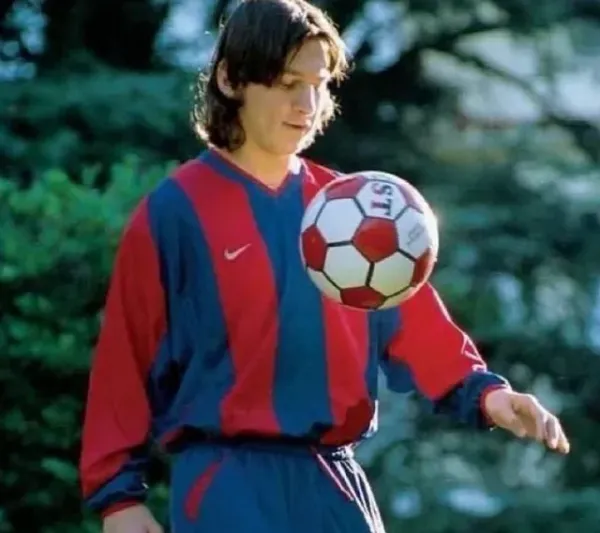
Messi during his time at Barcelona's youth academy
While he became the hottest young talent in Spain, football authorities in his own country, Argentina, were completely unaware of how a prodigious Argentinian teenager was taking Spanish youth football by storm, let alone knowing about the Spaniards’ move to get him to play for their national team.
But Messi’s family was very clear from the start that their boy would play for the country of his birth — even though two prominent clubs of Argentina refused to help them when they needed it the most.
Despite the resistance from the family, the Spanish FA never gave up hope.
A documentary on ESPN showed interviews with several former officials of the Spanish football federation and Barcelona’s famed youth academy, La Masia, as all of them narrated the story of their efforts to get Messi to change his mind.
Every effort, though, failed as the young Messi remained committed in his heart to Argentina, even though there was no approach from his country’s officials.
All that changed after Argentina’s football officials finally heard of Messi and his exploits at Barcelona, as well as Spain’s ambition to offer him citizenship to play for their team.
Having watched a VHS tape of Messi’s matches for Barcelona, they were convinced that the Argentinians could not afford to lose out on a generational talent.
In a panic mode now, Omar Souto, a former manager of the Argentina national team, bought a phonebook to find Messi’s family in Argentina.
Souto dialled the numbers of every Messi in Rosario until he found his paternal grandmother, who connected him to the player’s uncle.
After establishing contact with Messi and his father, Jorge, Argentina’s football association hastily organised a friendly match against the Paraguay Under-20 team in June 2004.
That turned out to be the start of Messi’s journey as an Argentinian national team footballer.
One year later, Messi led Argentina to the 2005 Under-20 World Cup triumph.
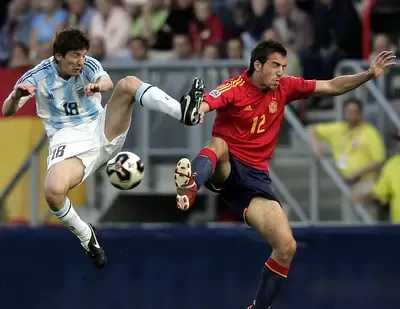
In the quarterfinals of that tournament, Argentina beat Spain 3-1, with Messi scoring the third goal for his team.
Messi (left) during Argentina's 2005 Under 20 World Cup quarterfinal match against Spain
There are still those in Spain who admire Messi for never losing patience despite his country’s lack of awareness about his rise in Spanish youth football, as he kept waiting for the call from the Argentinian football federation.
Vicente del Bosque, the head coach of Spain’s 2010 World Cup and 2012 Euro-winning teams, admitted to making all efforts to persuade Messi to play for the Spanish team.
"The Federation made every effort to get Messi to play for Spain," he told Radio Villa Trinidad.
"Lionel refused because he loves his country. His arrival would have been for the best.
"Messi is Messi - there is only one. It would have been a dream to coach him."
There are those who still believe if Messi had agreed to play for Spain, he would have won his first World Cup in 2010 when he was at his prime.
That Spain side is among the greatest international teams of all time, and Messi’s presence would have elevated them to even greater heights.
But Messi proved his Argentinian heart by refusing to be distracted even after receiving the Spanish passport in 2005.
The tears of joy after he finally conquered the peak of international football with Argentina at the Qatar World Cup could not have been more profound, especially after his countless heartbreaks.
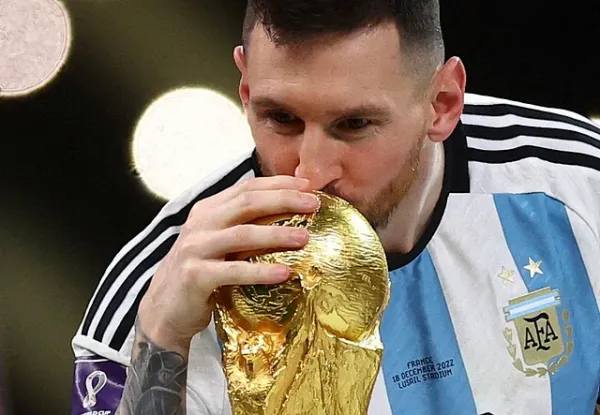
Messi kisses the trophy as he celebrates after winning the 2022 World Cup
Now he is all set to become the second player in history after Brazilian legend Cafu to play in three World Cup finals.
The irony is not lost on those who have followed the journey from the very start.
That his historic third World Cup final appearance would come against Spain, a country that helped him chase his dreams of becoming a professional footballer.
But he never stopped chasing his dream of playing for the country of his birth.
Scaloni faces former tutor De la Fuente in Argentina-Spain World Cup final Messi the new Di Maria? How Argentina kept 2026 World Cup dream alive-
Who should wear emerald gemstone and who should not, know its benefits and disadvantages
-
Include these foods rich in Vitamin C in your diet, viral infections will reduce.

-
Bloating Home Remedy: Tired of frequent indigestion-bloating? Then consume fresh mint leaves in this way

-
Thinking of buying a Satellite Phone in India? What are the rules? 90 percent people don’t know
-
What did Morkel say about Rohit Sharma’s form?