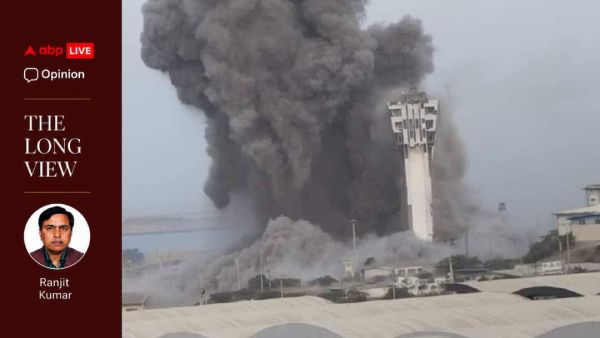
The recent US missile strikes on Iran's Chabahar port, a significant portion of which is managed by India, has brought into focus the significance of this connectivity initiative linking South, West, and Central Asia. Just two years ago, India had signed a 10-year agreement to operate the Shahid Beheshti terminal at the Chabahar port.
While India has historically navigated US pressures, there are indications that it will be forced to leave the port. The lack of a robust response to the missile attack reveals vulnerabilities in India's strategy to maintain its strategic autonomy.
This situation underscores India's perceived dependence on the US, which could be mitigated with a more strategic approach. The muted reaction from India has surprised many in the strategic community, especially given the US military's acknowledgment that the strikes targeted facilities at the port. The attack was framed as a measure against Iran's capabilities to threaten commercial shipping in the vital Strait of Hormuz.
US Pressure And India's Strategic Dilemma
The Chabahar port attack marks a significant escalation since the US initiated its confrontational stance against Iran on February 28. This incident serves as a reminder of the potential economic and strategic benefits India stands to gain from its engagement with Iran and the broader region, extending to Russia and Europe.
It also echoes the warning from US Deputy Secretary of State Christopher Landau, in March, while addressing the Raisina Dialogue in New Delhi: “India should understand that we are not going to make the same mistakes with India that we made with China 20 years ago in terms of saying, we are going to let you develop all these markets, and then, the next thing we know, you are beating us in a lot of commercial things.”
Landau's observations are being reflected in the actions of the U.S. President and his administration, which are obstructing India's efforts to establish its economic, industrial, and strategic presence across the broader Asian landscape. The U.S. appears to be resistant to India's expansion of influence from the West Asian regions to Central Asia. The directives from the Trump administration are compelling India to reconsider its strategy of linking with Afghanistan and Central Asian nations.
Chabahar's Importance For Regional Connectivity
Although the Indian Ministry of External Affairs has refrained from directly addressing the U.S. missile strike on the strategically vital Chabahar port in Iran, it has indicated that India is closely monitoring the situation. This cautious approach suggests a reluctance to provoke the U.S. administration, especially given India's significant investments in the port and its ambitious plans for the Chabahar Special Economic Zones.
These plans include establishing facilities for aluminium and urea production, as well as developing transportation links to Afghanistan and the emerging economic hubs of Central Asia, ultimately connecting to Russia via the North-South Corridor.
The Chabahar port serves as a crucial node in the International North-South Corridor, which promises to lower transportation costs and enhance cultural exchanges through tourism. India's silence regarding the U.S. attack on Chabahar may indicate a submission to U.S. pressure, reflecting a concern over potential sanctions that could impact India's strategic interests in the region.
Losing access to this port would significantly hinder India's trade with Afghanistan and Central Asia, undermining its broader economic ambitions.
Risk Of Losing A Strategic Asset
India must undertake a thorough evaluation of the potential losses it faces in comparative terms, particularly by analyzing the ramifications of U.S. sanctions and the implications of withdrawing from the Chabahar port project. This situation presents a critical juncture for India, as it not only tests the nation's strategic autonomy but also calls into question the viability of the Indo-U.S. strategic partnership, which has often prioritized American interests over India's national priorities.
In recent times, India has appeared to yield to U.S. pressure, compromising its long-term economic and strategic objectives. Notably, it was under Prime Minister Narendra Modi's administration that a tripartite agreement was forged with Iran and Afghanistan in 2016 regarding the utilization of Chabahar port, despite significant U.S. pressure to curtail oil trade with Iran.
The Modi government had previously engaged extensively with the Iranian regime, recognizing the strategic importance of the port during both his first and second terms. However, following the transition in U.S. leadership, India's engagement with Iran and its involvement in the development of Chabahar port have noticeably diminished.
Reports indicate that India has begun to scale back its participation in the Chabahar project to mitigate potential backlash from the Trump administration. The state-owned entity, India Ports Global Ltd. was initially tasked with overseeing the development and operations at Chabahar port.
However, in January of this year, when President Trump threatened to impose a 25 percent additional tariff on trade with Iran, India hesitated and reassessed its commitment. The U.S. military actions targeting Chabahar have jeopardized one of India's most significant overseas infrastructure initiatives, raising concerns that China may once again supplant India in the Makran coast region. This situation serves as a stark reminder of the loss of the Mongla port in Bangladesh to Chinese control.
Chabahar's Future And India's Stakes
The potential complications arising from the current geopolitical dynamics could significantly hinder the future development of regional connectivity initiatives that aim to link South Asia with West and Central Asia, extending further to Russia and Europe.
The Chabahar port, often referred to as a "Golden Gate," serves as a crucial access point for the Central Asian republics seeking to reach the Indian Ocean. Located on Iran's Makran coast, this deepwater port is strategically positioned approximately 210km from the Chinese-controlled Gwadar port in Pakistan, underscoring its importance in the regional power play.
Should India succumb to pressure from the United States and withdraw its involvement in Chabahar, it is highly likely that China would seize the opportunity to take over the port's management and operations, which would enable China to monitor Indian naval activities.
Thus, Chabahar represents much more than a mere port for India; it serves as a vital conduit to Central Asia and Afghanistan, integral to New Delhi's regional connectivity ambitions.
The memorandum of understanding signed in June between the US and Iran had sparked optimism regarding the resumption of activities at Chabahar, particularly following India's transfer of its stake in the free zone to a local Iranian entity. With improvements in the security landscape and the MoU suggesting a potential easing of sanctions on Iranian oil exports, there was renewed hope for India's involvement in the project.
However, recent escalations in conflict have cast doubt on the expansion and operational future of Chabahar. The shifting security dynamics surrounding this key connectivity initiative will be closely monitored by New Delhi.
It is crucial for Indian officials to recognize that expansion of India's relationship with Central Asia hinges on access to Chabahar, which would diminish significantly if that access were lost. The port aligns closely with India's long-term strategic and economic objectives, and in an increasingly volatile global environment, it is essential for India to bolster its geopolitical position. Therefore, it is vital for India to pursue all necessary diplomatic efforts to secure its interests in Chabahar.
(Ranjit Kumar is a senior journalist and strategic affairs analyst.)
-
Can Calling Someone a 'Motherf****ker' Land You in Jail? Supreme Court Explains

-
Significance of Guru Purnima: Rituals and Beliefs

-
Tragic Landslide in Nagaland Claims Lives Amid Ongoing Monsoon

-
Pune: Thousands Join ISKCON's Grand Jagannath Rath Yatra On Tilak Road |PHOTOS

-
Sunday book pick: Cannibalism and other postcolonial jokes in Abdulrazak Gurnah's 'Admiring Silence'