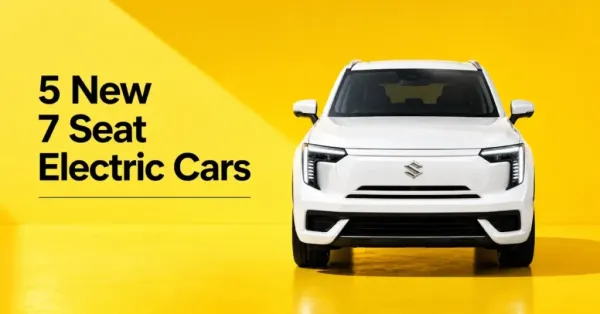
When we think about bigger cars and SUVs, we generally think of fuel-guzzling, family-hauling cars. However, as India is moving towards electric mobility, more automakers are now gearing up for the launch of 7-seater cars with electric powertrains. So, if you are also someone who has a requirement for an electric 7-seater, then you have come to the right spot.
Maruti Suzuki has already been spotted testing its upcoming three-row electric MPV, and it has been internally codenamed YMC. The production version is expected to make its global debut towards the end of 2026, following which it will be going on sale in 2027. It will become Maruti Suzuki’s first-ever seven-seat electric vehicle.
The YMC will be based on the same HEARTECT-e skateboard platform as the e Vitara. It will share its electric motors and battery packs with the e Vitara. Buyers are expected to get two battery options, of which the first will be the 49 kWh and the second will be the 61 kWh. Now, since the MPV will be larger and heavier than the e Vitara, it is believed that its driving range will be slightly lower. However, it is still expected to offer a range of 500 km on a single full charge.
The spy images of the YMC so far have shown that it will adopt a boxy, SUV-inspired design with upright proportions. It will also get aero-optimised alloy wheels, vertical connected LED tail lamps, large windows, and regular pull-type door handles. On the inside, it is expected to borrow several features from the e Vitara, including a 10.1-inch touchscreen, 10.25-inch digital instrument cluster, Level 2 ADAS, powered driver’s seat, ventilated seats, and a 360-degree camera.
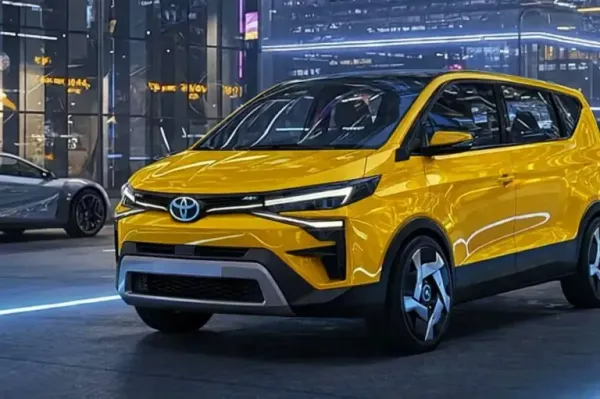
After the official launch of the Maruti Suzuki YMC, its strategic partner, Toyota, will also launch its own version of the Maruti YMC electric MPV. Toyota’s version will share almost all of its mechanical components with its Maruti sibling but, like all other badge-engineered models, will get unique exterior styling.
The electric MPV will use the same HEARTECT-e platform and will be offered with the same 49 kWh and 61 kWh battery packs. Its expected driving range figures will also be similar, and we can expect a 500 km range under ideal conditions. Toyota is expected to retain most of the interior layout and equipment.
Its features could include a 10.1-inch infotainment system, a 10.25-inch digital driver’s display, Level 2 ADAS, powered front seats, ventilated seats, a 360-degree camera, and connected technology. A six-seat version with second-row captain seats could also be offered alongside the standard seven-seater. As for the pricing, it is expected to remain between Rs 20 lakh and Rs 25 lakh, which means it will rival the Kia Carens Clavis EV, BYD eMax 7, and Mahindra XEV 9S.
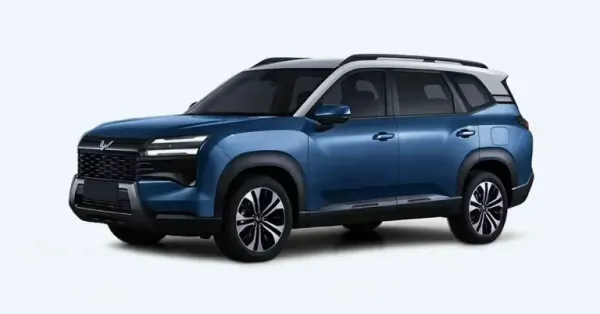
Later this year, JSW MG Motor India is gearing up for the launch of both plug-in hybrid and all-electric versions of the upcoming Hector Hawk SUV. Now, the plug-in hybrid will be launched first. The fully electric version is also expected to join the lineup around the festive season.
The upcoming Hector Hawk EV will be based on the Wuling Starlight 560 and will use MG’s ADAPT platform, which supports both plug-in hybrid and fully electric powertrains. The SUV is expected to measure 4,745 mm in length and boast a wheelbase of 2,810 mm. The EV is expected to receive a slightly revised front fascia.
It will also get new alloy wheels and EV-specific styling updates compared to the hybrid version. On the inside, we can expect a minimalist cabin featuring a large 12.8-inch touchscreen, leatherette upholstery, wireless charging, automatic climate control, cruise control, and a 360-degree camera. MG could also offer Level 2 ADAS depending on the final specification.
As for the power, it is expected to come from a 56.7 kWh battery pack paired with a front-mounted electric motor. It will produce around 136 bhp and 200 Nm. In terms of the real-world driving range, it will most likely be between 450 km and 500 km on a full charge.
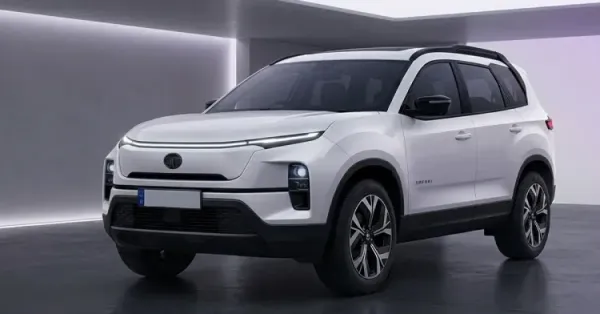
Tata Motors has already commenced testing the Safari.ev on Indian roads, and recently a few spy shots were shared. The Safari.ev will become Tata’s flagship electric SUV and will sit above the Harrier.ev in the company’s lineup. It will be built on the Acti.ev+ architecture, and the Safari.ev will retain the design of the ICE model.
However, to differentiate it, it will get EV-specific bumpers, new wheels, fresh badging, and an independent multi-link rear suspension similar to the Harrier.ev. The test vehicle was also seen with a side step, which is a feature that is not available on the standard Safari.
On the inside, the Safari.ev is expected to feature Tata’s latest TiDAL electronic architecture. This means it will offer over-the-air updates, auto park assist, summon mode, low-speed cruise control, UPI-based in-car payments, and a 540-degree surround-view camera system.
The Safari.ev is expected to borrow the Harrier.ev’s 65 kWh and 75 kWh battery packs along with rear-wheel-drive and dual-motor AWD options. Although, with the larger body, the range could be slightly less. The electric SUV is expected to make its debut around the festive season and will directly rival the Mahindra XEV 9S.
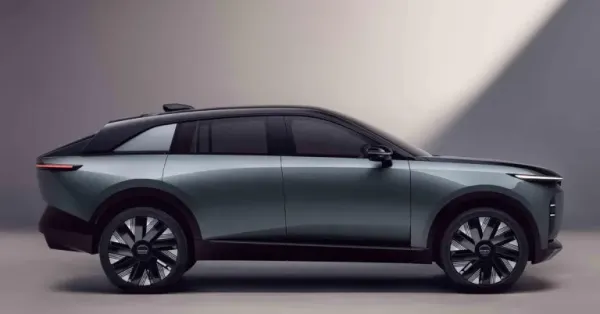
Last but not least, Tata Motors is also working on the development of a larger three-row electric SUV under the Avinya brand. The model will arrive after the Avinya X and will make Avinya Tata’s standalone premium electric vehicle brand.
Unlike Tata’s existing EVs, the upcoming SUV will use the Chery-JLR Freelander EV platform, with Tata reworking the electronics, software, and vehicle systems for Indian conditions. Its battery pack options are expected to range between 65 kWh and 80 kWh. Its production will take place at Tata’s new Panapakkam manufacturing facility, with the first model expected to arrive in 2027.
-
Four Chelsea players could be pushed out of Xabi Alonso’s squad after veteran double signing

-
Career opportunity in research: DRDO announces recruitment; check qualifications and interview details..

-
UP Assistant Professor Recruitment: Preparations for Assistant Professor in aided colleges of UP are in full swing..

-
NMDC Recruitment 2026: Recruitment announced for 102 Executive Trainee posts at NMDC; salary up to ₹1.80 lakh..

-
Recruitment announced for 24,752 sanitation worker posts in Rajasthan; even the uneducated can apply..