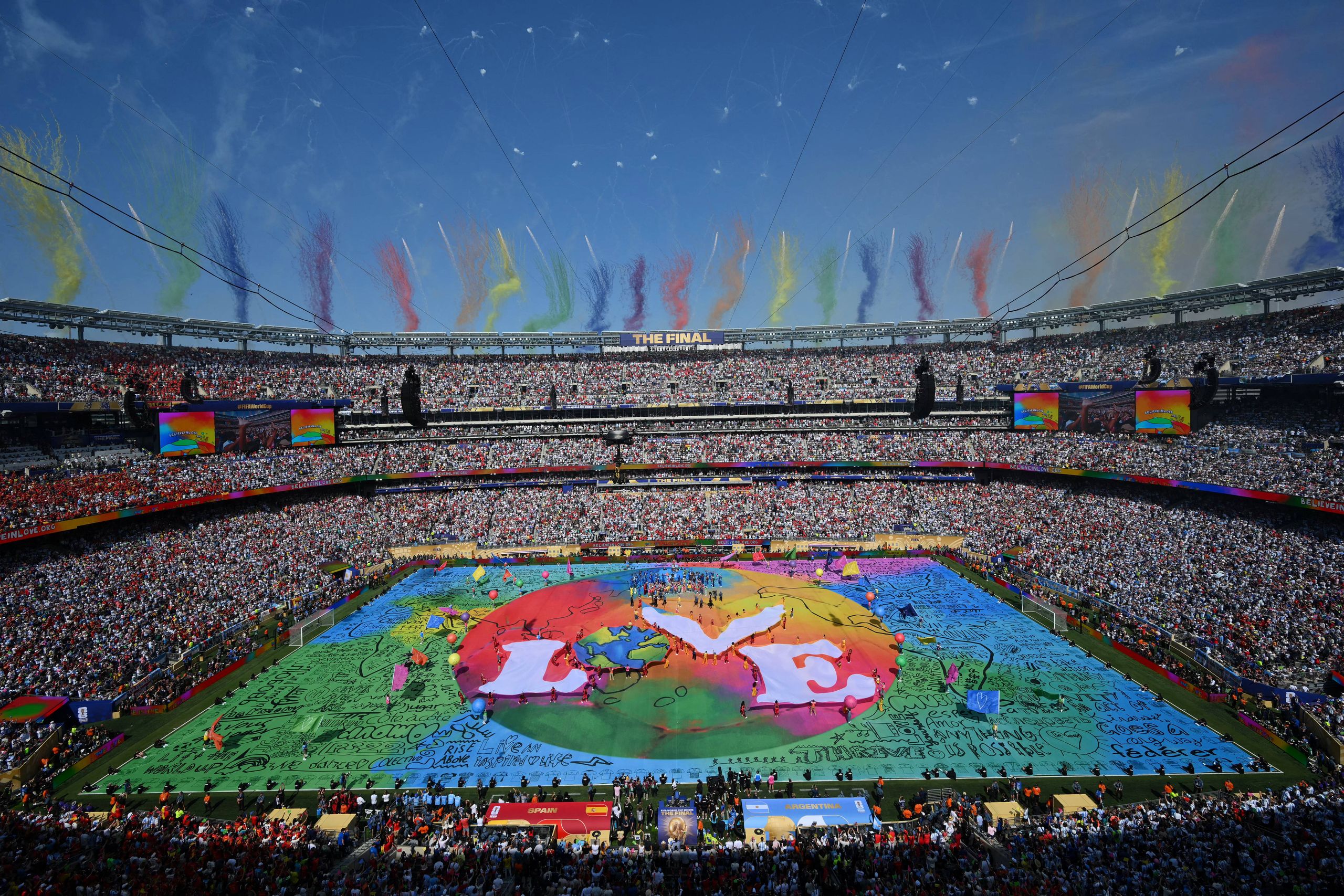
The first-ever World Cup half-time show was staged during the Spain versus Argentina final at the New York New Jersey Stadium.
If there is one positive outcome from this inaugural World Cup final half-time performance, it should be that it remains a one-time experiment, confined to the archives and never attempted again.
The entire spectacle felt misplaced, awkward, and, above all, utterly dull.
Before the match, members of the media, stadium staff, and volunteers were forced to queue for nearly three hours under the blazing sun due to heightened security checks prompted by President Trump’s presence. Ironically, that long wait was far more entertaining than what unfolded during the half-time interval.
Madonna spent most of her set performing within the bowels of the stadium, only appearing pitchside towards the conclusion of her song when she was joined by Brazilian legends Ronaldo and Ronaldinho. The scene looked more like a parody sketch from an Ali G film than a live performance. Even then, Madonna simply bowed to the crowd – a rather odd choice for such a high-profile occasion.
This approach, besides being an unusual creative decision, seemed designed for television viewers rather than for the thousands of fans inside the venue who had paid well over $4,000 for their seats.
Next up, Shakira and Burna Boy took to the stage to perform the official World Cup anthem “Dai Dai”, which sounded exactly like one might expect from a FIFA-commissioned track. Following them, the K-pop group BTS delivered their hit “Dynamite”. While it wasn’t to everyone’s taste, their performance was competent and well executed.
However, confusion returned when Justin Bieber took to the stage, introduced by Ted Lasso in what was clearly a promotional tie-in for the show’s new season. Bieber then performed an acoustic rendition of “Everything Hallelujah”, changing the lyrics to “It’s the World Cup, Hallelujah”. Despite the modification, the song remained slow and monotonous, failing to energise the crowd.
If the intention of the show was to get fans on their feet and dancing, Bieber’s selection missed the mark entirely. His performance was more likely to lull spectators into a nap than inspire celebration.
To his credit, Bieber probably made more appearances within the penalty box area during his set than Lionel Messi managed in the first half of the match.
Throughout the show, one question lingered: who was this actually for? Certainly not football fans, who typically look forward to a quick drink or restroom break at half-time rather than a bizarre pop medley that made the Eurovision Song Contest seem almost sophisticated by comparison.
At one point, footage of Pele from his New York Cosmos days appeared on the big screen as he spoke about “Love”, followed by children waving flags to spell out the same word – another perplexing and unnecessary segment.
The entire production felt more like a surreal fever dream mixed with an episode of Lip Sync Battle than the spectacular live event it was marketed to be.
The lineup itself was disjointed and lacked cohesion. Earlier in the tournament, Bon Jovi’s “Livin’ on a Prayer” had been played during hydration breaks, prompting genuine crowd participation. Given that Bon Jovi are currently performing a nine-night residency at Madison Square Garden, they would have been a far more fitting choice for the final than the collection of mismatched acts that appeared.
The only moment that truly engaged the crowd came when “Seven Nation Army” by The White Stripes was played – performed, amusingly, by Kermit the Frog, Miss Piggy, and Animal. At least the Muppets knew how to embrace the absurdity.
Before the final, many had compared this half-time show to those seen at the Super Bowl. But unlike the Super Bowl’s polished and iconic performances, this one was neither slick nor entertaining. It was bewildering, lifeless, and ultimately pointless.
After twenty minutes of confusion, fans were left wondering what they had just witnessed and, more importantly, why it had been included at all. The question remained unanswered: who was this for?
FIFA may have been relieved that Argentina, and not England, reached the final. English supporters, known for their vocal reactions, would almost certainly have booed the entire production.
Whoever conceived this idea for the world’s biggest sporting event has some serious explaining to do. The show felt poorly thought out and poorly executed. Yet, it will likely be hailed as a success by FIFA president Gianni Infantino and the officials in Zurich.
One must also consider the players, who are accustomed to a 15-minute half-time break. Extending that period disrupted their rhythm and risked injury as their bodies cooled down before play resumed.
While the World Cup hosted across the United States, Canada, and Mexico has largely been a success, that success has come in spite of FIFA’s decisions, not because of them. Hydration breaks, variable ticket pricing, political meddling, and now this misguided half-time spectacle have no place in football.
Let the game flow naturally and allow the fans to enjoy the sport—stop trying to manufacture entertainment.
-
Experts are telling why rice water is beneficial for skin and hair, know what is the right way to use it?

-
International Moon Day: How did man reach the moon for the first time? Know from history to today’s Moon mission

-
Coorg Trip Planning: Amazing Experiences on a Budget

-
5 apple-eating habits that may cause digestive problems

-
Kevin Feige admits disappointment over delayed ‘Blade’ reboot