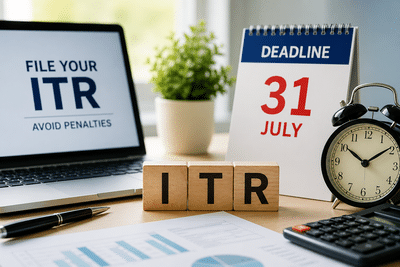
ITR Last Date 2026: Don't Count on an Extension, Here's Why Tax Experts Advise Filing on Time
As the Income Tax Return (ITR) filing deadline draws closer, many taxpayers are once again asking the same question: Will the government extend the last date this year? While deadline extensions have been announced in some previous years due to exceptional circumstances, tax professionals believe taxpayers should not expect the same in 2026 unless there is an official notification from the Income Tax Department.
Experts say the filing process has been streamlined this year, major return utilities were released on time, and the e-filing portal has remained largely stable. Waiting for a possible extension could lead to unnecessary penalties, interest charges, and the loss of important tax benefits.
Here's why experts believe an extension is unlikely and what taxpayers should do before the due date.
Why an ITR Deadline Extension Appears UnlikelyTax professionals point to several factors that suggest the government may stick to the existing filing schedule.
1. Taxpayers Have Already Been Given Adequate TimeThe filing calendar has been structured to reduce last-minute congestion on the income tax portal.
For the current assessment year:
- Salaried individuals and other eligible taxpayers filing ITR-1 and ITR-2 are required to submit their returns by July 31, 2026.
- Businesses and professionals not requiring a tax audit, generally filing ITR-3 and ITR-4, have time until August 31, 2026.
By separating deadlines for different taxpayer categories, the government has already eased pressure on the filing system.
2. Filing Utilities Were Released on TimeIn previous years, one of the primary reasons for extending filing deadlines was the delayed availability of return forms and filing utilities.
This year, however, the Income Tax Department made the utilities for major forms—including ITR-1, ITR-2, ITR-3, ITR-4, and ITR-5—available well in advance. As a result, taxpayers have had sufficient time to prepare and file their returns without waiting until the final days.
3. E-Filing Portal Has Been Functioning SmoothlyTechnical issues with the income tax e-filing portal have previously forced authorities to provide additional time for return filing.
According to tax experts, the 2026 filing season has seen relatively smooth portal performance. While minor issues may occur occasionally, there have been no widespread technical disruptions significant enough to justify extending the filing deadline.
4. Tax Rules Have Remained Relatively StableMajor tax reforms relating to capital gains taxation and indexation created additional compliance challenges in earlier years.
This time, tax provisions have remained comparatively stable, allowing taxpayers, chartered accountants, and tax professionals to prepare returns without major uncertainty. Since there have been no significant last-minute legislative changes, experts believe there is little justification for extending the due date.
Consequences of Missing the ITR Filing DeadlineWaiting for an extension that never arrives can prove costly. Missing the applicable due date may result in several financial and compliance-related consequences.
Late Filing Fee Under Section 234FTaxpayers filing a belated return may have to pay a late fee of up to ₹5,000.
Individuals whose total income does not exceed ₹5 lakh may be liable for a reduced late fee of ₹1,000, subject to the applicable provisions of the Income Tax Act.
Interest on Outstanding Tax LiabilityIf any tax remains unpaid after the due date, interest under Section 234A may apply.
The outstanding tax liability can attract interest at 1% per month or part of a month until the payment is made.
Loss of Carry Forward of Certain LossesTaxpayers who miss the due date may lose the opportunity to carry forward eligible business losses or capital losses, including certain losses arising from investments such as shares or other capital assets.
This could affect future tax planning and reduce the ability to offset gains in subsequent years.
Limited Tax Regime OptionsExperts also caution that filing a belated return may restrict the ability to opt for the old tax regime in cases where the applicable provisions require the option to be exercised within the prescribed timeline. Taxpayers should therefore evaluate both tax regimes before submitting their return.
Steps Taxpayers Should Take Before FilingTo avoid last-minute complications, tax experts recommend completing a few important checks before submitting the return.
Gather All Required DocumentsKeep the following documents ready:
- Form 16
- Interest certificates from banks
- Capital gains statements
- Details of other sources of income
- Investment and deduction proofs, wherever applicable
Cross-check the information reported in your return with:
- Annual Information Statement (AIS)
- Form 26AS
- Tax Information Summary (TIS), wherever applicable
Reconciling these records helps reduce the chances of receiving notices due to mismatched income or tax credits.
Compare Both Tax RegimesBefore filing, calculate your tax liability under both the old and new tax regimes to determine which option is more beneficial based on your income, deductions, and exemptions.
Avoid Rumours About Deadline ExtensionsTax professionals advise taxpayers not to rely on social media speculation or unofficial reports regarding possible deadline extensions. Unless the Income Tax Department issues an official announcement, the existing due dates should be treated as final.
File Early to Avoid Last-Minute StressWith filing utilities already available, the e-filing portal functioning normally, and sufficient time provided for different taxpayer categories, experts believe there is little reason to postpone filing your Income Tax Return. Completing the process well before the deadline can help avoid penalties, interest, technical delays, and unnecessary compliance issues while ensuring a smoother tax filing experience.
-
Paytm Eyes New Horizons With Enterprise AI & Wallet Revival

-
Nepal, India Discuss Expanding Cross-Border Electricity Trade

-
'Kyunki Saas Bhi Kabhi Bahu Thi 2's Sumeet Sachdev opens up about near-death experience after choking on food; says, 'It was very scary'

-
Erling Haaland Birthday: The Norwegian Goal Machine Turns 26, Celebrates Birthday In Viking Style

-
Love to eat jhal jhal? Plant the plants of the house tub, a month is enough to fill the tree!