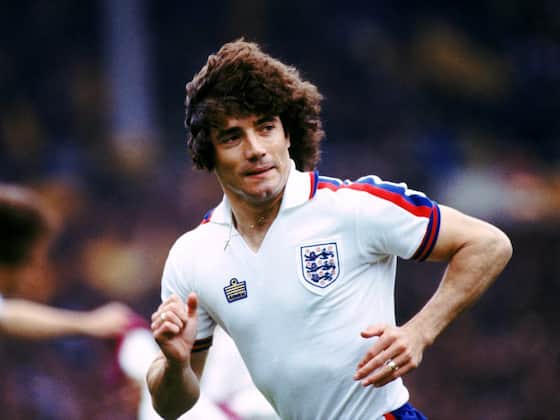
‘Mighty Mouse’ or ‘King Kev’, as fans fondly called him, left an indelible mark on football — both as a player and as a manager.
When Kevin Keegan first turned out for the Doncaster pub team, Lonsdale Hotel, on a Sunday morning, few could have imagined that it would mark the beginning of a journey to football’s highest echelon.
Joseph Kevin Keegan, who passed away aged 75 after battling stage four cancer, was born in Armthorpe, South Yorkshire, on February 14, 1951.
His father, Joe, a miner and World War II veteran who served in Burma’s jungles, was a devoted Newcastle United supporter — the very club where his son would later achieve iconic status, first as a player and then as a manager.
Despite suffering from bronchitis as a child — with doctors warning he might never play sports — Keegan attended St Peter’s School in Cantley, where his passion for athletics flourished.
He excelled in several sports, even captaining the school cricket team, but left school with only two O-Levels — in art and history. His dream of becoming a professional footballer appeared uncertain after being rejected by Coventry City for being considered too small.
During the summer of England’s 1966 World Cup victory, a 15-year-old Keegan worked at Peglers Brass Works in Doncaster. Yet his love for football never waned, and his performances for local side Lonsdale Hotel earned him a trial at Scunthorpe United, where manager Ron Ashman offered him an apprenticeship.
At 17, Keegan made his debut against Peterborough and soon caught the eye of Liverpool scouts. In May 1971, he signed for the Anfield club, beginning an era that would define a generation.
Keegan captured numerous trophies with Liverpool, including the 1973–74 FA Cup. He nearly missed his debut against Nottingham Forest after being delayed by traffic near Anfield, where police initially doubted his story of being Liverpool’s new signing. But just 12 minutes after kick-off, he scored his first goal for the Reds — the first of a hundred he would net for the club.
Partnering Welsh striker John Toshack, Keegan helped Bill Shankly’s Liverpool clinch the 1972–73 league title and the UEFA Cup. The Reds then secured the 1974 FA Cup, where Keegan scored twice in a 3-0 triumph over Newcastle United.
In the Charity Shield clash with Leeds United, Keegan was punched by Johnny Giles and later sent off after a fight with Billy Bremner. Both players were fined £500 and handed two-month bans by the Football Association.
Keegan’s popularity soared as Liverpool dominated English football, winning back-to-back First Division titles in 1975–76 and 1976–77. Off the pitch, he became a marketing sensation, endorsing products like Brut aftershave alongside boxing legend Henry Cooper. His appearance on the BBC’s ‘Superstars’ show, where he recovered from a cycling crash to win the episode, became part of his legend.
After another UEFA Cup victory in 1976, Liverpool lifted the 1977 European Cup with a 3-1 win over Borussia Monchengladbach in Rome. That match marked Keegan’s 323rd and final appearance for the club before he left for Germany’s Bundesliga, joining Hamburg, where Kenny Dalglish would replace him at Anfield.
Keegan became the only British footballer to win the Ballon d’Or twice — being crowned European Footballer of the Year in 1978 and 1979. He guided Hamburg to their first domestic title in nearly two decades and reached the 1980 European Cup final, though they were beaten by Brian Clough’s Nottingham Forest.
Keegan made his England debut in 1972 in a World Cup qualifier against Wales at Ninian Park. However, England failed to qualify for the 1974 and 1978 tournaments. When he finally played in the 1982 World Cup in Spain, he was recovering from a serious back injury, and the team were eliminated in the second group stage.
Overlooked later by Bobby Robson, Keegan ended his international career with 63 caps and 21 goals.
Returning to England with Southampton, he won the PFA Player of the Year award in 1981–82. Yet tensions with manager Lawrie McMenemy over the club’s lack of ambition led him to join Newcastle United — his father’s beloved team — ahead of the new season.
Keegan inspired Newcastle to promotion back to the top flight in 1984 before retiring that year. His farewell match against Liverpool ended with him departing the pitch in a helicopter, waving goodbye to the Gallowgate End, before relocating to Marbella to start a new life.
In 1991, Keegan made headlines after being attacked during a robbery while resting in his car following a drive from Spain. He was knocked unconscious and required eight stitches to his head.
Early in 1992, Keegan received an unexpected call offering him the managerial role at second-tier Newcastle, who were struggling after Ossie Ardiles’s departure. He accepted, rescuing the club from relegation and, with the backing of chairman Sir John Hall, leading them into the Premier League.
With record signing Andy Cole spearheading the attack, Newcastle earned promotion as Division One champions and finished third in their first Premier League season. However, in January 1995, Cole’s surprise transfer to Manchester United forced Keegan to defend the decision to furious supporters.
In the 1995–96 season, boosted by marquee arrivals David Ginola and Les Ferdinand, Newcastle surged to a 12-point lead by January. Yet Manchester United’s relentless pursuit rattled Keegan, leading to his famous televised outburst — “I will love it if we beat them” — directed at Sir Alex Ferguson. Ultimately, Ferguson’s men prevailed, and Newcastle finished four points behind.
Keegan lifted spirits with the then-world-record £15 million signing of Alan Shearer from Blackburn Rovers, but he resigned in January 1997.
Still adored by Newcastle fans, Keegan remains affectionately known as ‘King Kev’ on Tyneside.
He later became chief operating officer of Fulham, guiding them to the Division Two title in 1998–99, before taking charge of England. He led the national side to Euro 2000 but resigned later that year after a defeat to Germany in the final match at the old Wembley Stadium.
In 2001, Keegan took over Manchester City, leading them to the Division One title. He made a sensational return to Newcastle in 2008 after Sam Allardyce’s exit, but tensions with owner Mike Ashley’s board led to his resignation in September 2008. Keegan subsequently won £2 million in damages for constructive dismissal.
In later years, Keegan largely stayed away from the limelight, occasionally appearing as a pundit or at special events. His name, however, continues to resonate deeply in English football — a symbol of passion, charisma, and enduring love for the game.
-
Paytm Eyes New Horizons With Enterprise AI & Wallet Revival

-
Nepal, India Discuss Expanding Cross-Border Electricity Trade
-
'Kyunki Saas Bhi Kabhi Bahu Thi 2's Sumeet Sachdev opens up about near-death experience after choking on food; says, 'It was very scary'
-
Erling Haaland Birthday: The Norwegian Goal Machine Turns 26, Celebrates Birthday In Viking Style
-
Love to eat jhal jhal? Plant the plants of the house tub, a month is enough to fill the tree!