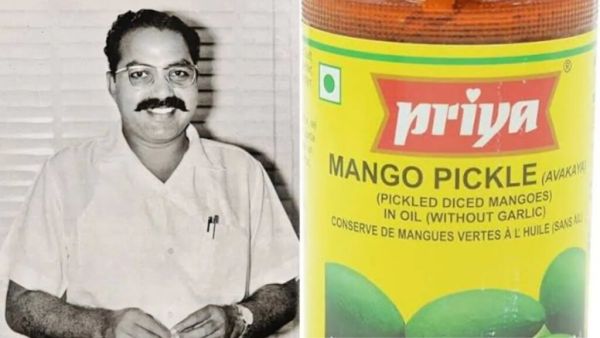
Priya Foods today sells more than 200 products across over 30 countries. But the story of one of India’s biggest packaged-food brands began with a problem familiar to generations of Indians traveling abroad: how do you carry the taste of home without the pickle jar leaking inside your suitcase?
A widely shared post on
The post opens on a freezing November night in the United States. A homesick Telugu student breaks down over a bowl of bland, watery lentil soup. For six months, he has not tasted the fierce heat of his grandmother’s gongura chutney or avakaya mango pickle. His mother had packed a glass jar for him, but it leaked, ruined his clothes and was confiscated by customs.
Decades later, inside an Indian grocery store in California’s Bay Area, an elderly man picks up a familiar red-lidded jar. When his granddaughter asks what it is, he opens the lid and lets the aroma of mango, mustard, chilli and oil escape.
“This,” he tells her, “is home.”
Between those two moments lies Ramoji Rao’s remarkable food story.
Born into a farming family in Andhra Pradesh’s Krishna district, Rao had already established Margadarsi, the advertising agency Kiron and the Telugu newspaper Eenadu. His businesses looked different, but were driven by a similar instinct: understand what ordinary Indians valued and then give it scale.
In 1980, Rao established Priya Foods around the idea of combining traditional recipes with modern food technology. At the time, buying pickle from a shop was still unfamiliar in many Telugu homes. Pickles were prepared by mothers and grandmothers, with recipes perfected over generations and matured in ceramic jars.
The real challenge was not manufacturing pickles. It was industrialising something deeply personal without making it taste industrial.
Priya began with six pickle varieties before expanding into culinary pastes, spice powders, instant mixes, ready-to-eat foods and other categories. The company now says its portfolio exceeds 200 products and reaches more than 30 countries.
Its growth followed Indians as they moved to the United States, Britain, Europe and the Middle East. Gongura and avakaya no longer had to depend on fragile jars wrapped inside suitcases.
Rao later built an ecosystem spanning Eenadu, ETV, Usha Kiran Movies, Ramoji Film City, Margadarsi, Dolphin Hotels and Kalanjali. Priya carried the same philosophy into food: Indians may travel across the world, but their palate rarely leaves home.
-
Cristiano Ronaldo Reportedly Set to Retire from Portugal Duty After Final Nations League Game Against Wales

-
If you are tired of eating sago, potato on the day of fasting, make gluten free amajira sukdi quickly in 10 minutes.
-
Rakhi Makeup: If you don’t have much time for makeup, then follow Alia’s 10-minute routine, get a fresh look in minutes.

-
Samsung Unveils Galaxy Z Fold8 Ultra, Fold8 and Flip8 in India: Check Prices, Specs and What’s New

-
Samsung’s big tech blast, three new foldable smartphones launched, price of Galaxy Z Fold8 Ultra up to Rs 2.60 lakh